



The tech world is buzzing with speculation about what many are calling the most significant corporate transition in decades. Apple's succession planning has shifted from theoretical discussions to active preparation, with industry insiders suggesting major changes could unfold sooner than expected. Recent reports indicate Apple is accelerating CEO succession planning efforts as Tim Cook may step down as soon as next year. The timing couldn't be more critical—Apple is currently experiencing a major leadership transition phase, with several key executives announcing departures and new hires reshaping the company's strategic direction.
This isn't just about replacing a CEO; it's about positioning the world's most valuable company for an AI-driven future while maintaining the operational excellence that built a $4 trillion empire. The stakes are extraordinary—whoever takes the helm will inherit unprecedented financial success alongside the challenge of proving Apple can compete when artificial intelligence increasingly drives user experiences.
The front-runner emerges from hardware leadership
When it comes to potential successors, one name consistently rises to the top of industry speculation. John Ternus, Apple's senior vice president of hardware engineering, is widely regarded as the leading contender to succeed Cook, according to multiple sources familiar with internal discussions. At 50 years old, Ternus has spent his entire career inside Apple, joining in 2001 as a product design engineer. His rise through the ranks tells a compelling story of technical expertise meeting strategic vision.
The hardware chief's credentials are impressive by any measure. Ternus has been responsible for hardware engineering behind every major Apple product and has been increasingly involved in product roadmaps and strategy. More tellingly, Apple is increasingly using Ternus as the face of new products, with the executive taking center stage during recent product launches.
What makes Ternus's candidacy particularly strategic is how his hardware-first thinking aligns with Apple's AI competitive approach. Ternus played a key role in the Mac's transition to Apple Silicon, one of the boldest strategic moves Apple has made in years. This wasn't just an incremental improvement—it fundamentally shifted how Apple computers work and gave the company unprecedented control over its hardware-software integration. The fact that Ternus has "earned the respect" of Cook, Williams, and other executives while being "well-liked at Apple" suggests he has both the technical chops and leadership presence to guide Apple through an era where optimized silicon becomes the foundation for AI capabilities.
Leadership shake-up signals broader transition
The succession speculation isn't happening in isolation—it's part of a comprehensive organizational restructuring that signals Apple's recognition that its approach to artificial intelligence needs fundamental changes. Apple announced a major personnel shake-up earlier this week, with the most significant being John Giannandrea's announcement of his retirement as Apple's AI chief after 7 years, staying as advisor until spring 2026.
This AI leadership transition represents a strategic reset rather than routine personnel changes. Apple named former Microsoft and Google executive Amar Subramanya as its VP of AI, replacing John Giannandrea. Subramanya brings impressive credentials, having served as corporate VP of AI at Microsoft and previously spent 16 years at Google where he headed up engineering for Google's Gemini Assistant. This high-profile external hire underscores how seriously Apple takes its competitive position in AI, especially given the company's typical preference for promoting from within.
The organizational changes extend beyond AI leadership into operational structure. Jeff Williams' role as chief operations officer was transitioned to Sabih Khan, who is described as a supply chain specialist much like Cook. These moves collectively demonstrate that after a decade of stability, we are seeing many changes as the company finds the next generation of leaders.
What makes these changes particularly significant is their timing: Apple is reshuffling its AI leadership at a pivotal moment when artificial intelligence capabilities increasingly determine competitive advantage. This comprehensive leadership transition suggests Apple recognizes it needs to accelerate its efforts to keep pace with rivals who have made AI central to their platform strategies.
Cook's remarkable legacy sets high bar
Understanding the magnitude of this potential transition requires appreciating what Tim Cook has accomplished during his tenure. After 14 years leading Apple to a $4 trillion valuation, CEO Tim Cook is preparing to step down, potentially as early as next year. The financial transformation tells an extraordinary story of sustained growth and market dominance.
When Cook inherited the CEO role from Steve Jobs, he took over a company valued at approximately $350 billion. Under Cook's leadership, Apple's market cap went from $350 billion to $4 trillion, making it the world's most valuable public company. Apple became the first US company to hit $1 trillion in value in 2018, then doubled it in 2020, and tripled it three years later.
But Cook's legacy extends far beyond financial metrics into strategic transformation of what Apple represents as a business. Cook built Apple's services empire, including Apple Music, TV+, iCloud, and the App Store, transforming Apple from just a hardware company into a more resilient entity. Today, Apple's services business generates nearly $100 billion annually—a revenue stream that's more predictable and carries higher margins than traditional hardware sales.
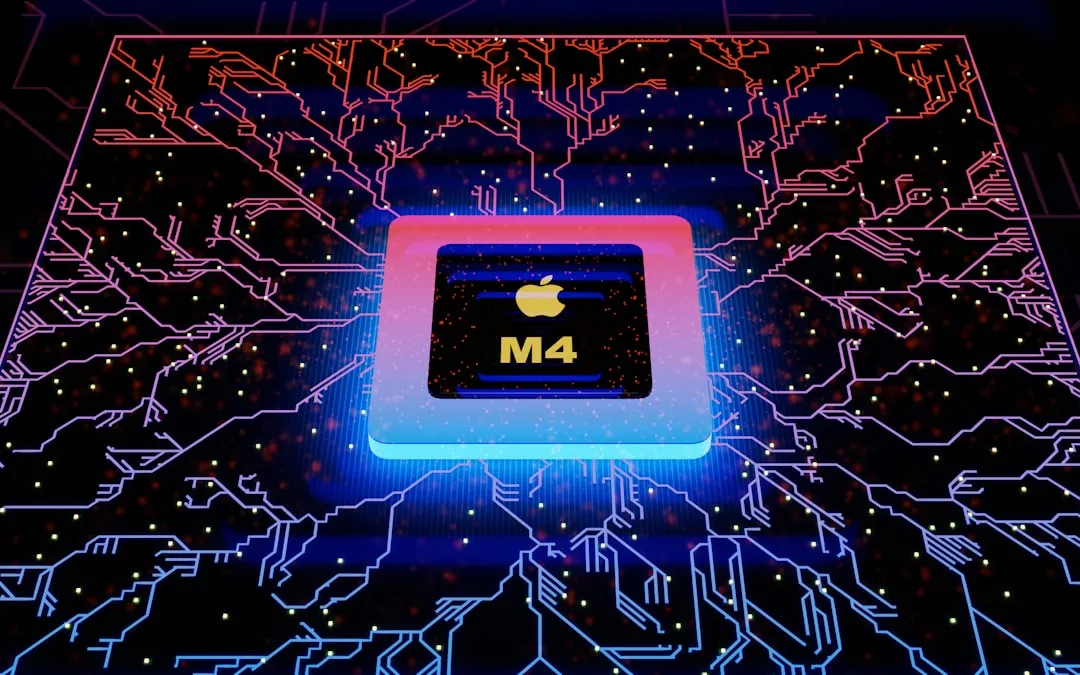
Perhaps Cook's most strategic accomplishment was enabling Apple's transition to controlling its own destiny through custom silicon. Apple's move to its own chips with the M-series processors was a significant gamble that paid off, improving speed, battery life, and control over hardware and software. This strategic shift, largely executed under Ternus's hardware leadership, has become a key competitive advantage that rivals are still struggling to match—and represents exactly the kind of integrated thinking that will be crucial for succeeding in an AI-dominated future.
What's next for the world's most valuable company?
As Apple prepares for this historic transition, the challenges facing the next CEO extend far beyond maintaining financial performance. The next CEO will be judged by a different scorecard: how effectively Apple turns its ecosystem advantage into everyday AI, how it threads the needle of antitrust scrutiny around app distribution and payments, and whether the company can kick up another must-have hardware cycle without softening its position on privacy.
The timing of any announcement remains strategically calculated. The company is unlikely to name a new CEO before its next earnings report in late January, which covers the critical holiday period. This approach allows Apple to report strong quarterly results before making such a significant announcement. Cook is expected to move into the role of executive chairman, and will still play a significant role for the company, ensuring continuity during the transition.
What's particularly telling about Apple's succession strategy is how the board appears to be betting on hardware expertise for an AI-dominated future. While Microsoft elevated cloud specialist Satya Nadella and Google promoted search and services veteran Sundar Pichai, Apple seems ready to put a hardware and silicon expert at the helm. This suggests the company believes if Apple believes winning AI lives inside highly optimized, power-efficient chips on your wrist, in your pocket, on your desk rather than primarily in distant data centers, then a hardware and silicon chief makes sense.
This approach aligns perfectly with Apple's traditional strategy of arriving to new technology categories after they mature, then integrating hardware, software, and services into experiences that feel inevitable. The difference now is that AI capabilities evolve monthly rather than yearly, requiring a leader who understands both the long-term nature of hardware development and the rapid pace of AI advancement. Ternus's background in custom silicon development—from the iPhone's A-series processors to the Mac's M-series chips—positions him uniquely to navigate this challenge.
The broader implications extend far beyond Cupertino. Apple's choice of successor and the strategy that follows will answer whether the company intends to lead the AI shift or is content being a fast follower wrapping late-arriving AI capabilities in finely crafted hardware. For investors, employees, and the millions of people who use Apple products daily, this succession represents not just a changing of the guard, but a defining moment that will determine whether the world's most valuable company can maintain its position when the fundamental rules of technology competition are being rewritten by artificial intelligence.






Comments
Be the first, drop a comment!