



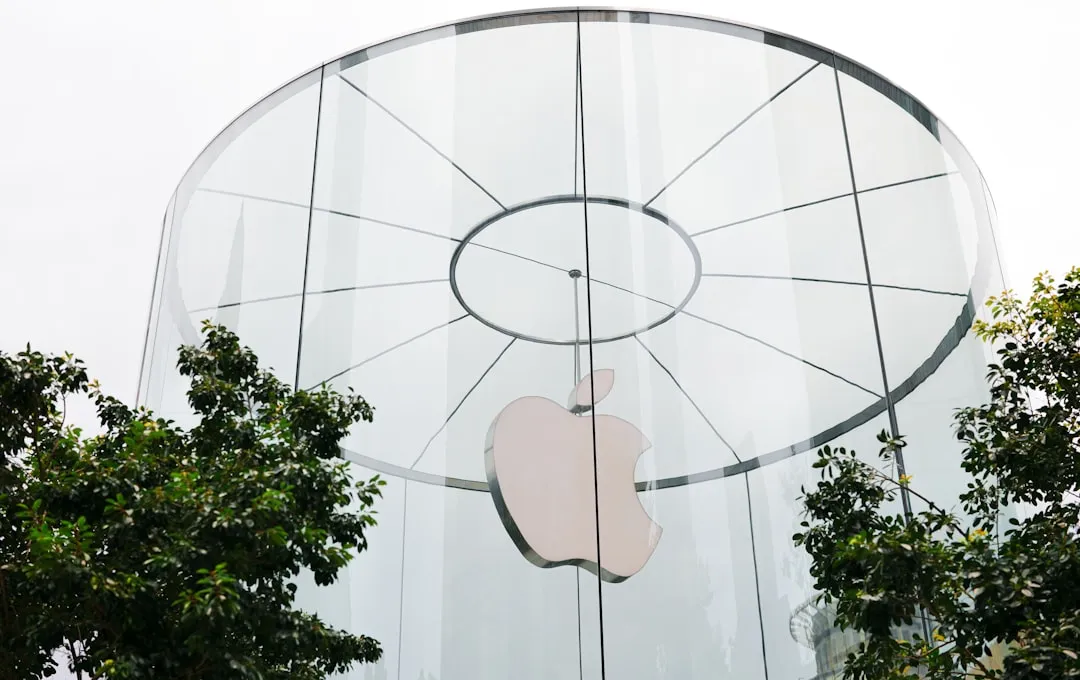
Looking at Apple's latest retail moves, you can see this isn't just about opening a few new stores. The company recently unveiled its fifth retail location in India at Noida's DLF Mall, which opens December 11 at 1 p.m. local time, alongside a new Beijing store at the Livat Centre that features dedicated seating for Apple Vision Pro demonstrations. These store openings aren't just about customer access—they're the visible manifestation of Apple's successful pivot to India as a manufacturing powerhouse, fundamentally reshaping global technology manufacturing in ways that extend far beyond simple supply chain adjustments.
India emerges as Apple's manufacturing powerhouse
Here's where things get really interesting: India isn't just becoming a retail destination for Apple—it's rapidly evolving into a critical manufacturing hub that's fundamentally changing how we think about global tech production. The transformation represents a complete shift from viewing India as a low-cost assembly location to recognizing it as a full-capability manufacturing partner.
The numbers tell a compelling story that even surprised industry veterans. One in every five iPhones is now manufactured in India, representing a dramatic shift from the company's historically China-centric production model. This ecosystem approach matters strategically because it reduces Apple's single-country dependency while accessing India's cost advantages and skilled workforce.
Apple's manufacturing ecosystem in India has expanded to include 45 companies ranging from large domestic firms to smaller component manufacturers, creating a sophisticated network that spans multiple states and skill levels. The job creation aspect alone is staggering—Apple's suppliers have generated nearly 350,000 jobs with about 120,000 direct roles, transforming entire regions into technology hubs.
Apple's iPhone production in India surged to over $14 billion in fiscal year 2023-24, with exports accounting for a significant portion of that output. But here's what really shows Apple's confidence in India's quality capabilities: the company now manufactures the entire iPhone 16 lineup locally, including the premium Pro models.
This signals Apple's confidence in India's manufacturing sophistication—producing flagship Pro models requires incredibly precise tooling, advanced quality control systems, and highly skilled workers capable of meeting Apple's exacting standards.
The retail revolution follows manufacturing success
This retail success validates Apple's manufacturing bet—local production enables competitive pricing while flagship stores reinforce premium positioning, creating a virtuous cycle that benefits both consumer access and brand perception.
The company currently operates four other stores across India: Apple Saket in New Delhi, Apple BKC in Mumbai, Apple Koregaon Park in Pune, and Apple Hebbal in Bengaluru. Each location features comprehensive services including Apple Pickup stations and Genius Bar support, bringing the full Apple experience to Indian consumers.
The performance metrics from these stores have exceeded expectations and validated Apple's retail strategy. Each of the existing Indian retail locations has generated between Rs 190-210 crore in revenue during the previous fiscal year, with consistent monthly sales of Rs 16-17 crore each.
These numbers have positioned Apple's Indian stores among its best performers globally—remarkable when you consider these are relatively new stores in a market where Apple products remain premium-priced relative to local purchasing power. This success reflects broader market momentum: Apple's India sales hit a record $9 billion in the last fiscal year, representing 13% growth from the previous year's $8 billion.
China remains crucial despite diversification efforts
While India captures headlines for rapid growth, China continues to play a vital role in Apple's global strategy, and understanding this nuanced relationship is crucial to grasping Apple's broader approach. The new Beijing store represents Apple's ongoing commitment to the Chinese market, even as the company diversifies its supply chain for geopolitical and risk management reasons.
This measured approach reflects economic reality—completely abandoning China would sacrifice decades of supply chain optimization and specialized capabilities that can't be quickly replicated elsewhere. China still accounts for around 50 percent of Apple's manufacturing facilities, down from the previous 60-70 percent range, representing a strategic rebalancing rather than a complete exodus.
Here's what many people miss when they talk about Apple "leaving China": the relationship has evolved to become more sophisticated rather than simply diminished. While iPhone assembly has begun shifting to India and Vietnam, China remains deeply embedded in the supply chain for critical components. In fact, Chinese firms have increased their share in precision manufacturing from 14 percent to 86 percent between 2013 and 2023.
This demonstrates China's successful migration up the value chain—instead of being primarily an assembly hub, China has become a source of sophisticated components and specialized manufacturing services that require advanced technical capabilities.
What this means for Apple's global strategy
Apple's simultaneous expansion in India and China reflects what supply chain experts call a sophisticated "China Plus One" approach that addresses multiple strategic objectives while managing implementation complexities that other companies are still struggling to navigate.
This aggressive timeline faces headwinds from infrastructure constraints and skills gaps, but Apple's track record suggests these challenges are surmountable with sufficient investment. Apple aims to make most iPhones sold in the United States at factories in India by the end of 2026, while roughly 80% of current US-bound iPhones are still manufactured in China. The scale of this shift is enormous when you consider that Apple sells over 60 million iPhones annually in the US alone.
The retail expansion strategy reveals Apple's long-term thinking—these stores serve as brand ambassadors, customer education centers, and market intelligence gathering points that inform product development for emerging markets. These new stores serve as showcases for the company's latest innovations, customer service centers, and comprehensive ecosystem destinations rather than simple sales channels.
What's particularly interesting is how Apple balances local adaptation with global consistency. The new Beijing store features dedicated Vision Pro demonstration areas, indicating Apple's commitment to bringing cutting-edge products to Chinese consumers despite recent market challenges. Meanwhile, the Indian stores emphasize services and support that help customers maximize their investment in Apple products—recognizing that in price-sensitive markets, post-purchase experience becomes even more critical for brand loyalty.
This strategy addresses risk diversification, tariff mitigation, and market access simultaneously. India's smartphone market is growing rapidly, with Apple achieving significant gains in both volume and value share, while China remains a massive market where maintaining retail presence is crucial for Apple's global brand positioning.
As Apple continues to navigate an increasingly complex global landscape, its ability to balance growth, resilience, and innovation across multiple markets will determine its success in the next chapter of its expansion story. The retail openings in both India and China aren't just about selling more products—they represent Apple's blueprint for sustained global leadership in an era where technological excellence must be matched by geopolitical sophistication and supply chain resilience.


















Comments
Be the first, drop a comment!