



If you've been following the chip industry over the past few years, you know that Apple's relationship with Intel has been, well, complicated. After famously ditching Intel's processors for their own custom silicon in 2020, it seemed like that chapter was closed for good. But here's the thing about the tech industry—just when you think you've got it figured out, something interesting happens.
Recent reports suggest we might be looking at an unexpected plot twist: Intel could start manufacturing some of Apple's M-series processors by 2027. Now, before you start thinking Apple is going backwards, let me break down what's actually happening here. This isn't about Apple abandoning their chip strategy—it's about something much more strategic.
The semiconductor landscape has been dominated by a single relationship for Apple: TSMC has served as the exclusive manufacturer for all of Apple's advanced processors powering Macs, iPhones, and iPads, according to multiple industry sources. Think about that for a second—every single chip in your iPhone, iPad, and modern Mac comes from one company's factories. That level of dependency became a critical vulnerability during the 2020-2022 chip shortages, when even Apple faced production delays and supply constraints that affected product launches.
Now, Apple appears ready to diversify this critical supply chain relationship through a strategic partnership with Intel. And honestly, it makes a lot of sense when you step back and look at the bigger picture.
What's driving Apple's interest in Intel manufacturing?
You might be wondering why Apple would want to shake up a relationship that's been working so well. After all, TSMC has been delivering some truly impressive chips for Apple over the years. But Apple's motivation for exploring Intel as a manufacturing partner stems from both strategic and practical considerations that go well beyond simple risk mitigation.
The company currently depends entirely on TSMC for its most advanced chip production, creating a potential vulnerability in its supply chain. Adding Intel as a domestic manufacturing option would provide Apple with negotiating leverage and serve as a backup if TSMC encounters production issues, as reported by TechLoy.
This diversification strategy becomes especially critical when you consider Apple's massive scale—they ship hundreds of millions of devices annually. Even a temporary disruption at TSMC could cascade into billions of dollars in lost revenue and market share erosion. Having Intel as an alternative supplier doesn't just provide backup capacity; it gives Apple significant leverage in pricing negotiations and technology roadmap discussions with both foundries.
The timing aligns with broader geopolitical trends favoring domestic manufacturing. Intel's U.S.-based production facilities offer Apple an opportunity to reduce reliance on overseas manufacturing, which could prove valuable given current "Made in America" policy preferences, according to industry analysts. This geographic diversification provides both political advantages and supply chain resilience, particularly important as semiconductor manufacturing increasingly becomes a national security priority.
What's particularly telling is that Apple has already taken concrete steps toward this partnership. The company has signed an exclusive non-disclosure agreement with Intel regarding the advanced 18A-P manufacturing process and has obtained early development tools, reports indicate. Apple is currently waiting for Intel to release more mature development tools, which are scheduled for the first quarter of 2026.
This progression—from initial discussions to NDAs to development kit access—follows Apple's typical methodical approach to major strategic decisions. They're not rushing into anything, but they're clearly serious enough to invest engineering resources in evaluating Intel's capabilities.
Intel's 18A process: the technology behind the partnership
Here's where things get really interesting from a technical standpoint. Intel's 18A manufacturing process represents a significant technological leap that makes this partnership possible. The process incorporates two breakthrough innovations: RibbonFET gate-all-around transistors and PowerVia backside power delivery technology, as detailed by Business World.
These aren't just incremental improvements—they represent fundamental changes in how transistors are built and powered. RibbonFET technology provides better control over current flow, reducing power leakage that has plagued smaller transistor designs. PowerVia moves power delivery to the back of the chip, freeing up space on the front for more transistors and better signal routing.
The 18A-P variant that Apple is evaluating has been specifically optimized for performance-per-watt efficiency, which aligns perfectly with Apple's focus on battery life in devices like the MacBook Air, according to Kavout analysis. Intel claims this process delivers up to 25 percent higher performance or 36 percent lower power consumption compared to its previous Intel 3 process, along with 30 percent improved transistor density.
What makes these numbers particularly impressive is that they come while maintaining the aggressive power efficiency requirements Apple demands. Previous attempts at dramatic performance improvements often came at the cost of power consumption—exactly what Apple can't afford in battery-powered devices.
Intel has already entered volume production of the 18A process in mid-2025, making it the first manufacturer globally to achieve 2nm-class production capabilities, reports confirm. The company's yield rates have been improving steadily, reaching 60-65% in November with a target of 70% by the end of 2025, demonstrating the process's increasing maturity.
Those yield improvements are crucial—they represent the difference between a promising technology demonstration and a viable manufacturing process. At 70% yields, Intel can produce chips cost-effectively enough to compete with TSMC's proven processes.
Which Apple devices would use Intel-manufactured chips?
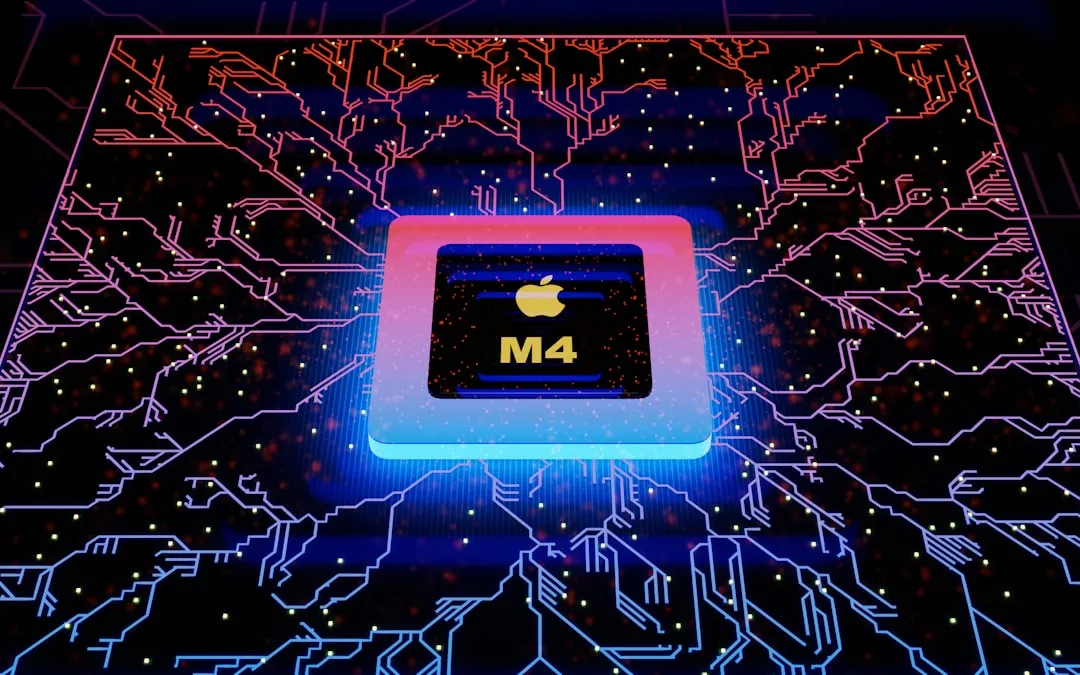
Now here's where the strategy gets really smart. The initial scope of this partnership appears focused on Apple's entry-level M-series processors rather than high-performance variants. Intel would handle production of the standard M-series chips that power MacBook Air and iPad Pro models, with projected annual volumes between 15 million and 20 million units starting in 2027, according to TechLoy reporting.
This segmentation strategy reveals Apple's sophisticated approach to supply chain risk management. TSMC would continue manufacturing Apple's higher-performance chip variants, including the M-series Pro, Max, and Ultra configurations, as well as the high-volume iPhone A-series processors, industry analysis shows. This division of labor allows Apple to optimize manufacturing costs for entry-level devices while reserving TSMC's premium processes for performance-critical applications.
By starting with entry-level chips, Apple minimizes performance risks while testing Intel's production capabilities at meaningful scale. The MacBook Air represents one of Apple's most important volume products, but it doesn't require the absolute peak performance that MacBook Pro users demand. If Intel's chips deliver 95% of TSMC's performance at 80% of the cost, that could be a winning proposition for price-sensitive segments.
Looking ahead, Intel could potentially expand its role to include iPhone chip production. Some analysts suggest that Intel might begin manufacturing Apple's A-series chips by 2028 using its next-generation 14A process, according to BGR reports. This would represent a significant expansion of the partnership beyond Mac and iPad processors.
That iPhone timeline reflects both the technical complexity and business importance of Apple's smartphone processors. iPhones generate the majority of Apple's revenue, so any manufacturing transition must be flawlessly executed. The 2027-2028 timeline gives both companies two full product cycles to perfect their collaboration before tackling Apple's most critical chips.
Market implications and what this means for the industry
The potential Apple-Intel partnership has already generated significant market interest, and the reaction tells us a lot about the strategic stakes involved. Intel's stock price surged more than 10% following initial reports of the potential deal, reflecting investor optimism about Intel's foundry business prospects, as reported by TipRanks.
That market reaction underscores just how transformative this partnership could be for Intel's foundry ambitions. For Intel, this represents crucial validation of its foundry capabilities and technological credibility. Securing Apple as a customer would provide Intel with both revenue and market credibility as it works to challenge TSMC's dominance in advanced chip manufacturing, industry observers note.
Beyond the immediate financial impact, an Apple partnership serves as Intel's ultimate reference customer. If Intel can meet Apple's notoriously demanding quality and performance standards, other chip designers will take notice. This could accelerate Intel's efforts to attract customers like Qualcomm, Broadcom, and AMD to its foundry services—companies that have historically relied exclusively on TSMC or Samsung.
The broader semiconductor industry is watching this development closely, as it could signal a shift toward more diversified manufacturing relationships. Apple's willingness to work with multiple foundry partners might encourage other major chip designers to reduce their dependence on TSMC, potentially reshaping competitive dynamics in the foundry market.
This trend toward diversification reflects growing recognition that single-source dependencies create systemic risks for the entire technology industry. If successful, the Apple-Intel partnership could establish a new paradigm where major customers maintain active relationships with multiple foundries, driving innovation through competition while reducing supply chain concentration risks.
The road ahead: challenges and opportunities
While the partnership shows promise, several factors will determine its ultimate success. Intel must demonstrate that its 18A process can consistently meet Apple's quality and performance standards while scaling to the required production volumes. Apple is currently waiting for Intel to deliver more mature development tools scheduled for early 2026, which will be crucial for finalizing chip designs, according to 9to5Mac.
The timeline remains ambitious, with production potentially beginning in the second or third quarter of 2027, as reported by multiple sources. Meeting this schedule requires Intel to execute flawlessly across multiple dimensions: technology readiness, manufacturing scale-up, quality systems, and supply chain coordination. Any significant delays could force Apple to allocate additional volumes to TSMC, potentially limiting Intel's role in the partnership.
Apple's quality requirements extend beyond just chip performance to include rigorous testing protocols, defect rate standards, and supply chain transparency that Intel must master. Unlike traditional foundry customers who might accept some variability, Apple demands consistent excellence across millions of units—a standard that has challenged even experienced manufacturers.
This partnership also represents a pragmatic approach to balancing performance, cost, and supply chain resilience for Apple. Rather than abandoning its custom silicon strategy, Apple is demonstrating how strategic manufacturing diversification can strengthen its competitive position, analysis suggests. Success here could pave the way for similar partnerships with other foundry providers, further reducing Apple's manufacturing concentration risk.
The implications extend far beyond these two companies. If Intel can successfully serve as Apple's second foundry, it validates the viability of a multi-polar semiconductor manufacturing landscape—one where innovation thrives through competition rather than concentration. In a world where chip manufacturing has become increasingly critical to national security and economic competitiveness, that kind of strategic diversification isn't just smart business—it's essential for industry resilience.











Comments
Be the first, drop a comment!