



When Apple launched its $230 iPhone Pocket in collaboration with Japanese fashion house Issey Miyake, the tech world watched with fascination and bewilderment. The limited-edition accessory debuted on November 14 and sold out completely across all markets on release day. What happened next was as predictable as it was swift: knockoff versions began appearing on Amazon almost immediately after Apple's sellout. This isn't just another story about tech knockoffs—it's a fascinating glimpse into how quickly the counterfeit market can capitalize on Apple's premium positioning and supply scarcity.
The anatomy of instant imitation
Here's what's genuinely impressive from a manufacturing perspective (if ethically questionable): the speed at which these knockoffs appeared. We're talking about counterfeiters reverse-engineering, manufacturing, and listing products on major e-commerce platforms in a matter of days, not weeks.
The counterfeit versions replicated the long over-the-shoulder design, complete with stretchy knit patterns and color options. What's particularly striking is the pricing strategy. The first Amazon copy sold for $99, making it less than half the price of Apple's original. This pricing reveals a key insight about manufacturing economics: when you strip away the Issey Miyake collaboration fees, premium materials sourcing, and Apple's luxury brand positioning, the actual production cost of a knitted phone sleeve becomes dramatically lower.
But here's where the economics get really revealing—another knockoff quickly followed, dubbed the "2025 Knitted Long Shoulder Phone Bag," priced at just $29.99. That's roughly one-eighth the price of Apple's original. These dramatic price differences may attract shoppers who missed out on securing the official version, but they also expose the true cost structure of textile accessories when you eliminate brand premiums and designer partnerships.
The technical execution reveals the sophistication of modern counterfeit operations. Chinese sites like AliExpress feature listings for accessories that look nearly identical to the iPhone Pocket, selling for as little as $6. However, there's a crucial detail that separates legitimate fashion collaboration from simple imitation: all versions of these fake iPhone Pockets are missing the crucial Issey Miyake logo from the label.
The psychology behind premium knockoffs
What makes the iPhone Pocket knockoff phenomenon particularly fascinating is how it exposes the intersection of fashion, technology, and consumer psychology. Let's break it down: Apple's original accessory was described as inspired by "a piece of cloth" and born of the idea "of creating an additional pocket"—a remarkably simple concept for such a premium price point.
The market response reveals a fascinating disconnect between perceived value and consumer expectations. Some consumers may spend $100 thinking they're buying a premium Apple accessory, only to receive a basic knit sleeve with a pocket. This highlights how Apple's brand equity creates a halo effect that extends far beyond the product itself—consumers aren't just buying a phone carrier, they're buying into Apple's design philosophy and status signaling.
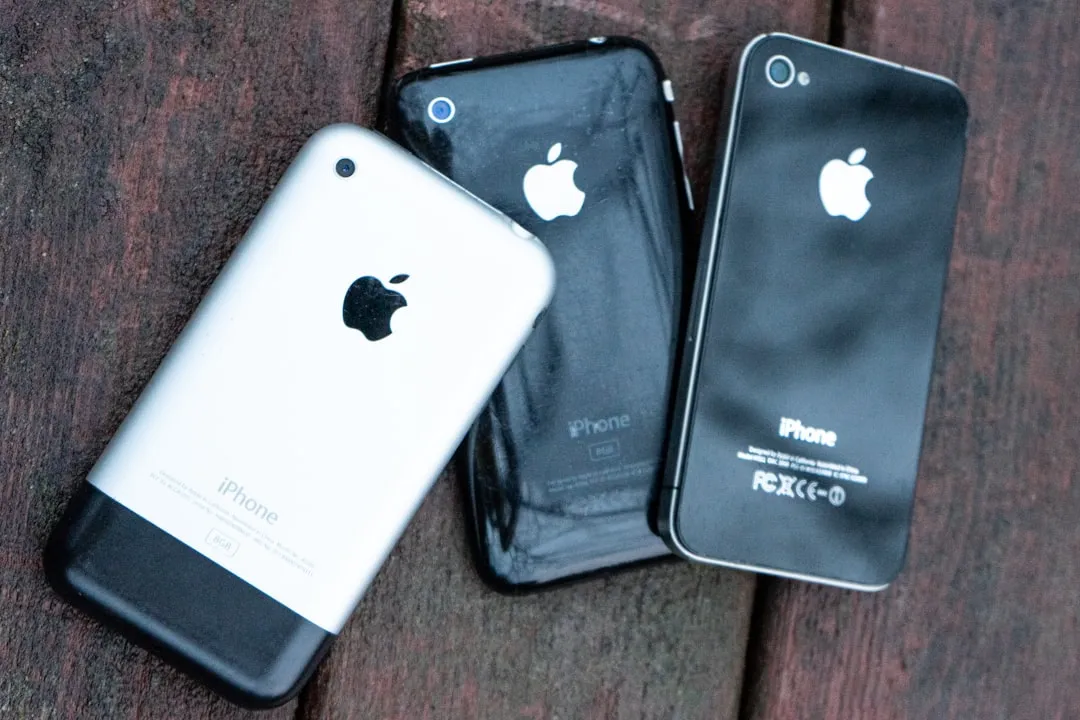
The historical context amplifies this psychological dynamic. The iPhone Pocket was met as a pretentious sequel to the 2004 iPod Sock, but with a crossbody option. Here's what makes this evolution particularly striking: the original iPod Sock sold in a six-pack for $30. This progression from $5 per iPod Sock to $230 for a single iPhone Pocket represents more than inflation—it reflects Apple's sophisticated transformation of simple accessories into luxury lifestyle statements.
This pricing evolution helps explain why counterfeit markets responded so aggressively. When consumers see a $225 markup on what appears functionally similar to a $5 iPod Sock with a strap, the counterfeit value proposition becomes psychologically compelling. It's not just about saving money—it's about accessing the aesthetic and functional concept without paying for what many perceive as artificial premium positioning.
The broader counterfeit ecosystem
The iPhone Pocket knockoffs represent just the tip of the iceberg in what's become a massive global industry. In 2019, the global counterfeiting industry was valued at $464 billion, roughly 2.5 percent of all international trade. That's not a typo—we're talking about an economy larger than most countries' GDP.
The scale of the problem is genuinely staggering. U.S. Customs and Border Protection seized over 27 million counterfeit products from China and Hong Kong in FY 2024, with a retail value of $5.02 billion. And that's just what they caught. The actual numbers flowing through the system are likely much higher.
The sophistication of modern counterfeiting operations is remarkable. Chinese e-commerce platforms like SHEIN and Temu accounted for over 30 percent of de minimis imports to the U.S. in 2022, taking advantage of regulations that allow imports under $800 to enter tariff-free. It's a loophole that's been systematically exploited.
What's really concerning is the quality of these operations. Recent research found that 24 out of 51 products purchased from Temu, AliExpress, and SHEIN were likely counterfeits. That's nearly a 50% counterfeit rate on major platforms.
The iPhone Pocket case study fits perfectly within Apple-specific counterfeiting patterns. Recent data shows a significant spike in searches for "iPhone imitation models" in late September 2025, coinciding with expected iPhone 17 launches, with search volume increasing by 90 points in September 2025 alone. What makes the iPhone Pocket situation unique is how it demonstrates counterfeiters' ability to pivot from hardware to accessories with the same rapid-response capabilities, suggesting their operations are more agile and diversified than previously understood.
What this means for Apple and consumers
The rapid emergence of iPhone Pocket knockoffs raises important questions about Apple's strategy and consumer protection. From Apple's perspective, this situation represents both validation and vulnerability. It's validation that their design and marketing create genuine demand, but it's also vulnerability in how quickly that demand can be exploited by counterfeiters.
For consumers, the lesson is more complex. While some knockoff listings describe themselves as "1:1 replicas" using the same production processes, the reality is that these products lack the design heritage, quality control, and brand authenticity that justify Apple's premium pricing. The absence of the Issey Miyake collaboration—a key element that distinguished the iPhone Pocket from a simple phone sleeve—makes these knockoffs fundamentally different products, regardless of visual similarity.
The individual purchasing decisions aggregate into significant economic impacts. Counterfeit goods cost the U.S. government approximately $13.5 billion in lost tax revenue, while resulting in the loss of over 283,000 retail jobs. When consumers choose a $30 knockoff over a $230 original, they're contributing to a system where authentic innovation becomes harder to fund and legitimate businesses struggle to compete against operations that bypass research, development, and brand-building investments.
Bottom line: The iPhone Pocket knockoff phenomenon serves as a case study in modern consumer culture—where the desire for premium design meets economic reality, and where the line between inspiration and imitation continues to blur in our increasingly connected global marketplace. What's fascinating is that this case reveals how counterfeiting has evolved beyond simple product piracy into sophisticated market psychology, where knockoffs capitalize not just on visual similarity, but on consumer frustration with premium pricing for seemingly simple products.
The key takeaway is that while knockoffs might look similar and cost less, they're missing the essential elements that made the original special: the collaborative design process, the quality materials, and the brand story that justified the premium. Whether that's worth $200+ is ultimately up to each consumer to decide—but understanding the broader implications of that choice helps us make more informed decisions about the kind of innovation ecosystem we want to support.





Comments
Be the first, drop a comment!