



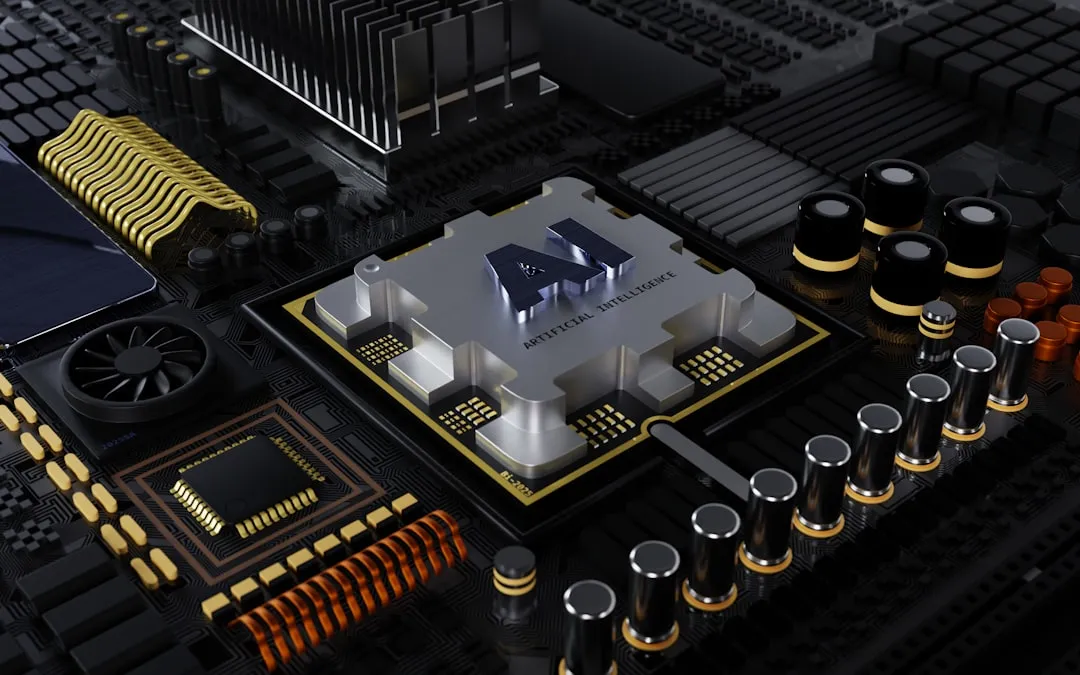
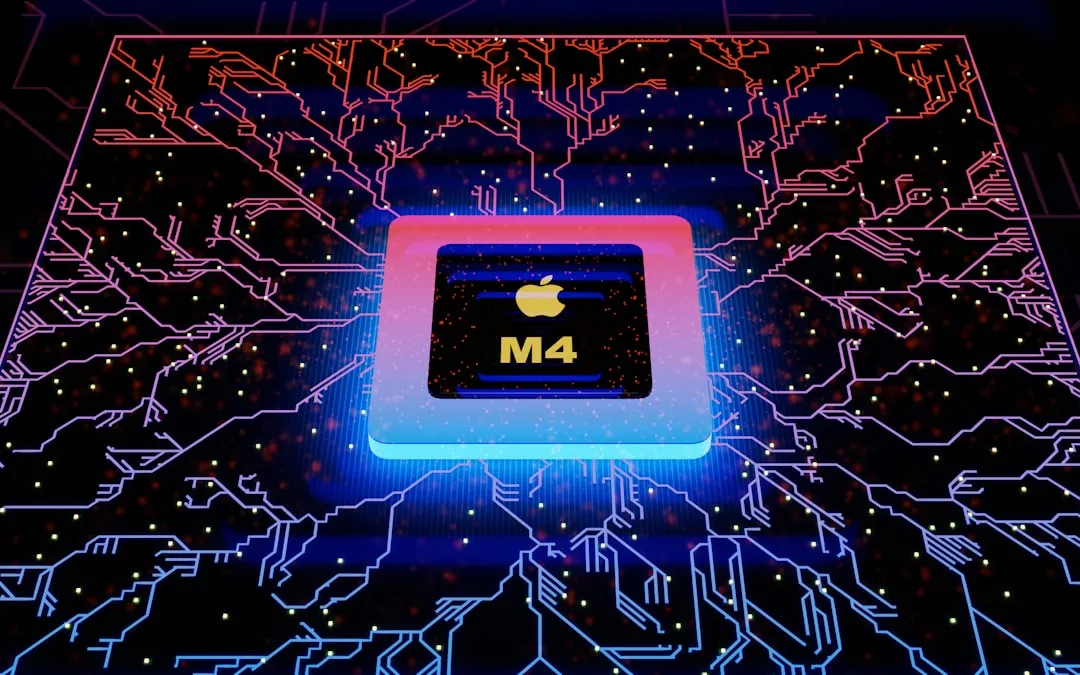
The rumor mill is buzzing with something that would have seemed impossible just a few years ago: Intel potentially manufacturing chips for Apple devices. Recent reports from respected analyst Ming-Chi Kuo suggest that Apple could partner with Intel to produce entry-level M-series processors by 2027, marking what could be one of the most dramatic shifts in the semiconductor landscape we've seen in decades.
The potential collaboration would see Intel handling production of Apple's lowest-end M-series chips using its advanced 18A-P manufacturing process, while TSMC continues manufacturing the higher-performance variants. This partnership represents more than just supply chain diversification—it could signal Intel's manufacturing renaissance becoming a reality.
Here's what makes this particularly fascinating: Just a few years ago, Apple publicly transitioned away from Intel processors, citing manufacturing delays and performance limitations. Now we're potentially witnessing Intel's comeback story, with the company positioning itself as a credible foundry partner for the very company that once walked away.
What's driving this potential partnership?
The strategic motivation behind this rumored collaboration runs deeper than typical supplier diversification. Let's break down the compelling factors that could be pushing both companies toward this unlikely alliance.
PRO TIP: For tech investors and industry watchers, this partnership represents a perfect case study in how geopolitical considerations are reshaping global supply chains.
First, there's the advanced manufacturing angle. Apple plans to use Intel's 18A process because it represents the earliest available sub-2nm advanced node manufactured in North America. This isn't just about having another supplier—it's about accessing cutting-edge technology on American soil, which carries significant strategic value given current geopolitical tensions.
The volume commitment is substantial enough to move the needle for Intel's foundry ambitions. Kuo estimates that Apple would allocate 15 to 20 million low-end M-series chips annually to Intel's facilities. To put this in perspective, these chips power millions of MacBook Airs, iPad Pros, and other popular Apple devices—representing significant revenue potential for Intel's foundry business.
The political dimension adds another layer of strategic value. This partnership would demonstrate Apple's support for domestic manufacturing policies while aligning with the current administration's focus on reshoring semiconductor production. It's a smart move that addresses business needs while navigating broader policy objectives.
But here's the core business driver: Apple needs a second advanced-node supplier to strengthen supply-chain resiliency. Apple's complete dependence on TSMC for critical chip production has always represented a potential vulnerability. Recent global supply chain disruptions have only reinforced the importance of diversification, even for lower-end chips that could serve as a strategic hedge.
Intel's 18A technology: ready for Apple's demands?
Here's where the technical story gets genuinely compelling. Intel's 18A manufacturing process represents a significant technological leap that could actually make this partnership viable—something that wouldn't have been possible with Intel's previous generation technologies.
Intel's 18A incorporates RibbonFET gate-all-around transistors and PowerVia backside power delivery architecture, which aren't incremental improvements—they're breakthrough innovations that could reshape chip design possibilities. The company claims 18A provides up to 25 percent higher performance or 36 percent lower power consumption compared to Intel 3, along with 30 percent improved transistor density.
What makes this timeline particularly interesting is Intel's execution. Intel entered volume production of 18A in mid-2025, making it the first manufacturer globally to reach 2nm-class production. This actually puts Intel ahead of TSMC in certain aspects of advanced manufacturing—a position we haven't seen in years.
The yield progression tells a story of improved discipline. Yield rates reached 60-65% in November and are targeted to hit 70% by the end of 2025. For context, these numbers suggest Intel has learned from its previous manufacturing challenges and is taking a more methodical approach to production ramp-up.
Intel's PowerVia backside power delivery deserves special attention for Apple's design requirements. This architecture moves power delivery to the back of the chip, freeing up valuable front-side real estate for transistors while improving power efficiency—exactly the kind of design flexibility that Apple's chip architects value for optimizing performance and power targets.
PRO TIP: When evaluating foundry capabilities, look beyond raw performance numbers to architectural innovations like PowerVia that provide design flexibility—these often matter more for custom chip designs.
Timeline and implementation challenges
The development pathway involves several critical milestones that reveal how serious both companies are about making this partnership work.
Apple has already signed an NDA with Intel and received the 18AP PDK 0.9.1GA, indicating this isn't just speculation—there's genuine technical evaluation happening with Apple's design teams already working with Intel's development tools. This level of engagement suggests the partnership has moved well beyond initial discussions into serious qualification work.
The waiting period ahead makes strategic sense. Apple is currently waiting for Intel to release more mature development tools, scheduled for the first quarter of 2026. This timeline allows both companies to work through the inevitable technical challenges that come with qualifying a new manufacturing process for Apple's demanding specifications.
The production timeline appears both ambitious and achievable. Intel could begin shipping production silicon in the second or third quarter of 2027. This would mark the first time Intel had manufactured any Apple silicon since Apple completely transitioned away from Intel in late 2023—a remarkable reversal of fortune.
The 18-24 month development window provides adequate time for both companies to address qualification requirements while maintaining Apple's quality standards. Unlike typical foundry engagements where customers adapt to available processes, Apple's involvement in process development could result in optimizations specifically tailored to their chip architectures.
Market implications and broader industry impact
The market's reaction to these rumors reveals just how transformative this partnership could be for the semiconductor industry. Rumors about the collaboration caused Intel's stock to surge over 10% on Black Friday, demonstrating investor recognition of what Apple's endorsement could mean for Intel's foundry credibility.
Beyond stock price movements, this partnership could fundamentally validate Intel's manufacturing capabilities across the broader semiconductor ecosystem. While confirmed 18A customers already include Microsoft, Amazon Web Services, the US Department of Defense, SoftBank, and Nvidia, having Apple as a customer would represent the ultimate endorsement of Intel's foundry capabilities.
The competitive implications extend far beyond Intel and Apple. TSMC has enjoyed near-monopoly power in advanced chip manufacturing for years, allowing the company to command premium pricing and favorable terms. Having Intel emerge as a credible alternative—validated by Apple's demanding requirements and high-volume production—could restore competitive balance to the foundry market.
From a geopolitical perspective, the move would support Washington's push for more domestic semiconductor manufacturing, aligning with broader national security and economic competitiveness objectives. This could encourage other major tech companies to pursue similar diversification strategies, creating a more distributed global manufacturing ecosystem.
The success of this partnership could influence major chip designers like Qualcomm, AMD, and even Nvidia to reconsider Intel as a foundry partner. If Apple proves that Intel can deliver on quality, timeline, and scale requirements, it could accelerate adoption across the industry.
What this means for the future of chip manufacturing
If this partnership materializes and succeeds, we could be witnessing the emergence of a new paradigm in semiconductor manufacturing. This collaboration reflects a shift toward more complex partnership models rather than the traditional single-supplier relationships that have dominated the industry.
The technical roadmap beyond 2027 positions Intel for potential leadership in certain manufacturing areas. Intel's roadmap extends beyond 18A to 14A in 2027, which will employ High-NA EUV lithography, potentially giving Intel a manufacturing advantage over TSMC's N2 node. This suggests Intel isn't just trying to achieve parity with TSMC—it's positioning itself to potentially leapfrog ahead in specific manufacturing capabilities.
However, execution remains the critical variable. Intel's historical delays on process node development are well-documented, and Apple has demonstrated little tolerance for manufacturing delays or quality issues. Intel must prove it has fundamentally transformed its approach to process development and manufacturing execution.
The broader implications for supply chain resilience could be transformative. If Intel successfully serves as Apple's second source for advanced chips, it could establish a template for other companies pursuing similar diversification strategies. This could lead to a more resilient global semiconductor manufacturing ecosystem that reduces concentration risk while maintaining technological advancement.
PRO TIP: For industry observers, watch Intel's execution on the 14A process timeline as a key indicator of whether the company has truly overcome its historical process development challenges.
Bottom line: The outcome of this potential partnership will determine whether Intel successfully transforms from a struggling chip manufacturer into a competitive foundry player capable of challenging TSMC's dominance. For Apple, it represents a strategic hedge that could provide both technological advantages and supply chain security while supporting domestic manufacturing policy.
If both companies can execute on their ambitious timeline and meet Apple's demanding technical requirements, we might be witnessing the beginning of a new era in semiconductor manufacturing—one where competition and geographic diversification replace the current concentration of advanced manufacturing in a single company and region. The success or failure of this partnership could reshape the entire foundry landscape for the next decade.














Comments
Be the first, drop a comment!