





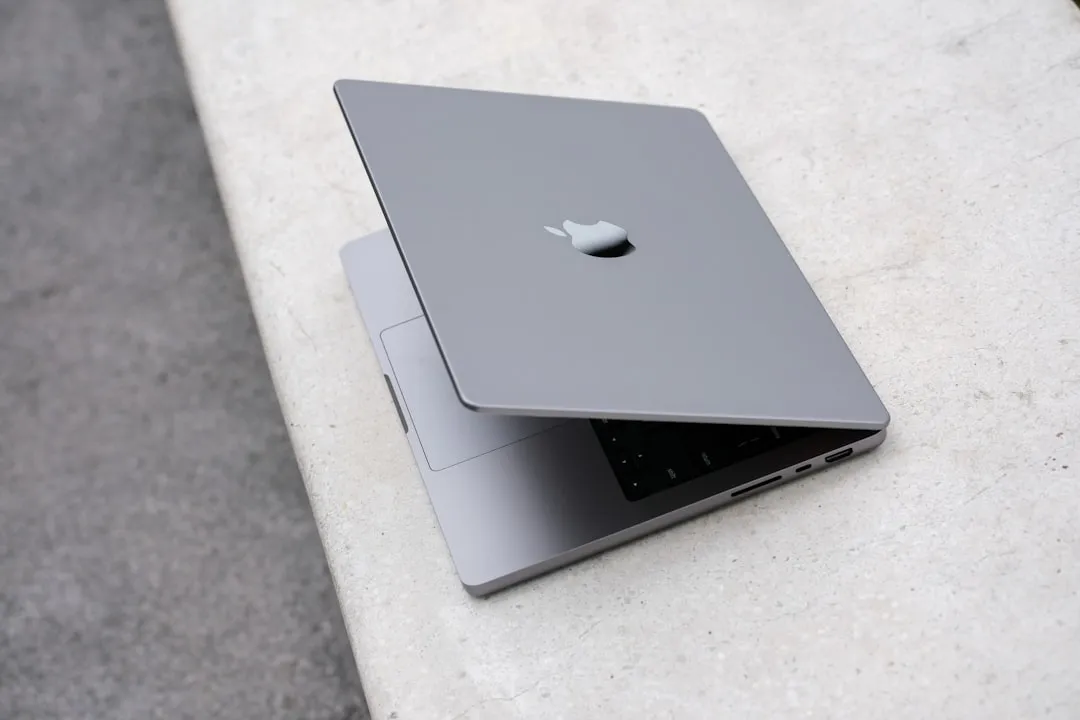
Looking at the latest MacBook Pro deal, it's hard not to get excited about what Apple is offering right now. The M5 MacBook Pro with 24GB of RAM has dropped to a record-low $1,499, which is a substantial $300 discount that's genuinely worth paying attention to. What makes this particularly interesting is the timing—the M5 chip just debuted in late October (Kotaku), making this discount unusually aggressive for such fresh hardware.
Here's what really caught my attention: this newer M5 model is now priced $200 lower than its M4 predecessor was at launch (Kotaku). You're essentially getting next-generation performance at a previous-generation price point, which doesn't happen very often in Apple's world. This pricing shift makes the M5 particularly compelling for professionals who need cutting-edge performance without the typical premium that accompanies brand-new Apple silicon.
The base M5 variant has evolved beyond being just a scaled-back version of the Max—it's now positioned as a genuinely capable standalone machine (Economic Times) that can handle serious professional workflows without requiring you to step up to the more expensive Pro or Max configurations.
What makes the M5 worth considering at this price?
The M5 chip represents more than just incremental progress from its predecessor. Built on Apple's refined third-generation 3nm process (Medium), it delivers meaningful performance improvements that show up in real-world usage. At its core, you're getting a 10-core CPU paired with a 10-core GPU (Kotaku), but the real story is in how those cores perform under demanding workloads.
The numbers tell an impressive story. The M5 delivers up to 15% better multithreaded performance compared to the M4 (Medium), with benchmark results showing the M5 scoring 17,938 in Geekbench 6 multi-core compared to the M4's 15,596 (Medium). That's solid progress, but where things get truly compelling is in specialized workloads that matter for modern professional applications.
The GPU-based AI capabilities have seen a dramatic improvement—we're talking about scores jumping from 8,602 to 23,391, making the M5 roughly 2.7 times faster than the M4 for AI workloads (Medium). For anyone working with AI-accelerated applications, machine learning tasks, or even enhanced photo and video processing that leverages on-device AI, this represents a generational leap in capability.
For creative professionals, these performance gains translate into tangible workflow benefits. The M5 can handle 179 tracks in Logic Pro compared to the M4's 144 tracks, representing a solid 24% improvement (Medium). The enhanced thermal management and efficiency gains deliver the kind of sustained, reliable performance that professionals depend on during intensive creative sessions (Economic Times).
Why 24GB RAM makes all the difference
Here's where this particular configuration becomes a standout value proposition. The 24GB of unified memory is where this deal really shines, and the reasoning goes deeper than simple "more is better" thinking. Apple's unified memory architecture means the GPU shares system memory with the CPU, so graphics-intensive tasks can consume significant portions of your available RAM (Adobe Community).
This shared approach fundamentally changes how you should think about memory requirements. You should essentially double what you'd normally consider sufficient (Adobe Community), especially if you're working with GPU-accelerated applications that can consume huge amounts of memory during processing (Adobe Community).
The practical impact becomes clear when you consider specific workflows. For professionals working with demanding applications, that extra 8GB can make a substantial difference in responsiveness and capability (Mac Observer). Video editors working in Final Cut Pro will find that while 1080p footage runs smoothly on 16GB, jumping to 4K with multiple effects often results in noticeable lag or dropped frames (Mac Observer).
The additional memory ensures sufficient processing power for both CPU and GPU operations (Mac Observer) while providing crucial headroom for future software updates that will inevitably demand more resources (Mac Observer). If you're planning to keep this machine for several years—which most professionals do—that extra capacity becomes increasingly valuable as applications become more sophisticated and memory-hungry.
Storage and display upgrades that matter
The performance story extends beyond processor and memory improvements. The M5 model includes significant upgrades in storage and connectivity that contribute meaningfully to the overall user experience. The storage subsystem has seen a particularly impressive boost, with SSD speeds roughly double those of the M4 (Medium). The 512GB SSD utilizes NVMe technology to achieve read and write speeds exceeding 5,000 MB/s (Kotaku).
Real-world testing shows the M5's storage hitting over 6 GB/s—essentially doubling the M4's performance (Medium). These storage improvements work synergistically with the increased RAM to minimize bottlenecks when working with large files, whether you're editing high-resolution video, processing RAW photos, or compiling complex code projects. The memory bandwidth has also increased significantly, reaching 153 GB/s compared to the M4's 120 GB/s—nearly a 30% improvement (Medium) that supports the increased processing capabilities without creating data transfer constraints.
The display continues to be a standout feature, with the Liquid Retina XDR panel delivering peak brightness of 1,600 nits and an impressive contrast ratio of 1,000,000:1 (Kotaku). Battery life remains excellent despite the performance improvements, with users typically seeing 15 to 20 hours of general use (Kotaku), and video playback extending to nearly 22 hours (Kotaku).
This combination of performance improvements and efficiency gains positions the M5 as a legitimate desktop replacement for many professional workflows (Medium). You're getting workstation-class performance in a portable form factor that can actually last through intensive workdays without compromising on capability.
How this deal fits into Apple's broader pricing strategy
This aggressive pricing on the M5 model reflects some notable shifts in Apple's laptop pricing approach that make this deal particularly significant. The company has implemented strategic price cuts on select models despite broader market pressures (Accio), with the MacBook Air line seeing a $100 reduction in starting prices with the M4 variants, reflecting Apple's focus on maintaining competitiveness (Accio).
Consumer interest data reveals interesting patterns in how buyers respond to Apple's pricing decisions. Search interest for 'MacBook Pro prices' peaked in August 2025, likely tied to the M4 Pro model launch (Accio), suggesting sustained interest in Pro model pricing among potential buyers. The M4 MacBook Air's price reduction has widened the gap between Air and Pro models (Accio), making this M5 Pro deal particularly attractive for users who need additional performance but want to avoid paying full premium pricing.
What makes this discount unusual is Apple's historical tendency to maintain premium pricing for Pro models regardless of component cost fluctuations (Accio). The $300 discount on such a new model breaks from that pattern significantly. For context, the 14-inch M4 MacBook Pro is currently available for $1,299 after a $300 discount (Medium), but the M5 at $1,499 with 24GB RAM and newer architecture represents better long-term value for most professional users who need the additional memory capacity.
Bottom line: Is this the right time to buy?
The M5 MacBook Pro at $1,499 with 24GB RAM represents a compelling value proposition that's unlikely to last long. This machine is engineered specifically for creator-focused workflows and excels in every area that matters for productivity and professional applications (Economic Times). The real-world performance improvements show up in actual workflows, with better thermal management and efficiency gains providing the kind of sustained, reliable performance that professionals depend on during intensive work sessions (Economic Times).
The 24GB memory configuration ensures you're not just buying for today's needs, but also preparing for increasingly demanding software and AI workloads that will emerge over the machine's lifespan (Mac Observer). If you're a professional who regularly works with 4K video, compiles applications, or runs memory-intensive creative software, the extra RAM will prove essential for maintaining smooth performance (Mac Observer).
At this price point, you're essentially getting next-generation performance with generous memory capacity at what previous-generation machines cost at launch. For anyone who's been waiting for the right moment to upgrade to Apple's latest silicon, this record-low pricing creates a window of opportunity that's worth serious consideration. The combination of cutting-edge AI capabilities, substantially improved storage performance, and the peace of mind that comes with 24GB of unified memory makes this deal particularly attractive for professionals who depend on their machines for demanding creative and technical work.












Comments
Be the first, drop a comment!