



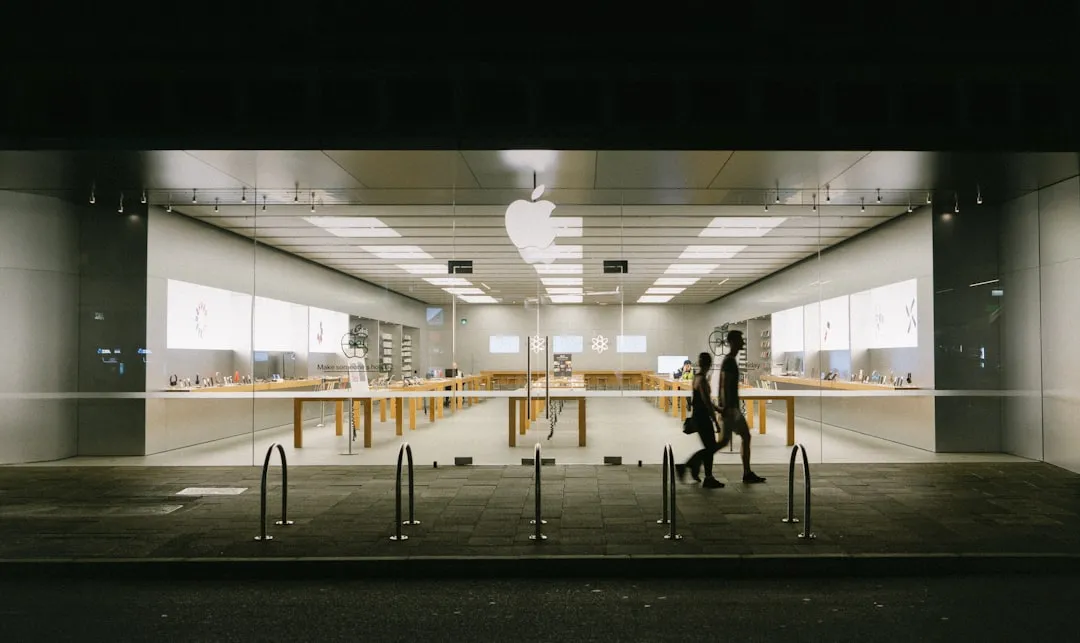
Looking at the reaction inside Apple headquarters when Alan Dye announced his move to Meta, you'd think the company just won a major victory rather than lost a key executive. Sources indicate Apple employees were actually celebrating when news of the departure broke—a response that reveals something fascinating about the current state of Apple's design culture and the broader transformation happening at the company.
This isn't your typical executive departure story. When Meta officially welcomed Dye to lead a new creative studio within Reality Labs, the move represented more than just another high-profile defection—it's a window into Apple's carefully orchestrated reset as Tim Cook prepares for his eventual transition and John Ternus prepares to take the helm.
What made Dye's exit so different from other departures?
The timing and circumstances surrounding Alan Dye's departure tell a story that goes beyond typical corporate reshuffling. Meta officially welcomed Dye to lead a new creative studio within Reality Labs, where he'll focus on AI-powered devices and spatial computing experiences. Mark Zuckerberg announced this hire directly on Threads, emphasizing how the new studio will merge design, fashion, and technology.
But here's what makes this departure truly unusual: Apple's internal response. Tim Cook's official statement notably omitted any eulogy for Dye, instead quickly pivoting to highlight his replacement, Stephen Lemay. This swift transition suggests the departure was not only anticipated but potentially welcomed by leadership—a stark contrast to the usual corporate mourning that accompanies major executive exits.
The writing had been on the wall for months. Dye's final months at Apple were marked by the controversial reception of iOS 26's "Liquid Glass" design language, which faced significant criticism for poor legibility and required Apple to add transparency controls in subsequent updates. When Apple has to essentially provide an "undo" button for a major design language, you know something fundamental went wrong.
Most telling of all: his absence from the iPhone 17 keynote in September was particularly notable, especially given his prominent role in previous product launches, including the Vision Pro introduction. When a design chief suddenly disappears from Apple's carefully choreographed keynote presentations, it signals that bigger changes are already in motion.
Why were Apple employees reportedly "giddy" about the change?
The internal celebration at Apple reveals deeper cultural tensions that most of us on the outside never saw coming. Dye had been instrumental in shaping Apple's design direction for two decades, overseeing flagship products like the Apple Watch, iPhone X, and Vision Pro headset since taking control of the design studio in 2015.
Yet his recent design philosophy seemed increasingly disconnected from both user needs and internal sentiment. The "Liquid Glass" aesthetic he unveiled at WWDC in June received significant pushback, forcing Apple into the unusual step of adding user controls to reduce the visual effects. This wasn't just external criticism—it reflected internal disagreement about design priorities.
The broader context makes the employee reaction even more understandable. The departure completes the dissolution of the design team originally built by Jony Ive, with other key figures like Evans Hankey, Tang Tan, and Bart Andre having left in recent years. This suggests Apple employees were ready for a fresh design perspective that moves beyond the Ive era's sometimes form-over-function approach.
What makes this reaction particularly revealing is Apple's culture, where employees are deeply invested in user experience. When design choices compromise usability—like making interface elements harder to read for the sake of visual innovation—it creates genuine internal friction. The "giddy" response suggests many Apple employees felt Dye's experimental design philosophy had drifted too far from Apple's core principle of intuitive, user-friendly design that actually serves people rather than impressing other designers.
How does this fit into Apple's broader leadership transition?
Here's where the story becomes truly fascinating: Dye's departure isn't happening in isolation—it's the final piece of a comprehensive organizational transformation. Sources close to the board indicate this is a carefully orchestrated succession strategy, rather than a crisis of departing talent.
The master plan centers on this timeline: Tim Cook is reportedly preparing to step down as CEO as early as 2026, transitioning to an Executive Chairman role similar to Jeff Bezos at Amazon. John Ternus, currently Senior Vice-President of Hardware Engineering, has been consolidating power over the past 24 months in preparation for taking the CEO role.
The wave of executive departures suddenly makes sense when viewed through this lens. Jeff Williams retiring in November 2025 and Luca Maestri stepping down as CFO in January 2025 aren't random departures—they're strategic moves to clear the organizational chart for Ternus's leadership team.
Consider this staggering fact: In the final quarter of 2025 alone, Apple has lost its design chief, COO, CFO, and key architects of Apple Silicon. At any other company, this would trigger panic among investors and analysts. But this appears to be "Apple 2.0" in the making—a planned transformation rather than an uncontrolled exodus that prepares the company for its next chapter under fundamentally different leadership.
What does this mean for Apple's design future?
Stephen Lemay's appointment as the new vice-president of human interface design signals what could be the most significant shift in Apple's design philosophy in over a decade. Cook's statement emphasized Lemay's key role in Apple's design since 1999, suggesting a return to Apple's pre-Ive design roots—an era when usability and functionality took precedence over pushing visual boundaries for their own sake.
This represents a fundamental philosophical shift. Lemay brings continuity with design principles that prioritized user needs over artistic experimentation. The internal celebration of Dye's departure likely reflects hope for design leadership that balances innovation with practical usability—exactly what users have been demanding after the Liquid Glass controversy demonstrated how design-for-design's-sake can backfire when it impacts core functionality.
The organizational implications extend beyond individual appointments. The leadership structure after Cook's transition will include peers of Ternus rather than mentors, creating a more collaborative and less hierarchical design process. This structural change could lead to more pragmatic design decisions that systematically balance breakthrough innovation with user experience—addressing the disconnect that led to employee frustration with recent design directions.
What's particularly promising is that this transition appears designed to restore Apple's reputation for intuitive design that "just works" rather than design that requires explanation or adaptation from users.
What this really tells us about Apple's transformation
The employee reaction to Dye's departure reveals something profound about Apple's cultural evolution and strategic positioning for the next decade. This organizational renovation isn't just about changing personnel—it's about fundamentally reshaping Apple for its next chapter.
This transformation is creating a leaner, more corporate, and more efficient Apple, moving away from the design-centric culture that defined the Jobs and early Cook eras. The strategy appears to be planned organizational renovation, preparing the company for success under Ternus's leadership with a focus on operational excellence and user-centered design rather than artistic statements.
Interestingly, Dye's move to Meta represents perfect timing for both companies. Meta's new studio will treat intelligence as a design material for human-centered innovation, which may actually be an ideal fit for Dye's experimental design approach. Meta needs bold visual innovation as it builds entirely new product categories, while Apple appears ready to prioritize functional design that serves existing users over design that pushes boundaries.
Bottom line: The "giddy" reaction from Apple employees tells us everything we need to know about where the company is heading. They're ready for design leadership that puts users first, ready for innovation that enhances rather than complicates their daily experience, and ready for Apple's next era under leaders who understand that great design solves problems rather than creating them. When your own employees celebrate a major departure, it's because they believe better things are coming—and in Apple's case, that optimism appears to be well-founded as the company positions itself for sustained success in the post-Cook era.








Comments
Be the first, drop a comment!