





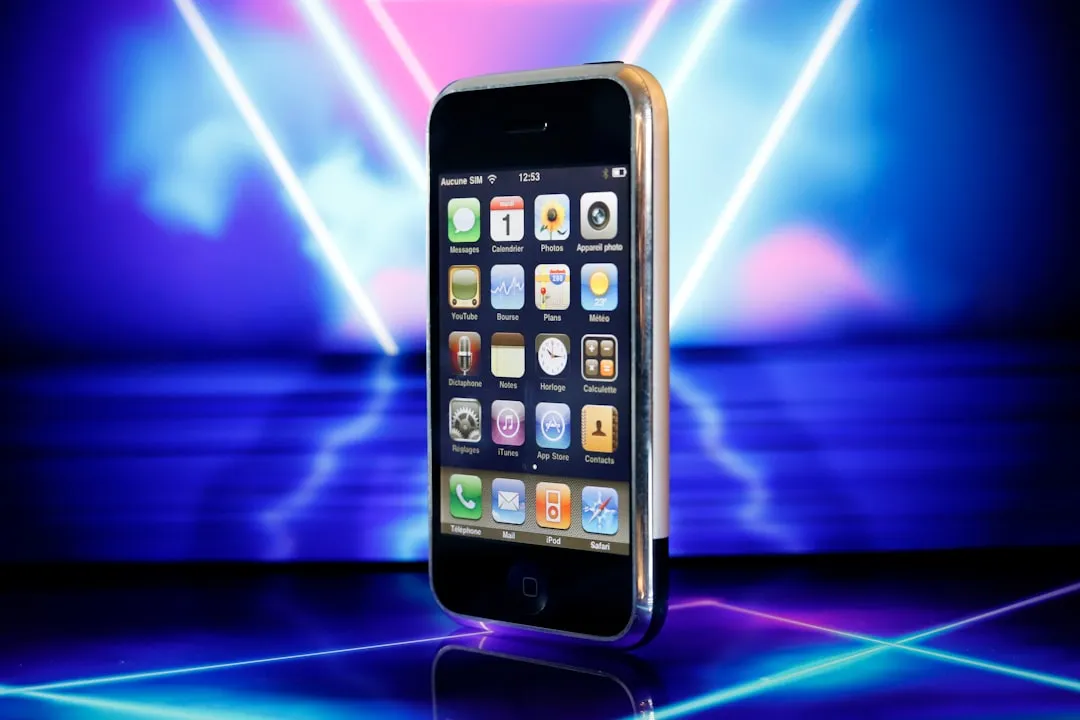
20th Anniversary iPhone All-Screen Display: 2027 Roadmap and Risks
Apple still plans to ship a 20th anniversary iPhone all-screen display with no visible cutouts, no Dynamic Island, and every front-facing sensor buried beneath uninterrupted glass. What changed this week is how much confidence anyone should have in the path to get there.
A report from MacRumors on Monday cites Weibo leaker Fixed Focus Digital saying Apple is "far from" a full-screen iPhone and that under-display Face ID is hitting meaningful snags. In the same reporting, Digital Chat Station, a separate leaker who previously outlined the step-by-step roadmap, claims the iPhone 18 Pro's front-facing design will arrive "largely unchanged," with the Dynamic Island intact. The intermediate milestone that was supposed to prove out the technology has been pushed back.
That's a significant revision to what most observers expected through much of 2025, when Bloomberg's Mark Gurman and display analyst Ross Young both pointed toward under-display Face ID arriving with the iPhone 18 Pro as a first concrete move toward a bezel-less 2027 flagship. That stepping stone now looks uncertain.
What "all-screen" actually means
The term gets used loosely, so it's worth being precise. A true all-screen iPhone means no Dynamic Island, no selfie camera punch-hole, and no visible notch of any kind. Both the front-facing camera and all Face ID sensors would sit beneath the display, completely hidden. The panel itself is expected to be a four-sided bending OLED that wraps the glass over all edges of the device, per MacRumors' December 2025 reporting. That's a significantly more ambitious engineering target than anything in the current iPhone lineup.
How the roadmap was supposed to work, and where it's breaking
The staged plan had a clean internal logic. Under-display Face ID would debut in the iPhone 18 Pro, shrinking the Dynamic Island to a simple punch-hole for the selfie camera. The foldable iPhone would then introduce a hidden under-display selfie camera as a real-world test. Both technologies would converge in the 2027 anniversary model. MacRumors outlined that sequence in December 2025, citing the same Digital Chat Station who has now revised the iPhone 18 portion downward, which is worth keeping in mind when weighing any single leaker's claims.
Source credibility varies considerably across this story, and the hierarchy matters. Gurman, who described a "bold" 2027 Pro model making extensive use of glass, is the most reliable voice on Apple's hardware direction. Ross Young, a respected display industry analyst, corroborated the under-display Face ID timeline for 2026, as MacRumors reported in May 2025. Both are reporting on Apple's strategic direction, where they have strong track records. Near-term product specifics, which models get which features and when, come mostly from Weibo leakers filtered through aggregation sites, with decidedly more mixed results.
Under-display Face ID was predicted for the iPhone 15, then the iPhone 16. Neither materialized, as 9to5Mac noted in January 2025. The 2027 destination has stronger sourcing. The 2026 stepping stone never did.
The foldable iPhone, expected alongside the iPhone 18 Pro this fall, has been described as a testbed for under-display camera technology before it reaches the anniversary model. One complication: a report suggests the foldable may skip Face ID entirely and rely on side-button Touch ID instead, per MacRumors. If that's accurate, the foldable would test the hidden camera approach but not the hidden biometric sensor approach, which means it doesn't solve the harder problem Apple still has. The "foldable as proof of concept" narrative may be overstated.
Two engineering problems Apple hasn't publicly cracked
The all-screen redesign is a physics problem before it's a design problem. The two challenges are distinct enough to require separate solutions on separate timelines.
Under-display Face ID depends on infrared light. Apple's system projects and reads a 3D face map using IR sensors, and passing infrared through OLED display layers is, as 9to5Mac reported in January 2025, "extremely poor," making recognition slower and less reliable. A patent Apple received in early 2025 describes one potential fix: removing specific subpixels, the individual red, green, and blue emitters within each pixel, to open cleaner paths for infrared light while rerouting control lines to reduce diffraction. Other approaches under study include LTPO panels with temporarily deactivated subpixels, optical waveguide layers, and IR-pass materials, per MacRumors' technical reporting. Multiple experimental directions in parallel typically signals that no single solution has won out yet.
Under-display selfie camera is a separate problem with a discouraging public track record. Samsung shipped a 4-megapixel under-display camera in the Galaxy Z Fold 6's inner screen, then abandoned the approach on the Z Fold 7 entirely, reverting to a conventional punch-hole cutout, according to CNET's November 2025 coverage. The bar Apple faces is considerably higher. Its current selfie camera shoots at 18 megapixels with a square sensor optimized for both portrait and landscape framing. Matching that output from behind a display layer is an unsolved consumer-electronics problem at anything close to Apple's standard.
LG Innotek, an Apple supplier, has developed an under-display camera claiming to retain over 99 percent image quality, per Wccftech's December 2025 reporting. That figure applies to a 1.5-megapixel unit built for automotive use, where resolution was kept low deliberately to maximize reliability in vehicles. The underlying lens array approach may have directional relevance for the iPhone 20 bezel-less display program; the specific spec does not translate to smartphones.
If the 2026 step slips, with no under-display Face ID in the iPhone 18 Pro, Apple faces a tighter problem: converging two unresolved sensor technologies into a single flagship in under 18 months. That's the actual risk the latest leaks introduce.
What could delay the 20th anniversary iPhone all-screen display
Despite the roadmap turbulence, the case for a 2027 anniversary phone rests on something more durable than leaker speculation: supply-chain capital.
LG Display has reportedly begun preparing for mass production of OLED panels designed specifically for the anniversary iPhone, per MacObserver's reporting on Korean outlet DealSite in December 2025. Industry sources cited in that reporting say LG is considering an investment of around $300 million to modify existing production lines, with Apple said to have tentatively allocated roughly ten lines to LG for the project. The panel itself is described as a four-sided bending OLED requiring thinner encapsulation than current displays, a genuine manufacturing challenge beyond anything in the existing iPhone lineup. Companies do not commit at that scale without directional clarity from their customer.
Samsung Display, by contrast, appears focused on foldable panels for the near-term iPhone lineup. Equipment industry sources in Korea told MacObserver there is "almost no talk" of Samsung investment in the anniversary project. Samsung shipped 124 million iPhone OLED panels to Apple in 2024 and remains the dominant display supplier by volume, per UBI data cited by OLED-Info in August 2025, which makes LG's apparent lead role on the 2027 display a meaningful signal about where each supplier believes Apple is heading.
Gurman's backing of the concept remains the strongest single indicator in the category. A "bold" 2027 model with extensive glass use is consistent with everything suppliers appear to be preparing. The iPhone X parallel holds: that redesign was considered technically improbable until Apple shipped it. Apple characteristically works through hard engineering problems without announcing milestones, then delivers when the solution meets its quality bar.
Two developments in the next 12 months would raise confidence substantially. First, if the iPhone 18 Pro ships with any form of under-display Face ID, even alongside a remaining punch-hole camera, it confirms Apple has at least one of the two sensor problems resolved at shipping quality. Second, if the foldable iPhone ships with a capable under-display selfie camera and Face ID rather than a Touch ID substitution, the testbed theory gains real weight.
The inverse scenario carries real consequences. An iPhone 18 Pro with an unchanged Dynamic Island and a foldable that trades Face ID for Touch ID would mean both technologies remain unresolved heading into 2027's final development window, leaving the anniversary model to carry the full engineering risk alone.
A goal with real backing, a path that needs proving
The 2027 all-screen iPhone is not a rumor resting on wishful thinking. Supplier investment at nine-figure scale and Bloomberg-level sourcing give the concept more grounding than most Apple hardware speculation. What the reporting from this week clarifies is that the roadmap was always more fragile than it looked, dependent on staging milestones that now appear to be slipping.
The hierarchy of confidence looks like this: the destination has the strongest support; the engineering solutions for getting there remain unconfirmed at Apple's standards; the near-term intermediate steps are increasingly uncertain. That's not a reason to dismiss the 2027 phone, but it is a reason to treat any specific timeline claim as provisional until the iPhone 18 generation actually ships.
The fall 2026 cycle will be more informative than any leak between now and then. If Apple has resolved even one of the two sensor problems at shipping quality, the anniversary model becomes considerably more believable. If neither arrives, it becomes considerably more ambitious.






Comments
Be the first, drop a comment!