



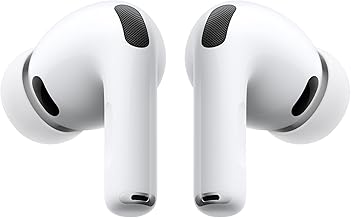


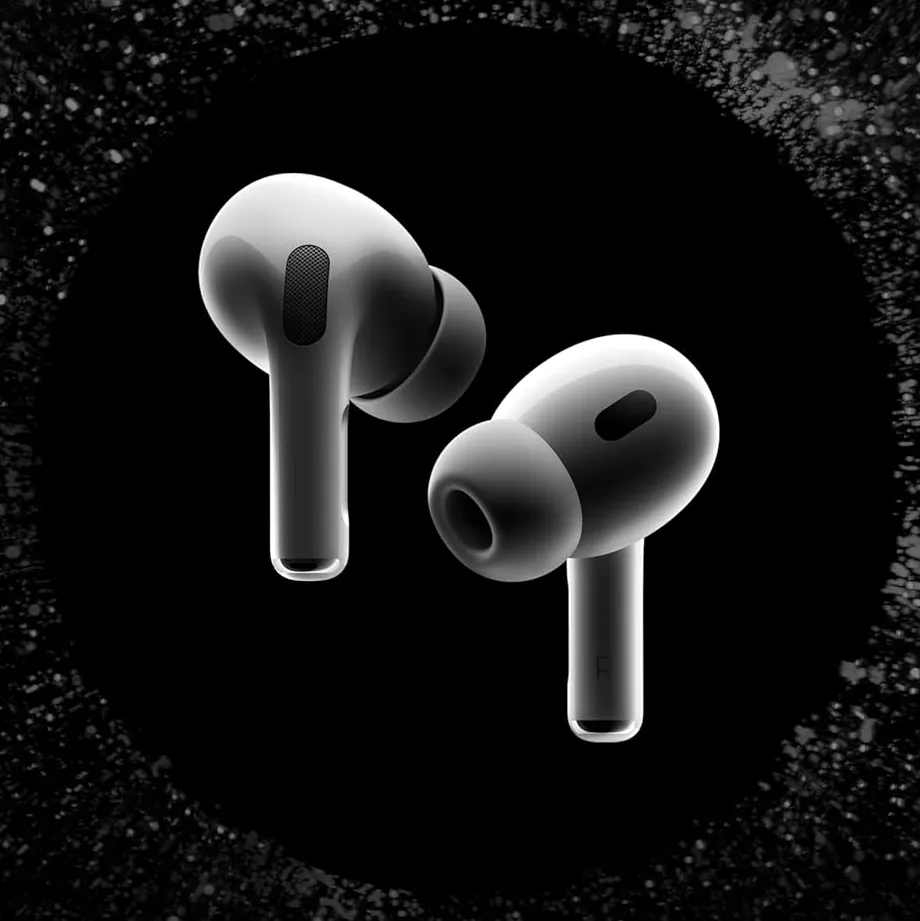
Apple's camera-equipped AirPods Pro are reportedly close to production, but Apple already delayed them once because Siri wasn't ready. That single fact tells you almost everything about this product. If Apple can make Siri see and respond reliably through a pair of earbuds, it may have found the first AI wearable people would actually use daily. If not, the cameras become a gimmick attached to an intimacy problem, and that's a harder thing to walk back than simply being late.
Prototypes of the AirPods Pro with AI-powered cameras are in design validation testing, one stage before production validation, with early mass production potentially starting soon, Bloomberg's Mark Gurman recently reported. Apple originally targeted a first-half 2026 launch, then pushed the product back because its upgraded, AI-capable Siri wasn't ready. The delay signals that Apple viewed Siri, not the hardware, as the gating factor. That's an unusually candid admission from a company that tends to announce products only when they're already finished.
The cameras themselves are not photo or video hardware. They capture low-resolution visual information fed into Siri for real-time analysis, MacRumors details. Siri sees what you see. The question is whether it understands what it's looking at fast enough to be useful.
What camera-equipped AirPods Pro would actually do
The use cases Apple is reportedly targeting are specific enough to be evaluated honestly. A user standing at a kitchen counter asks Siri what to cook with the ingredients in front of them. The AirPods capture the scene; Siri responds with a spoken recipe, no phone unlocked, no hands occupied. The cameras may also support more detailed turn-by-turn navigation by reading visual landmarks around the wearer, and could trigger reminders based on objects in the environment.
These are genuinely practical tasks. But they aren't equally hard to deliver. Navigation assistance and object lookup are relatively bounded problems with clear success criteria. Ingredient recognition in a cluttered, variably lit kitchen is harder. Context-aware reminders that fire accurately at the right moment are harder still.
Ear-level cameras have a real advantage for hands-busy situations, like cooking, walking, cycling, where pulling out a phone is awkward or impossible. The tradeoff is framing and precision. A phone camera can be pointed deliberately; AirPods capture whatever happens to be in front of the wearer. For object identification that depends on a clear, centered view, that's a meaningful constraint. Expect the first category of tasks to work reasonably well before the second does.
iOS 27's Camera app is also reportedly getting a Siri visual mode, letting users scan nutrition labels and query objects through their iPhone. Apple is building the habit before the hardware ships. That's smart product sequencing, not just a feature announcement.
Why Siri is the only variable that matters now
The hardware is close. Siri is not, or wasn't as of the delay that pushed this product out of the first half of 2026. Apple's improved Siri is now said to be "on track" for September alongside iOS 27, with the camera AirPods potentially launching in that same window, says reports. Apple has also retained the option to delay the hardware again if it isn't satisfied with the Visual Intelligence feature quality. That's not boilerplate, it's policy, and Apple has already exercised it once.
The interaction model sets a higher bar than most voice AI encounters. A recipe suggestion that takes five seconds feels broken in an earbud. Smart glasses get some forgiveness on latency because the user is already looking at something; with AirPods, the request is fully voice-driven and the response hangs in dead air. Users calibrate their tolerance against the medium. Dead air in an earbud is a specific kind of awful.
There's also a real evidence gap worth naming directly. No public data currently exists on recognition accuracy, response latency in motion or low light, or how the system performs in noisy real-world environments. The use cases Gurman describes are design intentions, not field results. Fitting cameras into earbud stems required extreme miniaturization and power management tradeoffs, and no public testing data yet shows how battery life or heat hold up under sustained visual processing. Design validation and performance validation are two different things.
The standard to hold this product to is specific: Does Siri identify common objects correctly on the first attempt in non-ideal conditions? Does it respond fast enough that the interaction feels natural? Does it handle follow-up questions without requiring the user to reframe the whole query from scratch? And does it work without forcing the wearer to awkwardly aim their head at a target like a surveillance camera on a slow pivot? Demo conditions won't answer any of that. Live, unscripted use will.
The right form factor, and the privacy tradeoff it creates
Apple's decision to build ambient visual AI into AirPods rather than glasses or a new pendant is the strongest product strategy move available to them. Meta's Ray-Ban glasses have shown that some users will accept camera wearables, but they require a deliberate fashion choice; you are visibly wearing camera glasses, and everyone around you can see that. AirPods are already a market-leading device worn across demographic groups without any AI context. Apple is also developing smart glasses and an AI pendant, both potentially targeting as early as 2027, The Verge reported. Camera AirPods arrive first and skip the adoption fight entirely. That's a structural advantage, not a minor one.
The privacy problem is the inverse of what makes the form factor attractive. Apple plans a small LED indicator on the stems that illuminates when visual data is being fed to the cloud. The intention is right. The execution is likely insufficient.
A 2024 ACM study on camera glasses found that wearers themselves considered the devices' privacy indicators ineffective. The physical design concealed the recording capability from bystanders, and wearers reported feeling personally responsible for protecting the people around them because the product provided no meaningful protection on their behalf. A small LED on an earbud stem is easier to miss than one on a pair of glasses.
The standard counterargument is that smartphones already capture the world constantly, so ambient recording is nothing new. That's partially true. But phones are held visibly, and the act of capture is deliberate and legible to anyone nearby. Earbuds are passive and worn continuously. The person next to you at a coffee shop cannot tell whether your AirPods are actively sending visual data to a server. That asymmetry is exactly what makes an indicator light necessary, and exactly what makes it insufficient on its own.
To Apple's credit on the data-handling side: a 2025 peer-reviewed analysis of 17 wearable manufacturers found Apple received only two "high risk" ratings across 24 privacy evaluation criteria, among the lowest in the group. Apple's data practices are better than most of its wearable competitors. That doesn't resolve the social norm question. The harder issue is behavioral and cultural, and no product announcement resolves that.
What September can and cannot prove
September is the next likely checkpoint for both the upgraded Siri and the camera AirPods. Apple's push into AI-infused hardware puts it in direct competition with Meta, which has had success with its smart glasses, and could give the company a leg up on OpenAI, which is reportedly developing a phone. The timing logic is sound. The execution risk is still Siri.
When Apple shows this product, watch whether the demonstrations are live or pre-scripted. Watch whether Siri responses arrive fast enough that the interaction feels natural rather than rehearsed. Watch whether the system handles objects accurately in imperfect lighting, and whether follow-up questions work without restarting the whole query. A polished demo in a controlled kitchen with a curated set of objects tells you almost nothing. An unrehearsed demonstration in a realistic, messy environment tells you almost everything.
Camera AirPods are, on paper, the most credible AI wearable anyone has proposed. They don't require new habits, new fashion decisions, or new devices. The argument that they become a genuinely useful daily tool is reasonable. The argument that it's guaranteed is not. Apple has already moved the goalposts once, and explicitly reserved the right to do it again.
The camera is not the feature. Siri is the feature. The camera is just how Siri sees.


Comments
Be the first, drop a comment!