



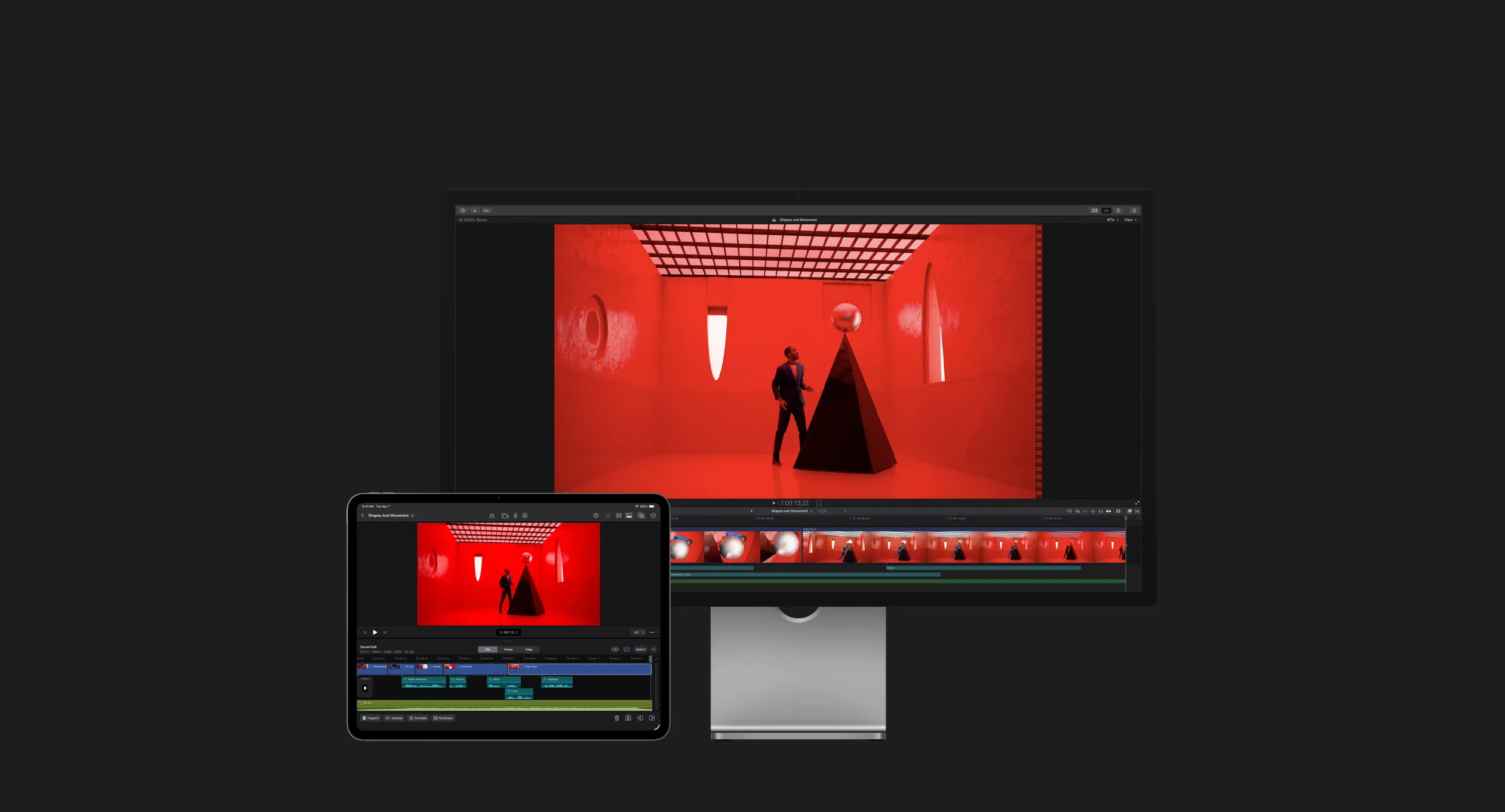
Apple has acquired MotionVFX, the Warsaw-based plugin developer that spent 15 years building the color grading, 3D workflows, and AI tools that Final Cut Pro lacked natively. The MotionVFX acquisition reportedly brings 70 employees into Apple and is aimed at attracting more subscribers to Creator Studio, the $12.99/month bundle Apple launched in January. Apple declined to comment and has not disclosed deal terms.
MotionVFX confirmed the deal on its own website. "We are extremely excited to share that MotionVFX is joining the Apple team to continue to empower creators and editors to do their best work," the company said. No product roadmap or timeline for changes has been announced.
The deal closed roughly two months after Creator Studio launched. That bundle packages Final Cut Pro, Logic Pro, Pixelmator Pro, Motion, Compressor, and MainStage for $12.99/month. MotionVFX's standalone packages started at $29/month for tools serving the same audience. Adobe Creative Cloud and DaVinci Resolve both start at $29/month as well. The price gap is significant on paper; the question is whether the bundle's feature set can justify the comparison.
What MotionVFX built and why Final Cut Pro needed it
Start with the specific tools Apple now owns, because that's where the deal's significance sits.
mFilmLook handles cinematic color grading and film emulation. Color correction is where DaVinci Resolve arguably holds its sharpest competitive edge over Final Cut among professional editors. Resolve built those tools natively; Final Cut users have historically needed plugins to get anywhere close. mFilmLook existed precisely because that gap was real and paying customers wanted to close it.
Then there's mO2, a plugin that lets editors work with 3D models directly inside Final Cut Pro and Apple Motion. Reports identify a 3D model plugin called mO3 as part of the current catalog; the naming discrepancy between sources hasn't been resolved against MotionVFX's own product pages, so the specific version number should be treated with caution. The capability itself, 3D asset integration inside Final Cut, is confirmed across multiple outlets.
Design Studio rounds out the key products. It's a panel extension that lets editors browse and install effects and templates without leaving Final Cut Pro. Think of it as a curated in-app marketplace: the kind of seamless asset-browsing experience Apple would want to own rather than route through a third party. The suite also reportedly includes AI-powered upscaling and automated captions, rounding out a catalog that covers most of the feature categories where Final Cut has trailed its competitors.
MotionVFX was founded by Szymon Masiak in 2009 and built these tools not just for Apple's apps but for DaVinci Resolve as well. A 70-person company in Warsaw spent 15 years filling specific gaps that Apple's own engineering teams left open. That breadth is what makes the acquisition more significant than the headcount suggests.
What the Apple MotionVFX deal means for Final Cut Pro color grading and Creator Studio
Apple has done this before. The 2024 acquisition of Pixelmator helped make Creator Studio viable by bringing Pixelmator Pro into the bundle as a native offering rather than a separate paid app. The MotionVFX deal follows the same logic, on a larger scale and with more technically specialized products.
The subscription math is straightforward enough. A Final Cut Pro user who wanted professional color grading, 3D workflows, and an in-app asset library on top of Creator Studio was previously looking at stacking a $29/month MotionVFX subscription on top of $12.99/month. That's over $40/month before touching any other tool. Fold those capabilities into Creator Studio, and the bundle's value argument changes considerably.
CNBC reported that the acquisition is expected to allow Apple to integrate MotionVFX's capabilities directly rather than continuing to route users through third-party extensions. That framing points toward native feature additions rather than a scenario where the tools get rebadged and kept behind a separate paywall. Apple hasn't confirmed specifics, and no timeline exists.
MotionVFX's plugin catalog remains available through its marketplace for now. "For now" is doing real work in that statement. After the Pixelmator acquisition, the app was folded into Creator Studio as a bundled offering. Existing MotionVFX subscribers should treat the current availability as a transitional state, not the end state, even if Apple hasn't said so directly.
What happens next for Final Cut Pro users and the plugin ecosystem
For current Final Cut Pro users, the most concrete signals will come from product announcements. WWDC is the obvious venue, or a Final Cut Pro update that quietly adds capabilities sourced from the MotionVFX team. Based on what's been reported, color grading tools, in-app asset browsing, and AI features like upscaling and captions are the most likely candidates to surface first. CNBC's framing of direct integration over third-party extensions is the clearest directional signal available.
For Creator Studio subscribers, the practical question is whether the bundle's value expands meaningfully in the next 12-18 months, as it did when Pixelmator Pro arrived. The bundle's most persistent criticism from serious editors has been that professional color and effects work still requires spending extra on third-party tools. If the MotionVFX catalog gets absorbed, even partially, that criticism becomes substantially harder to sustain.
The less resolved question involves the wider plugin ecosystem. MotionVFX built tools for DaVinci Resolve as well as Apple's own apps. Whether Apple continues supporting those Resolve-facing products or winds them down is unknown. Apple has no particular incentive to keep supporting a competitor's users, but it also hasn't announced any changes. Resolve users who relied on MotionVFX tools are reasonably in a holding pattern.
The broader signal for independent Final Cut Pro plugin developers is harder to dismiss. MotionVFX was the most prominent third-party presence in the Final Cut ecosystem. Its catalog covered color grading, 3D integration, AI tools, and in-app asset delivery, essentially the full stack of premium capabilities that independent developers have built businesses around. Apple just brought all of that in-house.
Three things will define what the Final Cut Pro ecosystem looks like on the other side of this: which MotionVFX capabilities become native Final Cut features versus optional add-ons, what happens to existing MotionVFX subscriptions, and whether they get folded into Creator Studio pricing, and how the independent plugin market responds to losing its anchor tenant. Apple hasn't answered any of those questions. When it does, the answers will say a lot about whether Creator Studio is becoming a genuine professional platform or just a well-priced bundle still waiting for the tools to catch up.







Comments
Be the first, drop a comment!