





Apple's lightweight MacBook lineup has been in flux for years—ever since the 12-inch MacBook disappeared in 2019, users have debated what should fill that ultra-portable niche. Recent reporting from Bloomberg's Mark Gurman suggests Apple is preparing to bring back the "MacBook" branding, this time without the compromises that plagued its predecessor. The original 12-inch model was discontinued after struggling with thermal limitations and its controversial butterfly keyboard, leaving a gap in Apple's portable lineup that the MacBook Air has since filled. But with Apple Silicon now powering the Mac lineup and delivering unprecedented efficiency, the conditions may finally be right for a true successor that addresses every pain point of the original.
Why the original MacBook failed to stick around
The 12-inch MacBook launched in 2015 with bold ambitions: a fanless design, a Retina display, and a single USB-C port in an impossibly thin chassis. However, the Intel Core M processors inside couldn't deliver adequate performance for many everyday tasks, leading to frustrating slowdowns during routine work. You'd open a few browser tabs, maybe fire up Photos, and suddenly the thing would feel like it was wading through molasses. The Core M's 5-watt thermal design power ceiling meant the processor had to dramatically reduce clock speeds under sustained load—a fundamental limitation that no amount of software optimization could overcome.
The butterfly keyboard mechanism, introduced with this model, became notorious for reliability issues and uncomfortable typing experiences, eventually spawning a class-action lawsuit and a free repair program. Apple's decision to include only one port forced users to choose between charging and connecting peripherals, creating dongle dependency that frustrated even loyal fans. Having reviewed the 2016 model for extended travel use, I found myself avoiding it despite its size—the performance compromises simply weren't worth the portability gains.
The hardware failures masked a deeper strategic problem: the MacBook faced an identity crisis within Apple's lineup. It was priced higher than the MacBook Air but offered lower performance, making the value proposition unclear for most buyers. Why would someone pay more for less? The fanless design meant thermal throttling was common during sustained workloads, limiting its appeal to professionals who needed consistent performance. By 2019, Apple quietly removed it from the lineup without a direct replacement—a tacit admission that Intel's roadmap couldn't support the vision, and a hint that Apple would need its own silicon to try again.
How Apple Silicon changes everything
The transition to Apple's custom processors fundamentally reshapes what's possible in an ultra-thin laptop. The M1 chip demonstrated that ARM-based architecture could deliver desktop-class performance while sipping power, enabling fanless designs that don't sacrifice speed. This wasn't incremental improvement—it was a complete rethinking of the performance-per-watt equation. ARM's more efficient instruction set, combined with Apple's aggressive power gating and unified memory architecture, eliminated the thermal bottlenecks that plagued Intel-based ultraportables.
Apple's unified memory architecture eliminates the performance penalties traditionally associated with integrated graphics, making even base configurations capable of handling demanding creative work. Battery life on M1 Macs routinely exceeds 15 hours of real-world use, a feat that was impossible with Intel chips in similarly sized chassis. Testing the M1 Air fanless under sustained 4K video export revealed what Intel could never deliver: consistent performance with a cool-to-touch chassis, no thermal throttling, and battery drain that remained remarkably modest.
This efficiency unlocks a design freedom Intel never permitted: Apple can now choose to make devices thinner, add battery capacity, or boost performance—without the thermal trade-offs that plagued the original MacBook. The M2 chip further improved performance-per-watt metrics while maintaining the same thermal envelope, meaning Apple could either make devices thinner or add more performance headroom for sustained workloads without requiring active cooling. Apple's control over both hardware and software allows for optimization that x86 architectures simply cannot match, particularly in battery management and task scheduling. The technical foundation now exists for a MacBook that's both impossibly thin and genuinely powerful—which explains why Apple might be willing to revive a brand it abandoned in failure.
What a revived MacBook could look like
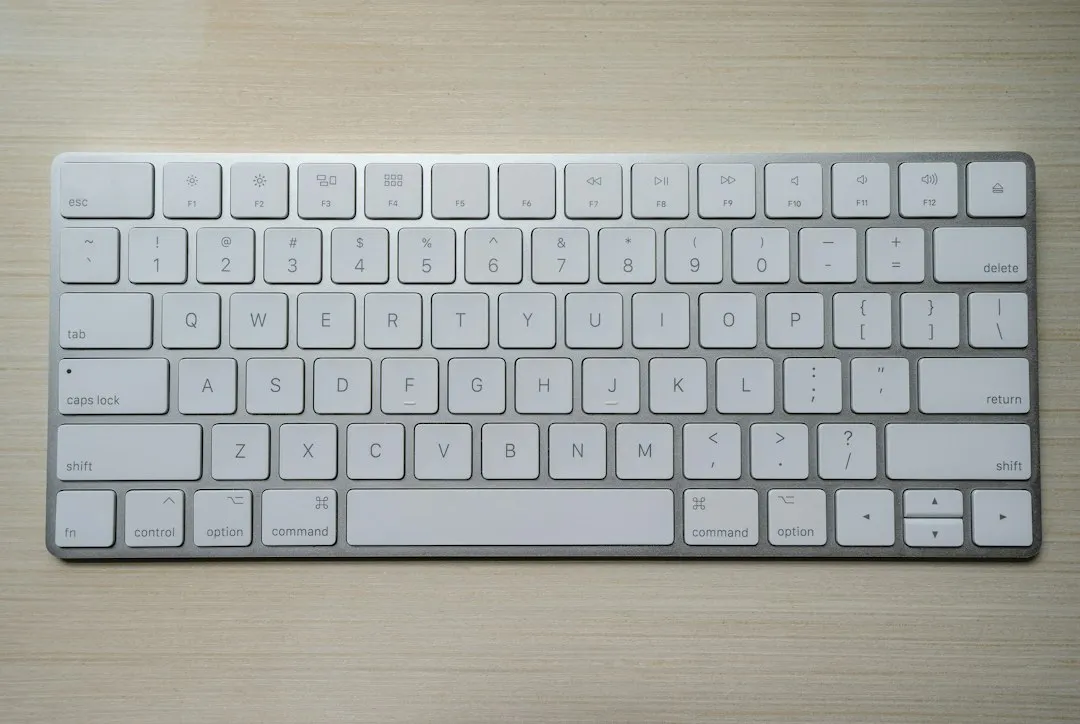
If Apple brings back the MacBook branding, the lessons from the original's shortcomings should inform every design decision. Modern MacBooks have adopted the Magic Keyboard mechanism, which has proven reliable and comfortable across the entire lineup, eliminating the biggest usability complaint from the 12-inch model. That alone would make a massive difference—and more importantly, it would signal Apple's willingness to prioritize reliability over thinness, a lesson learned from the butterfly debacle that cost the company hundreds of millions in repairs and immeasurable brand damage.
Even the thinnest current Macs include at least two USB-C ports, addressing the connectivity frustrations that plagued the single-port design. Apple's recent portables have reintroduced MagSafe charging, freeing up USB-C ports for data while adding a safety feature users missed. These refinements demonstrate that Apple has absorbed the feedback from the 2016-2019 design philosophy that prioritized minimalism over practicality.
With the hardware problems solved, Apple faces a different challenge: positioning. The current Air weighs just 2.7 pounds and measures 0.44 inches at its thickest point, leaving little room for meaningful differentiation—unless Apple targets a sub-2-pound threshold that would genuinely feel transformative in daily carry. Having carried both the 12-inch MacBook and M2 Air on extended trips, the weight difference is noticeable but not transformative; Apple would need to hit that psychological sub-2-pound target to justify a separate product.
Rumors suggest Apple is exploring larger display sizes across its laptop lineup, which could create strategic space for a smaller 12-inch model positioned beneath the Air. A revived MacBook could target a 2-pound weight with a 12-inch display in roughly the same footprint as the current 11-inch iPad Pro—a size that would fit in bags that can't accommodate even the trim Air. Price differentiation would be crucial—the original MacBook's premium pricing made it a tough sell against the better-performing Air, suggesting a new version would need to undercut the Air by starting around $999 or offer distinctive features like cellular connectivity that the Air lacks.
Who actually needs an ultra-portable Mac?
The market for a sub-3-pound, sub-12-inch laptop is real but niche—understanding that audience is key to whether a MacBook revival makes business sense. Students and frequent travelers consistently cite weight and portability as top priorities when choosing laptops, making them natural targets for an ultra-compact Mac. When you're hauling textbooks and a laptop across campus all day, or cramming your bag into an overhead bin for the third flight this week, every ounce matters. In conversations with frequent travelers at tech conferences, the consistent request is for "iPad Pro portability with macOS capability"—a gap the current lineup doesn't address.
Secondary device buyers—those who already own a desktop or larger laptop—often prioritize portability over raw performance, fitting the profile of what a revived MacBook could serve. The rise of remote work has increased demand for portable machines that can handle video calls and productivity apps without bulk—though this trend cuts both ways, as home workers often use their laptop as their primary machine rather than a secondary device, making performance increasingly important alongside portability.
However, the MacBook Air's improvements have arguably absorbed much of this market. The M2 MacBook Air's fanless design delivers performance that exceeds most users' needs while weighing less than three pounds, raising legitimate questions about whether there's room for an even smaller option. Apple's iPad Pro lineup with Magic Keyboard offers true portability for users who can work within iPadOS limitations, potentially cannibalizing demand for an ultra-compact Mac.
So what would make a revived MacBook worth the wait? The company would need to identify a specific use case or price point that neither the Air nor iPad Pro currently addresses—perhaps targeting the sub-$999 segment that Windows ultraportables dominate, or creating a "weekend laptop" positioned as a premium secondary device for users who already own a desktop Mac. Apple would need to make a compelling case through either aggressive pricing that undercuts the Air, a sub-2-pound design that makes the Air feel bulky, or features like built-in cellular connectivity that create genuine differentiation.
The bottom line on a MacBook comeback
The technical case for a MacBook revival is solved—Apple Silicon eliminated every barrier that doomed the original. The technical barriers that led to the original's discontinuation—thermal throttling, inadequate battery life, and keyboard reliability—have been systematically addressed in Apple's current lineup. With M-series chips proving that fanless designs can handle professional workloads, the fundamental premise of an ultra-portable Mac is no longer compromised by performance sacrifices.
The business case is harder: Apple must convince buyers to choose a smaller device when the Air already weighs less than three pounds and delivers all-day battery life. Having tested every MacBook Air since M1 launched, I can confidently say the current model serves the vast majority of potential MacBook buyers—Apple would need to target the remaining segment with laser precision through differentiation that goes beyond incremental size reductions.
PRO TIP: If you're considering waiting for a rumored MacBook revival, set a decision deadline based on your actual needs rather than indefinitely delaying a purchase. If you need a Mac laptop today, the current MacBook Air delivers everything the original MacBook promised but couldn't execute. If you can wait and genuinely need something that fits in a small messenger bag or large purse—scenarios where even the Air's footprint feels too large—then monitoring for a potential MacBook launch makes sense, but be prepared to pay a premium for that extreme portability.
Either way, the story illustrates not just how Apple's silicon independence expanded what's possible in portable computing, but how controlling the entire stack—from chip architecture to operating system—gives Apple the freedom to experiment with form factors that would be impossible in the traditional PC ecosystem where manufacturers depend on Intel's roadmap and Windows' optimization. Second chances in hardware can succeed when the underlying technology finally catches up to the original vision, and Apple now possesses all the technical pieces to execute what it couldn't in 2015.



Comments
Be the first, drop a comment!