






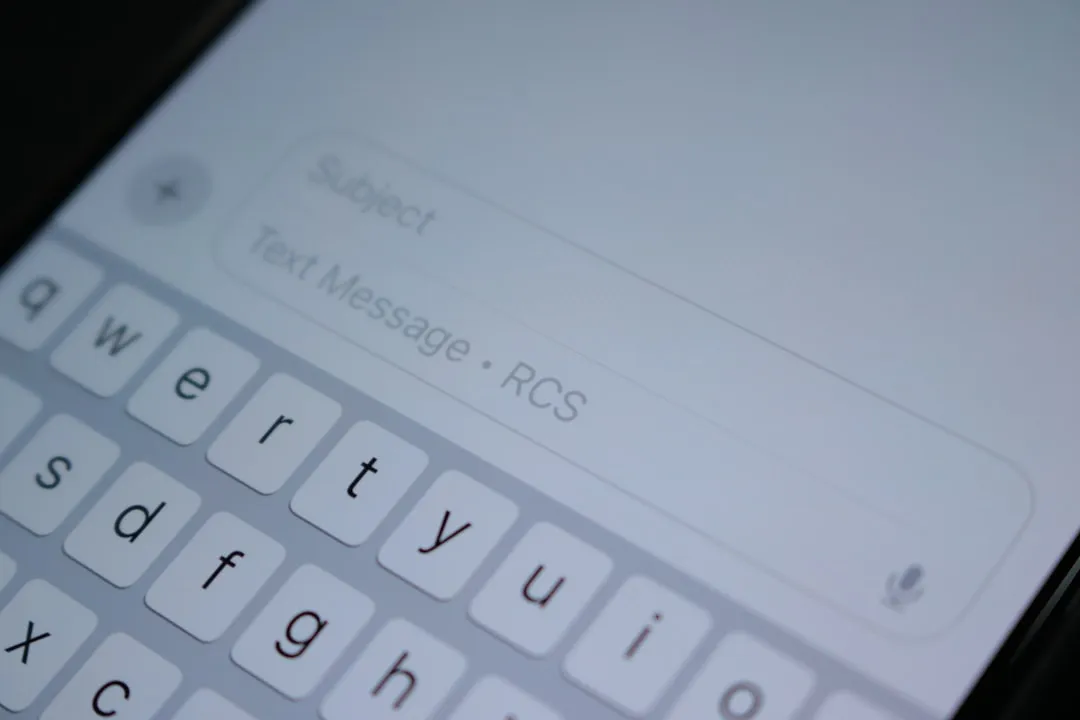
Apple has begun rolling out end-to-end encrypted RCS chats on iPhone in iOS 26.5, closing a major privacy gap in cross-platform messaging. The catch is compatibility. Updating your phone is not enough. For encryption to activate, the iPhone user must be running iOS 26.5 with a supported carrier, and the Android user must be using the latest version of Google Messages. Carrier support can still determine whether a given RCS conversation is encrypted, as reported by MacRumors. Support is not universal at launch, even though Apple's carrier list, per 9to5Mac, already includes several major U.S. and Canadian networks.
Until now, iPhone-to-Android RCS threads were not end-to-end encrypted. Those conversations did support read receipts, typing indicators, and high-resolution media sharing, per the GSMA, but content protection was absent. WhatsApp, iMessage, and supported Google Messages RCS conversations between Android users have all offered end-to-end encryption for years. Cross-platform RCS was the holdout, as Android Police noted. iOS 26.5 is designed to fix that, provisionally, with Apple's own release notes labeling the feature "beta" even as it ships in a public release.
Apple began testing E2EE support for cross-platform RCS during the iOS 26.4 beta cycle earlier this year but held the feature back from that public release, MacRumors reported. It returned in the iOS 26.5 beta and has been available throughout that testing process. iOS 26.5 is the public release that starts the rollout.
Why updating to iOS 26.5 doesn't automatically encrypt your chats
Apple's official wording is specific: "End-to-end encrypted RCS messaging (beta) in Messages is available with supported carriers and will roll out over time." Apple says end-to-end encrypted RCS in Messages requires iOS 26.5 and a carrier that supports end-to-end encryption; Apple's announcement also specifies that Android participants need the latest version of Google Messages.
This is not something the user can force in settings if carrier support is missing. It is a network support question on both ends of the conversation. The rollout is staged by design, Android Police reported, with wider carrier availability coming at an unspecified pace.
The "beta" label is worth taking seriously. Apple's beta label is best treated as a rollout caveat: the feature is public, but availability and behavior may still vary.
How to check whether encrypted RCS chats on iPhone are actually active
Once iOS 26.5 is installed, the check is straightforward. Encrypted RCS conversations display a lock icon with "Encrypted" written beneath the RCS label in the Messages thread, Android Police confirmed. The feature is on by default, but users can verify or toggle it in Settings → Apps → Messages → RCS Messaging → End-to-End Encryption (Beta).
No lock icon means the conversation is not end-to-end encrypted, which could reflect carrier support, software compatibility, or rollout timing, and the thread continues as ordinary unencrypted RCS, same as before the update.
One practical nuance: a user could have some Android contacts showing the lock icon and others not, depending on which carrier each contact uses. It will not be an all-or-nothing outcome across every thread at once. The encryption status is per conversation, not a universal mode you switch on for your phone.
On the Android side, encrypted cross-platform threads look identical to any other encrypted RCS chat in Google Messages, with no distinct visual treatment for iPhone conversations, Engadget noted. The same encryption support extends to iPadOS 26.5, macOS Tahoe 26.5, and watchOS 26.5, so the update applies across Apple's messaging apps on every platform, not just the iPhone, MacRumors reported.
For sensitive conversations where carrier support hasn't arrived yet, Signal or WhatsApp remain reliable options. Neither depends on carrier adoption.
Why this required a standards overhaul, not just a software update
The rollout only makes sense when you look at the standard Apple had to adopt first. E2EE for cross-platform RCS required a coordinated industry effort, not a unilateral decision by any single platform.
The GSMA published new RCS specifications in March 2025 incorporating end-to-end encryption built on the Messaging Layer Security protocol. Alongside existing SIM-based authentication, the organization described E2EE as delivering the highest level of privacy for RCS users, offering stronger protection from scams, fraud, and interception beyond just protecting message content in transit, the GSMA said in its newsroom announcement. Encryption became a defined component of RCS Universal Profile 3.0, developed with Apple's direct involvement, MacRumors reported.
Universal Profile 3.0 also introduced other cross-platform improvements alongside encryption, according to MacRumors: editing and deleting messages, cross-platform Tapback reactions, and inline replies within cross-platform threads. Encryption is the headline, but the spec moved the whole feature surface forward.
When Apple said in 2025 it would bring E2EE to RCS in a future software update, it was committing to implement a standard it had already helped write, Engadget reported. iOS 26.5 is that update.
The GSMA has since published Universal Profile 4.0, which adds interoperable video calling from RCS conversations for up to 32 participants, richer text formatting options, and higher-quality media exchange, according to the GSMA. Theoretically, that spec would allow iPhone and Android users to initiate video calls with each other directly from their native messaging apps, Android Police reported. Whether those features reach users depends, as with encryption now, on when Apple, Google, and carriers choose to adopt it.
That gap between finalized specification and actual deployment is the recurring pattern here. The standard for encryption was published more than a year ago. Carrier infrastructure is what's still catching up, and the same dynamic will play out for every subsequent RCS feature.
What changes now, and what's still waiting
For users on qualifying carriers, this is a meaningful privacy upgrade for a category of conversation that previously had none. iPhone-to-Android RCS threads showing the lock icon carry end-to-end encryption, meaning the message contents are protected from being read while they are sent between devices. That narrows the privacy gap with iPhone-to-iPhone iMessage threads, although iMessage remains Apple's primary encrypted messaging experience between Apple devices.
For everyone else, the update changes nothing in practice yet. The architecture for secure RCS chats between iPhone and Android now exists at both the specification level and the platform level. What remains is deployment, and on that, no firm timeline exists.
The primary question for users going forward is not what Apple or Google have built. It is which carriers have actually enabled the standard, and when. Apple added RCS support to the iPhone with iOS 18. The encryption spec was published over a year later. iOS 26.5 brings the platform implementation.




Comments
Be the first, drop a comment!