





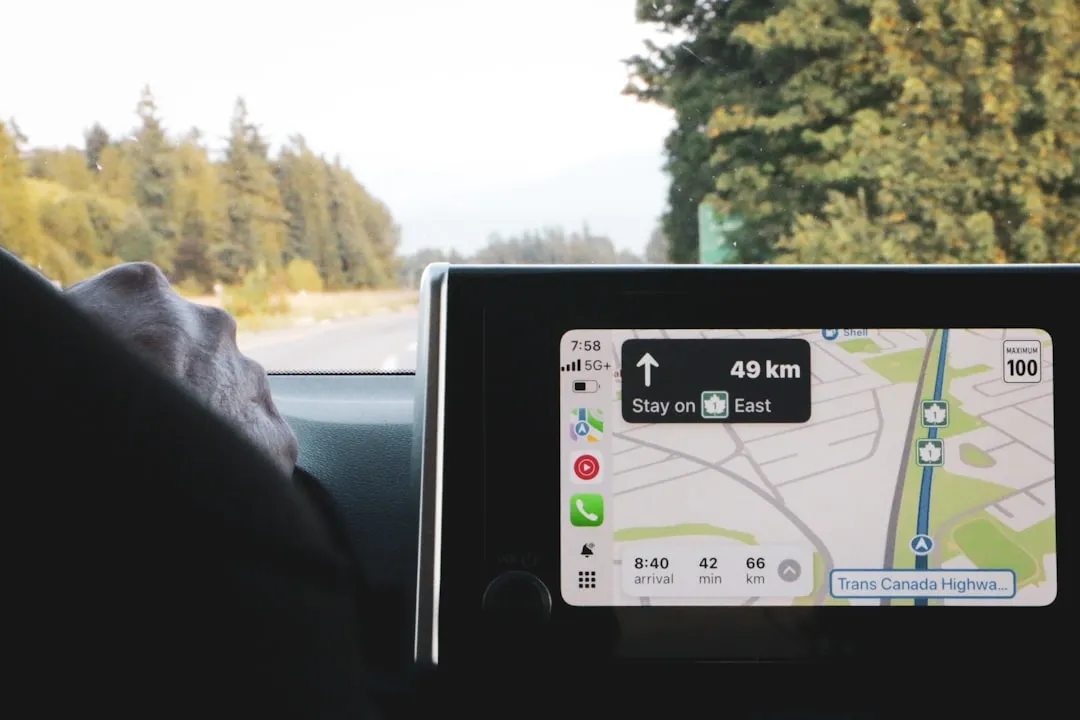
Google Maps CarPlay Gemini: What the App Code Reveals
Code strings buried inside the Google Maps iOS app suggest that Gemini AI is coming to CarPlay, MacRumors reported this week. Gemini already exists in the iPhone version of Google Maps, but not in CarPlay. That gap may be closing, and the timing connects directly to a platform shift: Apple opened CarPlay to voice-based conversational apps for the first time with iOS 26.4, the change 9to5Mac covered in February.
This would not be a standalone Gemini chatbot appearing as a new icon on CarPlay's home screen. It would be Gemini inside Google Maps, an app millions of drivers already have running during navigation. That distinction is more consequential than it sounds.
What Google Maps CarPlay Gemini code actually shows
The app strings found by MacRumors indicate that users could tell Gemini to navigate to a specific location by voice, after first accepting updated Terms of Service through the iPhone version of Google Maps. That TOS step mirrors how Google already gates Gemini access in the mobile app.
The integration is not live. The framework exists in the code, but the feature has not been activated for CarPlay users. Code presence in an app build suggests active preparation, not an imminent launch announcement, and MacRumors frames it accordingly: the feature could be rolling out soon, but nothing has been confirmed. There is no launch date, no official announcement from Google, and no detail on which regions or account types would get access first.
Worth noting as an open implementation question: the code does not clarify whether Google is building this under the existing Google Maps CarPlay navigation entitlement, through Apple's new voice-based conversational app category, or some combination of both. That technical detail would determine how deeply Gemini could be embedded in the Maps CarPlay experience, and right now it remains unresolved.
Why AI inside Maps is different from another CarPlay chatbot
ChatGPT, Grok, and Perplexity already have CarPlay apps, MacRumors notes. But those are standalone apps that a driver would need to deliberately open from CarPlay's home screen, which is a separate step from whatever navigation task they're already doing.
The Google Maps implementation would work differently. Gemini would live inside the app a driver already has open for turn-by-turn directions. That means conversational AI would be accessible at the moment a driver actually needs it: mid-route, already navigating, without switching contexts. The difference is between a tool you have to go find and one that's already in your hand.
On iPhone, Gemini is integrated into Google Maps through "Ask Maps," a feature built specifically for the kind of conversational, open-ended questions that a standard search box handles poorly, MacRumors explains. A driver asking whether a restaurant along their route is open when they'd arrive, or requesting a reroute that avoids construction and passes a specific type of gas station, is the kind of multi-part, context-dependent query where Ask Maps adds real value. A text search field in a navigation app was never designed for that.
The CarPlay version would extend that into the driving environment. Voice-only access is actually a better fit here than on a phone, where you might type or tap. In a car, keeping your eyes on the road is the constraint that shapes everything, and a feature that lets you ask a navigation question and get a spoken answer without picking up your phone serves that constraint directly. The iPhone version requires saying "Hey Google" or tapping the Gemini icon within the app, MacRumors reports. The CarPlay version of that interaction flow is where Apple's rules take over.
What Apple's iOS 26.4 framework allows and blocks
Apple's new entitlement for voice-based conversational apps, requiring iOS 26.4 as a minimum, comes with a mandatory voice control screen that participating apps must display during active voice sessions, providing visual feedback while the driver speaks. Apple published a template for this screen in its CarPlay Developer Guide, as Digital Trends reported in February. If Google Maps uses this framework, that screen would be the interface through which Gemini interactions appear on a car's display.
Activation will be more deliberate than on iPhone. CarPlay's framework requires users to manually open an app before a voice session begins, Digital Trends reported. Wake words are not supported. The "Hey Google" trigger that works in the iPhone version of Maps will not carry over to CarPlay.
Apple's guidelines specify that voice-based conversational apps must treat voice as the primary modality upon launch and should not surface text-heavy or image-heavy responses, 9to5Mac reported. That requirement is clearly oriented around distraction: a wall of text on a car screen is a hazard, not a feature. The richer visual Gemini experience on iPhone gets pared back considerably behind the wheel.
Hard limits apply across the board. These apps cannot control vehicle functions or iPhone settings, and Siri remains the system-level voice controller for CarPlay, Digital Trends noted. Gemini in Maps would sit as a layer within the navigation experience, not a replacement for any system function. Apple drew those lines clearly, and they apply to every developer building for this category.
The framework also places the responsibility of actually shipping squarely on the app developers. Apple has opened the platform; updating the app with CarPlay availability is up to companies like Google, 9to5Mac noted. The code in Google Maps suggests they're working toward it, but "working toward" and "shipped" are not the same thing.
Why rollout timing is genuinely uncertain
Google's track record with CarPlay feature parity makes measured expectations the reasonable position. Hazard and delay reporting was available in the Google Maps iPhone app since 2019 and in Apple Maps since 2021. It didn't reach Google Maps on CarPlay until July 2024, AppleInsider reported, and even then it was still rolling out gradually with no clear timeline for full availability. The pattern is consistent: mobile ships first, CarPlay follows later, sometimes years later.
The hazard reporting precedent is the right frame for reading the Gemini code discovery. The code being present in the app is consistent with a feature in active preparation. It also confirms the pattern: Google builds the mobile version first, then eventually closes the CarPlay gap. The Gemini integration on iPhone has been running for some time; the CarPlay version looks like the next step in that same sequence, not a simultaneous launch.
What the code cannot tell you is how far along that preparation is. There is no staged rollout schedule, no confirmed regional availability, and no indication of whether privacy or regulatory requirements in certain markets might complicate or delay the initial release. Code has preceded a live feature before, and the hazard reporting example shows that Google's CarPlay timelines don't always telegraph themselves in advance.
The practical summary: both sides of the infrastructure equation are now in place. Apple has opened the platform category. Google appears to be building toward the launch. What connects those two facts to an actual release date is still unknown.
What to watch for next
If the code reflects what eventually ships, Gemini in Google Maps on CarPlay would mark a meaningful step, not because AI in a car is novel, but because it would arrive inside a task drivers are already engaged in rather than requiring them to seek out a separate app. That positioning is what gives the Maps implementation a plausible claim to regular use.
The CarPlay version will be leaner than its iPhone counterpart: manually launched, voice-first, no wake words, spoken responses instead of rich visual output. Drivers who expect the full Ask Maps experience from their phones will get a stripped-down version behind the wheel, as the framework Apple and Google are both working within requires.
Apple's new voice app category is the structural development worth keeping in view. It defines the rules for every navigation and AI app building for CarPlay going forward. What Google still needs to confirm: which entitlement path it's using, which markets get access first, and whether the feature ships as a Maps update or requires a separate app action from users. Until Google says something publicly, the code is the only evidence, and code is a direction, not a delivery date.



Comments
Be the first, drop a comment!