





iOS 27 Advanced AI Dictation: Which iPhones Can Run It
Apple's most capable voice-to-text upgrade in iOS 27 shipped switched off in the first developer beta, and the vast majority of iPhones that support Apple Intelligence can't run it at all. Advanced Dictation Preview delivers sharply better transcription accuracy with automatic punctuation and capitalization, but the feature requires at least 12GB of RAM a threshold only the iPhone 17 Pro, iPhone 17 Pro Max, and iPhone Air clear, per MacRumors and TechSpot. One note on sourcing: 9to5Mac names only the iPhone 17 Pro and iPhone Air; the 17 Pro Max appears in MacRumors and TechSpot but not in 9to5Mac's device list.
Apple Intelligence as a platform covers every iPhone 16 model and later, plus the iPhone 15 Pro and 15 Pro Max, across 16 supported languages. Advanced Dictation support is a separate, narrower category. The feature runs on Apple's AFM Core Advanced on-device model, which carries hardware requirements that most of that install base doesn't meet.
What iOS 27 advanced AI dictation actually does
Apple describes the upgrade as delivering "a major boost in accuracy," and the improvement goes beyond raw transcription. The system handles capitalization and punctuation automatically as you speak, removing the manual cleanup step that makes standard dictation impractical for anything longer than a quick message, 9to5Mac reported.
The more significant advantage is offline consistency. Because Advanced Dictation runs entirely on-device using the AFM Core Advanced model, transcription quality stays constant regardless of network conditions, 9to5Mac noted. Standard cloud-dependent voice input degrades quietly when signal drops. For anyone who dictates on planes, in transit, or in buildings with weak connectivity, that reliability gap is real.
Once enabled, the improvement is system-wide every text field that accepts voice input gets the same upgrade automatically, with no per-app configuration required. There's no setup in Mail, no separate toggle in Notes. Turn it on once, and it applies everywhere.
This is a keyboard input feature, separate from Siri AI. Siri AI, announced at WWDC26 earlier this month, is a conversational assistant capable of drafting emails, editing documents, and managing personal information. Advanced Dictation improves how text gets into the phone; Siri AI is about what the phone does with it afterward. The two features occupy different parts of the input workflow and carry different hardware and availability timelines.
It's also worth noting the privacy angle. Because Advanced Dictation processes everything on-device with no server dependency, there's no data leaving the phone during transcription. That puts it in a different category from Apple Intelligence features that rely on server-side models including image generation, which carries daily usage limits precisely because it depends on Apple's cloud infrastructure, per Apple's newsroom. Advanced Dictation has no such caps.
How to turn on AI dictation in iOS 27
Three iPhone models qualify: the iPhone 17 Pro, iPhone 17 Pro Max, and iPhone Air. The standard iPhone 17 has 8GB of RAM and falls below the 12GB floor, MacRumors confirmed. Every older iPhone model does too, regardless of whether it supports Apple Intelligence in other respects. If your device isn't on that list, the Advanced Dictation toggle won't appear in Settings at all.
The same 12GB RAM requirement applies across Apple's other platforms. Compatible devices include iPads with M4 chips or later, Macs with M3 or later, and the second-generation Vision Pro with M5, per TechSpot and 9to5Mac. Models below those thresholds are excluded even if they support Apple Intelligence for other features the line between "Apple Intelligence device" and "Advanced Dictation device" is consistent across the product lineup.
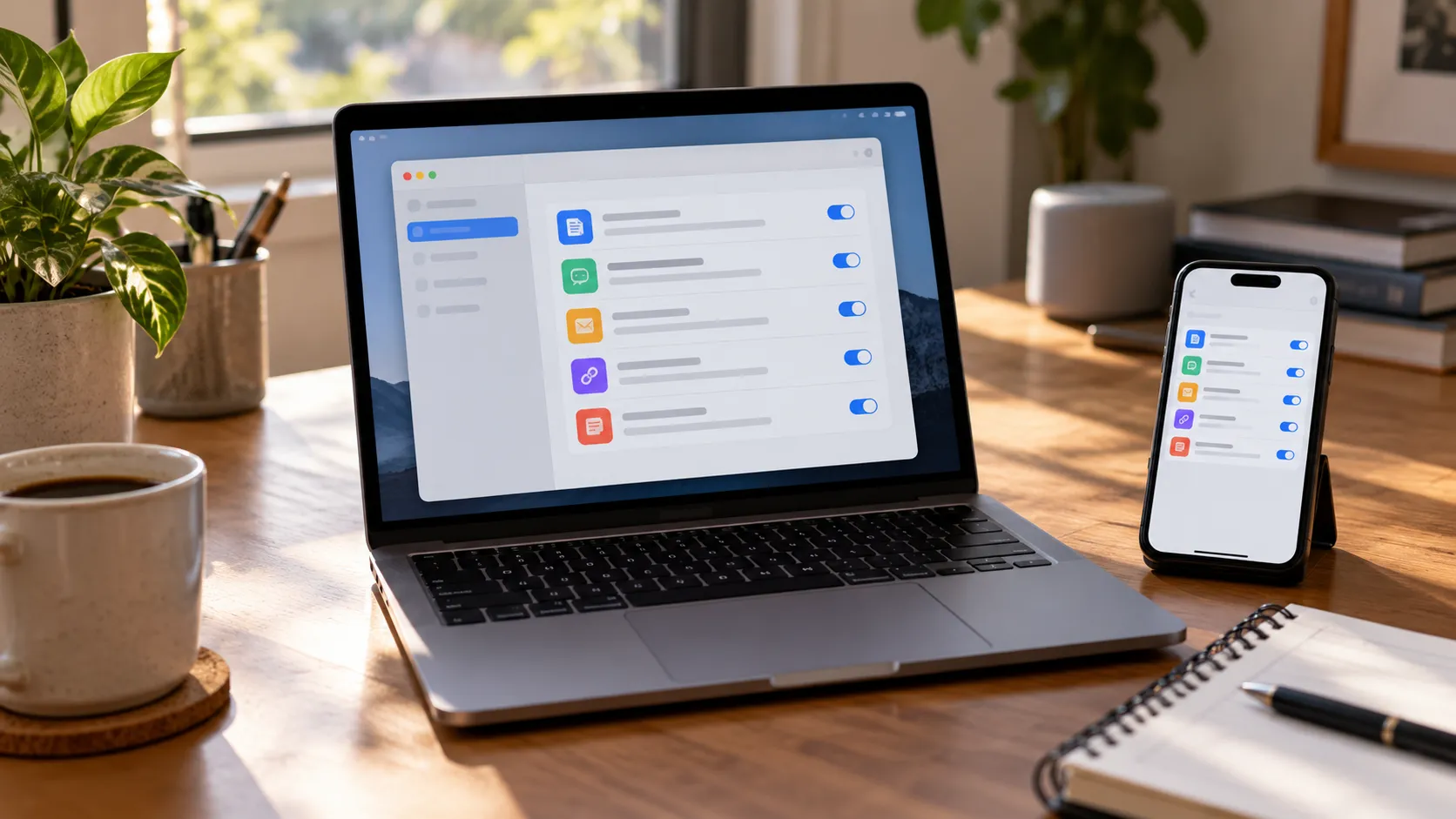
For eligible users running the iOS 27 beta, enabling it takes about ten seconds:
- Open Settings
- Go to General → Keyboards
- Scroll to the Dictation section
- Enable the toggle labeled "Advanced Dictation Preview"
The improvement applies system-wide immediately, 9to5Mac confirmed. No restart required, no per-app configuration.
iOS 27 dictation not enabled by default: what the "Preview" label signals
Apple has not explained the opt-in status. The label says "Preview," which typically signals a feature present enough for developer testing but not ready for automatic exposure to every eligible user. Whether that reflects accuracy concerns, computational overhead, or routine beta caution, no explanation has been published, 9to5Mac noted.
The off-by-default status fits Apple's broader iOS 27 AI rollout, which is explicitly phased. Some Apple Intelligence features are live in the developer beta now; others, including the full Siri AI, arrive later in the cycle and launch in English first, Apple confirmed. Whether "Preview" status persists through the fall public release is an open question the feature could become enabled by default as the beta matures this summer, or it could ship still requiring users to find the toggle themselves, 9to5Mac reported.
The off-by-default choice also puts the feature's existence largely out of view for most users. Someone who buys an iPhone 17 Pro this fall, installs iOS 27, and never reads the release notes has no obvious reason to go looking for an Advanced Dictation toggle buried in General → Keyboards. Apple's App Store listing for iOS 27 describes Apple Intelligence support broadly, without surfacing the hardware divide between general eligibility and Advanced Dictation eligibility. That distinction is real it's just not visible by default.
The bigger picture: Apple Intelligence is a tiered system
Advanced Dictation illustrates something about how Apple Intelligence in iOS 27 is actually structured. The base tier runs on hardware going back to the iPhone 15 Pro a wide range of devices covering most of Apple's recent installed base. The premium tier, built on the AFM Core Advanced model, is limited to devices from the past year with at least 12GB of RAM.
That divide extends beyond dictation. The same model powers Expressive Voices, which allows users to customize the tone and pace of Siri's speech, MacRumors reported. Both features share the same hardware gate; both are unavailable on the standard iPhone 17 and everything older. Owning an Apple Intelligence-compatible device is not the same as owning one that can run the platform's most capable features, and Apple hasn't prominently communicated that distinction.
This kind of internal tiering isn't new Apple has always segmented features by chip generation to some degree. What's different here is the gap between the public perception of Apple Intelligence as a unified platform and the reality of a two-tier system where the more capable tier covers a much narrower slice of the user base. Users who upgraded to an iPhone 16 last year expecting the full Apple Intelligence experience may find, this fall, that several headline features simply don't appear on their device.
The beta cycle this summer will clarify a few things: whether the "Preview" label drops before public release, whether Apple defaults the feature to on for eligible users, and whether any communication effort closes the gap between what Apple Intelligence promises broadly and what specific hardware actually delivers. As of the first developer beta, none of those questions have answers.





Comments
Be the first, drop a comment!