





iPad Turns 16: How Deliberate Ambiguity Drove Apple's Tablet Lead
Sixteen years after launch, the iPad dominates a maturing tablet market by succeeding at every price point. That's not an accident it's the product of a lineup built around deliberate ambiguity.
Today marks 16 years since Apple began selling a device it couldn't fully explain. On April 3, 2010, the iPad turns 16, and the question Steve Jobs raised at its January reveal what exactly sits between a phone and a laptop remains officially unanswered. Jobs framed the device as "far better at some key things" like web browsing, email, video, and reading, per Low End Mac. It shipped without a camera, without multitasking, without file management, and without Flash support. Critics filled the gaps with skepticism. Consumers filled stores: 300,000 units sold on launch day, one million in under a month, half the time the original iPhone had needed to reach the same milestone, as MacRumors noted.
What's remarkable about that launch, in retrospect, isn't the demand. It's that Apple never fully resolved the question it raised. Sixteen years on, the iPad remains technically a "third category" device, and Apple still appears unwilling to fully resolve how much it should overlap with the Mac. Meanwhile, it has quietly become the dominant force in global tablets, with analyst estimates putting Apple's share between 37% and 45% across every quarter of 2025 more than double Samsung's closest challenge, according to IDC and Omdia data via 9to5Mac.
Those two facts are connected. Apple didn't win the tablet market by answering "what is the iPad?" It won by building a product ladder that lets the question mean something different at every price point, and then refusing to fully close off any of the answers.
From one device to a ladder: how Apple built an ecosystem competitors couldn't replicate
The original iPad was commercially successful, but it was the platform architecture that followed not the hardware itself that made the category Apple's to keep.
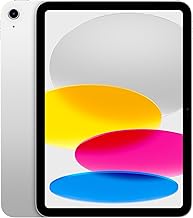
Apple ended 2010 with over 15 million iPads sold and $9.5 billion in first-year revenue; one estimate puts units closer to 25 million, which would make it the fastest-selling new product category in Apple's history, per MacRumors and Cult of Mac. What that revenue bought was time and credibility to expand. The iPad mini arrived in 2012 for users who wanted portability. The iPad Air in 2013 brought thinness and a premium feel to the mainstream. The iPad Pro in 2015 introduced the device's most consequential accessories: the Smart Keyboard and the Apple Pencil.
The Pencil was a turning point. It enabled low-latency precision input that no finger-driven touchscreen had previously matched, opening the iPad to illustrators, note-takers, and designers who had no equivalent option elsewhere, as Macworld observed in its retrospective last October.
Each product tier served a distinct use case:
Base iPad: price-sensitive buyers, schools, casual consumers
iPad Air: mainstream users wanting more performance without Pro pricing
iPad mini: portability-first users who wouldn't compromise on the Apple ecosystem
iPad Pro: professionals and power users with hardware demands that exceeded what any other tablet offered
Accessories Pencil, Smart Keyboard, eventually the Magic Keyboard with full trackpad made each tier meaningfully more capable without requiring a platform overhaul. The result was a product family that competitors could challenge at individual points but couldn't replicate as a coherent whole. Samsung builds tablets. Apple built a tablet ecosystem. That distinction compounded over 16 years.
The software layer reinforced it. iOS 9 in 2015 added Slide Over and Split View multitasking for iPad five years after launch, arriving alongside the original iPad Pro, Macworld reported. USB-C came to the Pro. The Files app improved. The operating system became iPadOS in 2019, a signal that Apple considered it a distinct enough platform to deserve its own identity. Final Cut Pro and Logic Pro eventually made the jump. With iPadOS 26, Apple added free-form window management, a menu bar, and the Preview app features that had existed only on Macs, per The Verge. Slowly, the ceiling rose. It hasn't been removed, but the direction has been consistent for a decade.
Why competitors couldn't copy the ladder
The ecosystem gap goes beyond product count. Three structural advantages explain why rivals have been unable to close the distance.
First, app optimization. Because the iPad has run iOS-derived software since day one, it inherited the world's largest mobile app ecosystem immediately. Developers optimized for iPadOS specifically not as an afterthought. Android tablet apps have historically lagged in polish and tablet-specific layout support, a gap that took years to narrow and never fully closed.
Second, the accessory flywheel. Apple designed the Pencil and Smart Keyboard to work exclusively with iPad, building a hardware accessory ecosystem with no cross-platform alternative. Each generation of accessory improved in lockstep with the iPad hardware. That tightly controlled integration where a Magic Keyboard bought for an iPad Pro works seamlessly and adds trackpad cursor support is something open Android ecosystems structurally struggle to match, because no single vendor controls both device and accessory roadmap.
Third, the trickle-down model. Features that debuted on the Pro M-series chips, ProMotion displays, USB-C reliably migrate down to the Air and eventually the base iPad over successive generations, per Macworld. This means every rung of the ladder improves without Apple cannibalizing its own premium tier. A buyer who starts on the base iPad and later wants more lands on the Air, then the Pro, all within the same ecosystem, with the same accessories and apps. A Samsung buyer moving up the Galaxy Tab range faces a similar product ladder in theory, but without the same software continuity or accessory integration that makes the transition frictionless.
The result is a product family that builds loyalty across price points rather than just competing at each one individually.
Why Apple's market lead held in 2025 and what actually drove it
The tablet market the iPad helped create is now mature. Full-year 2025 shipments reached 151.9 million units, up 5% year-over-year, but IDC notes that replacement demand from consumers upgrading pandemic-era devices drove the first half of the year, with growth decelerating meaningfully in the second half as that cycle tapered. Counterpoint Research goes further, reporting a 4% year-over-year decline in Q4 2025 specifically and describing it as a shift toward a more mature phase, with display panel shipments also declining a sign of controlled inventory rather than expansion, per FoneArena. The analysts disagree on exact numbers, but the narrative is consistent: this is a settled category.
Apple's 2025 performance benefited from several converging tailwinds worth separating from structural strength. Millions of iPads sold in 2020 and 2021 reached the end of their typical upgrade window, driving consumers back into stores. Education-led deployments continued across regions. Subsidized promotions in China helped make Q1 2025 the fastest-growing major region for tablets globally, according to Canalys data via AppleInsider. In Q2, tariff-fear buying pulled demand forward, with Apple CEO Tim Cook explicitly citing the threat of import price increases as a reason consumers purchased in April, AppleInsider reported. Some of that demand was genuine. Some was borrowed from the future.
What endures beyond the tailwinds is how the lineup performs across tiers. IDC estimated Apple shipped approximately 17.1 million iPads in Q4 2025, capturing roughly 42% global share, with entry-level models accounting for nearly 52% of Apple's own quarterly volume, per IDC. Simultaneously, Apple's average iPad selling price rose from $527 to $583, reflecting durable premium-segment strength at the Pro and Air end of the line, Counterpoint data shows. High volume at the base, rising average revenue from the top that combination is the structural story. The ladder is doing exactly what Apple built it to do.
It wasn't uniform throughout the year. In Q2 2025, unit sales rose 2.4% while revenue fell 8% year-over-year, indicating buyer mix was tilting toward cheaper models in that period, per IDC data via SlatePad. That's a quarterly fluctuation, not a trend reversal, but it's worth tracking.
Three other data points frame the competitive picture:
Canalys data shows Apple shipped 13.7 million iPads in Q1 2025, up 14% year-over-year with 37.3% global share, driven largely by consumers replacing pandemic-era devices, per AppleInsider
Samsung shipped 6.4 million tablets in Q4 2025, down 7.5% year-over-year the nearest competitor losing ground even as Apple gained it, while Lenovo grew 35% primarily through the Chinese market, per IDC
A Canalys survey found more than 20% of B2B partners planned to equip mobile workers with tablets in 2025 a modest but consistent indicator that enterprise use continues to supplement consumer volume, per AppleInsider
Omdia research manager Himani Mukka observed that 2025 delivered the tablet market's highest annual shipment volume since the pandemic-driven demand boom of 2020, but flagged that memory component constraints and demand pressure could weigh on 2026, as 9to5Mac reported. The replacement cycle that energized 2025 won't repeat automatically. Whether Apple's dual-tier architecture holds its numbers in a less favorable macro environment is the next real test.
iPad turns 16 with a hardware lead and an identity question Apple still won't fully answer
The iPad Pro is now, by almost any hardware measure, a laptop. Reviewers at Macworld noted last October that the M5 chip inside it runs on the same generation as the MacBook Air, with no meaningful performance difference between the two devices a convergence that took roughly five years of Apple Silicon to achieve. The tandem OLED display drew the strongest reviews of any Apple screen across any product line. With the Magic Keyboard attached, the typing and trackpad experience approaches what you'd get from a MacBook, per The Verge. In Geekbench 6 multicore testing, the M5 iPad Pro scored 16,116 roughly 10% faster than the previous M4 model, and 38% faster than the M3 iPad Air, CNET found.
Apple also increased base RAM on lower-storage Pro configurations by 50% to 12GB, explicitly to support an operating system now expected to hold many windows open simultaneously, Six Colors observed. That's not a routine spec bump it's Apple acknowledging in silicon that the software has grown into the machine.
The software situation is more complicated. The Verge argued in November 2025 that the iPad still operates under constraints that are policy choices, not hardware limitations: software distribution locked to the App Store, restricted browser engine access, no system-level terminal, and a thinner ecosystem of utility apps compared to macOS. These aren't unsolvable problems. Apple simply hasn't solved them.
At the 16-year mark of iPad history, the question worth asking is whether that's an oversight or a strategy.
The entry-level iPad the model driving more than half of Apple's quarterly tablet unit volume serves consumers, students, and casual users who have no need for terminal access or sideloading. For them, the platform's constraints function as features: a simpler, more secure computing experience that doesn't require maintenance. Opening iPadOS to the full depth of macOS would benefit the Pro customer spending $1,299 and up, while potentially complicating the experience for the far larger population below that price. The original iPad Pro started at $799 in 2015; today's large-format M5 model begins at $1,299, with fully configured systems including keyboard and storage easily exceeding $2,000, per CNET and Macworld.
Apple is navigating a genuine tension between two large audiences with fundamentally different needs, using the same operating system. iPadOS 26's Mac-borrowed features free-form multitasking, menu bar, improved file access indicate Apple knows which direction the Pro is heading, per The Verge. The pace is deliberate. One software cycle at a time, the ceiling rises without Apple forcing a harder choice about what the device actually is.
That approach has served Apple well across the full run of iPad anniversary years. Whether it can continue serving a $1,299 Pro buyer who increasingly looks at a $1,099 MacBook Air and wonders what the trade-off actually buys them is the sharper question the next few years will answer.
What 16 years of not fully answering the question actually built
At 16, the iPad has outlasted every prediction that tablets would collapse back into phones or get absorbed by laptops. It commands a stable, mature market shipping more than 150 million units annually, from a position no competitor has meaningfully challenged in years.
The more instructive lesson is what built that dominance. Apple didn't win by making one perfect tablet. It won by constructing a ladder of use cases each rung distinct enough to serve a different buyer, each connected enough to share an ecosystem and then declining to let any single answer to "what is the iPad?" foreclose the others. The base iPad is a consumption device and a school tool. The Air is a mainstream computer. The Pro is a near-laptop that Apple is slowly, carefully converting into a fully capable one. The same platform serves all three. That's harder to replicate than any single product.
The global tablet market shipped 151.9 million units in full-year 2025 its highest annual volume since the pandemic-driven 2020 boom but Omdia warned that demand faces increasing pressure in 2026 from memory constraints and fading replacement cycles, per IDC and 9to5Mac. The replacement cycle won't repeat. Memory cost pressures loom. Tariff-driven demand pulled forward from future quarters will show up as a gap somewhere in 2026.
The coming year will be a more honest test of structural demand than 2025 was.
Apple enters it with the strongest lineup it has ever had, a 40%-plus market share lead, and one unresolved strategic question that has been quietly powering the whole thing since the beginning. Sixteen years of not fully explaining what the iPad is. Sixteen years of winning anyway.





Comments
Be the first, drop a comment!