





![for iPhone 18 Pro Case Clear [Not-Yellowing]](https://m.media-amazon.com/images/I/714DZnjreeL._AC_UY218_.jpg)
iPhone 18 Pro Dynamic Island: Why It's Staying Unchanged
The Dynamic Island is surviving the iPhone 18 Pro. After months of conflicting reports about top-left punch-hole cameras, full under-display Face ID, and the outright elimination of Apple's pill-shaped cutout, the strongest available evidence points to a device that looks nearly identical to current models. Two days ago, MacRumors cited Weibo leaker Fixed Focus Digital reporting that Apple's under-display development is hitting snags, with the iPhone 18 Pro's front panel potentially unchanged from what's shipping today.
If a dramatically different iPhone face is what would move you to upgrade, this almost certainly isn't the year.
What changed in the iPhone 18 Pro Dynamic Island rumors
The rumor arc here has three distinct beats, and keeping them straight matters for understanding where things stand.
In January, the cleaner version of events took shape. Weibo leaker Instant Digital argued that earlier dramatic claims had been based on a mistranslation of Chinese and Korean supply chain reporting, with MacRumors covering the correction. The more defensible picture that emerged: a smaller, centered Dynamic Island on the iPhone 18 Pro, with the selfie camera staying in place and only the flood illuminator moving under the display. Display analyst Ross Young and leaker ShrimpApplePro both backed that read independently.
Before that correction landed, The Information had reported that the iPhone 18 Pro's front camera would shift to the top-left corner of the display, claiming this would eliminate the pill-shaped cutout entirely. ET News and creator Jon Prosser published supporting renders. That claim spread fast.
Now, two weeks ago, even the more modest January scenario is in doubt. Fixed Focus Digital's new report suggests Apple is "far from" a full-screen iPhone, and a separate recent claim from Weibo leaker Digital Chat Station, per MacRumors, puts Face ID and the Dynamic Island as "largely unchanged" on the iPhone 18 Pro, with more ambitious under-display work pushed to a later generation. The smaller-cutout scenario that looked settled in January now looks less certain than it did.
Dynamic Island is a software decision as much as a hardware one
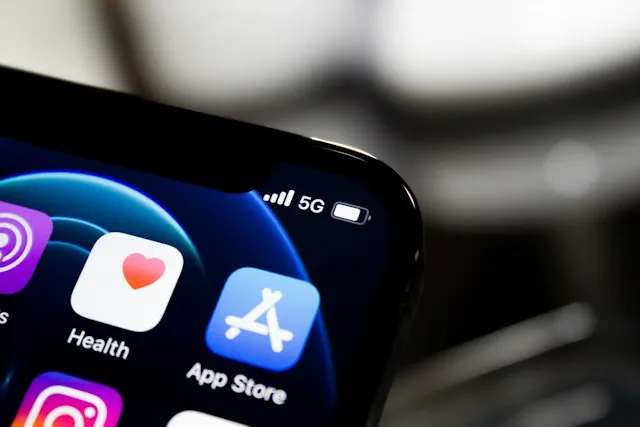
Before the hardware details make sense, one distinction matters. "Dynamic Island" refers to two things at once: a physical pill-shaped cutout and a software interaction layer built around it.
That software layer surfaces timers, navigation prompts, music controls, and live activity notifications. It has a developer ecosystem and genuine user familiarity built up since the iPhone 14 Pro launch. Even if the physical cutout eventually shrinks to a single punch-hole, the Dynamic Island feature itself is expected to remain, 9to5Mac noted in January. Apple could extend that functionality through software overlays even as the underlying hardware changes, Technobezz reported that same month.
The "death of the Dynamic Island" framing that ran through earlier coverage conflated two separate questions: when does the hardware cutout disappear, and when does the UI feature disappear? Apple has strong incentives to preserve the latter indefinitely. The cutout is what's slowly shrinking; the software layer is what Apple has invested in as a platform, and it's too embedded now to abandon just because the hardware beneath it changes shape.
iPhone 18 Pro Dynamic Island rumors: how the dramatic version fell apart
The most striking iPhone 18 Pro front-panel claims, a top-left punch-hole selfie camera, full Dynamic Island elimination, the pill-shaped cutout gone entirely, trace back to a specific misreading of supply chain information.
The Information reported in December that the front camera would move to the top-left corner of the display, explicitly claiming this would eliminate the pill-shaped cutout, per MacRumors. ET News backed the invisible Face ID module idea; Jon Prosser published renders showing how a top-left Dynamic Island might look. The claim had momentum.
Instant Digital's correction, also reported by MacRumors in January, was specific: what the original Chinese and Korean sources described was the relocation of an infrared Face ID component internally, not a visible front camera moved to the top-left of the display. A component-level engineering decision became a product design story through translation gaps and downstream amplification.
The component at the center of the confusion is the flood illuminator, the simplest of Face ID's three sensor modules and the only one considered feasible to hide beneath the display in the near term. It sits to the left in Apple's current sensor assembly, per MacRumors. Moving it under the display creates an internal left-side change that, misread, became "top-left hole-punch camera." The dot projector and infrared camera, by contrast, would remain centered and housed within a reduced pill-shaped cutout alongside the selfie camera, MacRumors noted.
The dramatic scenario had a single sourcing chain. The conservative one attracted Ross Young and ShrimpApplePro confirming it independently. That's how supply chain signal gets separated from noise. The moderate read didn't win because it was less exciting. It won because more sources, working separately, agreed with it.
Why iPhone 18 Pro under-display Face ID is taking longer than expected
Apple's cautious pace on this isn't a scheduling failure. It reflects genuine technical constraints that no product roadmap overrides on demand.
Hiding Face ID sensors is technically more tractable than hiding a selfie camera, and Apple has made clear it intends to move in that sequence, 9to5Mac noted in January. The selfie camera stays visible until under-display image quality meets Apple's standard, not merely passable, but competitive with a conventional camera system. That bar is higher than it sounds.
Android manufacturers including ZTE and Samsung have shipped under-display selfie cameras, but those systems represent a small fraction of total smartphone shipments, and Samsung's Galaxy Z Fold line uses a 4MP under-display camera, specs that Apple's quality threshold would not accept, according to FindArticles citing market research. The technology exists at proof-of-concept scale. It doesn't yet exist at Apple scale.
Apple's problem is scale. The company commands roughly 20 percent of the global smartphone market, FindArticles noted, which means any under-display solution it ships needs to work consistently across hundreds of millions of units in variable conditions. Manufacturing yield and unit-to-unit consistency are problems Apple's competitors haven't had to solve at comparable volume.
The March reporting confirms the gap between ambition and execution. Across the latest supply chain sources, the pattern is the same: the hidden-sensor plan is taking longer than expected. The specific bottlenecks, sensor accuracy through OLED layers, Face ID security performance through display material, brightness uniformity, remain undisclosed. But the directional read from multiple recent sources is consistent enough to be credible.
Two timelines, one slowly shrinking pill
The most defensible expectation for fall 2026, when the iPhone 18 Pro and Pro Max are expected to be announced alongside Apple's first foldable iPhone, per MacRumors, is a front design that is either modestly smaller than current models or effectively identical. Right now, the safer bet is the latter.
The two-phase roadmap still holds as a design ambition: under-display Face ID first, then the selfie camera once image quality clears Apple's bar. The selfie camera phase may not arrive until 2027 or 2028, per FindArticles, with some earlier framing tying the fully uninterrupted display to a milestone device later in the decade. Former Apple design chief Jony Ive described that goal as "a single slab of glass," 9to5Mac noted. The vision hasn't changed. The timeline has.
The generation after iPhone 18 Pro is where the more meaningful smaller Dynamic Island iPhone 18 Pro successor story should be watched, assuming development snags don't push that further still.
What stays consistent either way is the software layer. The Dynamic Island as a UI feature has too much developer and user investment to vanish when the hardware eventually does. Apple's more likely path is preserving the interaction model on a smaller, and eventually invisible, hardware foundation. The island shrinks; the experience persists. That's probably been the plan all along.



Comments
Be the first, drop a comment!