





Mac Studio 512GB RAM Removed: Why Apple Pulled Its Top Config
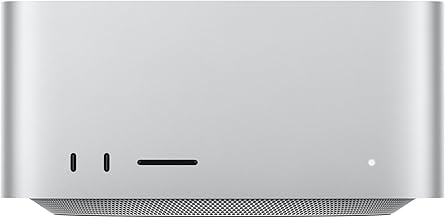
Apple has pulled the 512GB unified memory configuration from the M3 Ultra Mac Studio, leaving buyers who need that much local memory with no current path through Apple. The removal appears to have happened sometime in early March 2026, with no announcement. At the same time, the 256GB model jumped $400 in price, and top-RAM configurations are now running four to five months out on delivery, according to Ars Technica.
This is a narrow problem. If your workload fits within 128GB, nothing here changes your options. If it doesn't, here's what changed and what the decision looks like right now.
What changed: the Mac Studio 512GB RAM removal and the 256GB price increase
Apple launched the M3 Ultra Mac Studio on March 1, 2025, with 512GB of unified memory as a headline feature. The specific pitch, from Apple's March 2025 announcement: the machine could run large language models exceeding 600 billion parameters entirely in local memory, no cloud offloading required. Apple called it the most unified memory ever in a personal computer.
That configuration is no longer for sale.
The $9,499 512GB M3 Ultra configuration disappeared from the Apple Store sometime between March 4 and March 6, 2026, without any public notice, as Ars Technica reported when the change became visible. The telling detail is the mismatch: Apple's Tech Specs page still lists the 512GB configuration as an available option, while the Apple Store has removed it entirely. That is not how planned product changes look.
Apple's usual approach when supply tightens is to extend shipping estimates, sometimes by weeks or months, rather than delist the product, per Ars Technica. Pulling a configuration outright is rare behavior. The most straightforward reading is that the company did not expect supply to recover fast enough to keep the option in front of buyers.
The 256GB configuration, now the ceiling across Apple's entire Mac lineup, got more expensive at the same time. Its price climbed from $1,600 to $2,000, a $400 increase with no separate announcement, according to Ars Technica.
The memory architecture across Apple's chip lineup makes that ceiling significant. Ultra chips are the only Apple silicon that can exceed 128GB. The M4 Max and M5 Max both stop at 128GB; Pro chips cap at 64GB; standard M4 and M5 chips top out at 32GB, per Ars Technica. The 256GB Mac Studio is not just the high-end option. It is the only option for any buyer who needs more memory than any other Mac can provide, and it is currently backordered four to five months at $400 more than its launch price.
Why the Mac Studio RAM shortage likely forced Apple to drop the 512GB configuration
Apple has said nothing publicly, so what follows is inference supported by market conditions and Apple's own earnings disclosures, not confirmed causation.
Memory manufacturers have been shifting production capacity toward high-bandwidth memory, the specialized DRAM used in data center AI accelerators like Nvidia's H200. That reallocation has reduced the available supply of conventional DRAM and driven prices higher across the board. Smaller companies have already responded with repeated price increases and delayed product launches, as Ars Technica documented. Apple, buying at a scale that insulates it longer than most, appears to have absorbed that pressure until it couldn't.
Apple's own earnings call points in the same direction. CEO Tim Cook acknowledged that rising memory costs could begin compressing Apple's profit margins later in 2026, according to Ars Technica. The $400 increase on the 256GB configuration is consistent with real DRAM cost passing through to buyers rather than being absorbed at the margin.
Whether the 512GB removal is temporary or permanent, Apple has not said. The shortage explanation fits the available evidence. It is not confirmed.
Who should buy now, who should wait, and who should look elsewhere
Need 512GB on a single machine now: Apple has no option. The configuration is gone from the Apple Store, and there is no announced timeline for its return. The only path that reaches 512GB of pooled Apple memory involves buying two Mac Studios, which costs more than the $9,499 single-system configuration it would nominally replace and introduces interconnect latency that on-die unified memory does not have, per Ars Technica. That tradeoff may be acceptable depending on the workload, but it is not an equivalent substitute.
Can work within 256GB: The option exists. Ordering now starts the clock on a four-to-five month delivery window. There is no current basis for expecting the price to fall or availability to open up before that backlog clears, so waiting does not obviously improve the position.
Can distribute workloads across machines: macOS Tahoe 26.2 added support for Thunderbolt 5-equipped Macs to operate as a unified compute cluster, allowing distributed compute workloads across systems, according to Ars Technica. Two 256GB Mac Studios could in principle reach 512GB of pooled memory. The tradeoff shows up in three places: the combined cost exceeds the old $9,499 single-system price, interconnect latency adds overhead that a single die avoids, and the cluster feature is still relatively new. Worth tracking as it matures. Not a direct substitute today.
What to watch for
The buyer situation as of early April 2026: the 512GB Mac Studio is gone, the 256GB model costs $400 more than it did at launch, and top-RAM configurations are running four to five months out on delivery.
The clearest signal to track is whether Apple restores the 512GB option to the Apple Store, even with an extended ship estimate. That move would confirm a supply disruption rather than a permanent discontinuation. The continued mismatch between Apple's Tech Specs page and its storefront, with no correction in either direction, suggests no resolution is imminent, per Ars Technica.
There is a larger tension underneath the supply problem. Apple spent the past year building a case that large local memory is a decisive advantage for AI work, specifically that a Mac could run very large models locally instead of splitting work across systems or sending it to the cloud. The DRAM market is applying pressure against that premise at exactly the top of the range where it mattered most, as Apple's own 2025 launch materials made clear. Whether this is a temporary supply disruption or something structurally harder to resolve is the question Apple has not answered, and is not, apparently, in a hurry to raise.













Comments
Be the first, drop a comment!