





MacBook Pro Charger Accessory Compatibility Guide: A3607 Slot Changes
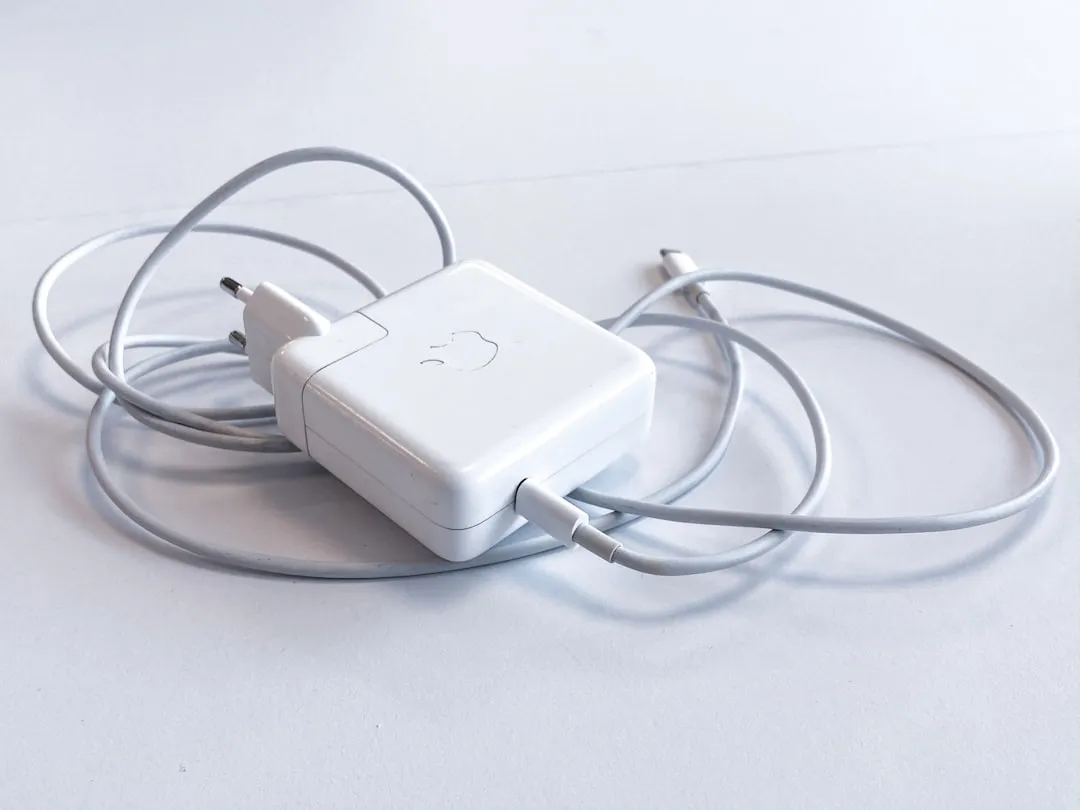
Apple has quietly revised the plug-module slot on its 140W MacBook Pro charger, and the changes are specific enough to raise a real MacBook Pro charger accessory compatibility question for anyone using interchangeable AC plug heads. The new unit is model A3607. The previous generation was the A2452. The slot geometry differs between them in two documented ways. Whether older plug modules still fit the new charger has not been confirmed by any published fit test, as of this week.
That distinction matters. The slot changed that's confirmed. Whether your specific plug heads still seat correctly is an open question, not a proven failure. But for frequent travelers who depend on modular accessories, the gap between "probably fine" and "definitely fine" is worth closing before a long-haul trip.
What the teardown found
Chargerlab published a full teardown of the A3607 in mid-March 2026, and two changes to the plug-module slot are clearly documented. The slot now includes a metal retention clip that was absent in the A2452. Its function is to hold the plug module firmly in place during extended use, per the teardown. The prong geometry has also been revised compared to the previous generation.
Those appear to be the primary documented mechanical changes. Plug modules are precision-fit components. They rely on exact slot dimensions to seat flush against the charger body, lock into the retention mechanism, and make solid electrical contact. A new metal clip occupies physical space that previously didn't exist. Revised prong dimensions shift where and how contact surfaces meet. Either change could cause a fitment problem. Together, they compound the risk.
From the outside, nothing looks different. The A3607 matches the A2452 in exterior dimensions, output specifications, and overall appearance, Chargerlab confirmed. You wouldn't spot the slot revision on a store shelf or in the box. It only becomes relevant the moment you try to insert a plug module.
MacBook Pro charger connector change: which plug heads are at risk
The accessories with the most direct exposure are those that physically attach to the charger body through that slot: Apple's interchangeable international plug kits, travel adapter sets, and third-party replacement duckheads designed for the 140W charger's removable slot. All of them depend on matching the slot geometry, and the A3607 has changed that geometry in two specific places.
What an incompatible module looks like in practice: it won't insert past the new metal clip, won't seat flush against the charger body, fails to engage the retention latch, or sits loose enough to disconnect under light pressure. The test is immediate and binary. Either the module drops in and locks, or it doesn't. There's no ambiguous middle state.
The accessories that are not affected:
USB-C cables
MagSafe 3 cables and connections
Third-party 140W USB-C power adapters
USB-C hubs and docks
Most USB-C PD–compatible power adapters can charge a Mac laptop, though charging speed depends on wattage, Apple's support documentation confirms. The charging protocol runs over the cable connection, entirely separate from the plug-module interface. If you use a third-party 140W brick from Anker or Ugreen, this story isn't about you. If you use Apple's own charger with swappable plug heads, it is.
The first-party versus third-party risk profile is also worth thinking through. Apple can quietly update its own international plug kit to fit the A3607, or simply bundle compatible modules with new charger units, and most buyers would never notice. Third-party plug module makers don't have that option. They're not guaranteed to track Apple's internal hardware revisions, and a slot change this subtle nothing in the external appearance changed is exactly the kind of update that slips past an accessory manufacturer's QA process. That's not a confirmed difference in outcome. It's a reasonable way to think about where the risk concentrates.
It's also worth noting what "compatible" actually requires here. A plug module has to clear the new metal clip on insertion, seat fully against the charger body, engage the retention mechanism so it doesn't pull free, and make clean contact across the revised prong geometry. That's four discrete fit conditions, not one. An older module might clear three of them and fail on the fourth seating loosely, for instance, in a way that's not immediately obvious but becomes a problem when the charger is jostled. The practical upshot is that a casual glance isn't sufficient. A firm push to full depth, followed by a light tug to confirm the retention latch engaged, is the actual test.
Why the slot changed
The bigger story inside the A3607 is a complete internal redesign. Chargerlab performed a decapsulation analysis, physically exposing the silicon die, and confirmed the charger uses a custom LLC switching device from Infineon. Microscopic examination of the die revealed front-side source and drain pads along with an interdigitated structure hallmark features of lateral GaN transistors making the a revised GaN-based 140W charger design.
The timing wasn't arbitrary. Chargerlab concluded the GaN adoption is most likely tied to upcoming U.S. Department of Energy Level VII efficiency requirements and stricter energy regulations taking effect across multiple regions (Chargerlab, March 2026). Compliance deadlines have a way of accelerating hardware transitions that might otherwise move more slowly.
That regulatory context is also the most plausible explanation for the physical slot changes. A new internal architecture requires updated component placement and revised mechanical tolerances throughout the chassis. The retention clip and revised prong geometry likely followed from engineering constraints imposed by the new internals, not from any deliberate decision to strand older accessories. No source has drawn that connection explicitly, and it should be read as interpretation. But a compliance-driven redesign is a simpler explanation than deliberate lockout, and it fits the available evidence.
GaN switching devices run at higher frequencies and generate heat differently than the silicon-based components they replace. That changes thermal management requirements, which can affect how internal components are arranged, which in turn can affect the mechanical tolerances of external features like the plug-module slot. The changes aren't random. They follow a coherent engineering logic even if Apple hasn't documented the chain of causation publicly.
What to do if you own modular plug accessories
Start with the model number. It's printed on the back label of the charger. A2452 is the previous generation. A3607 is the new one. If your charger shows A3607, your plug-module accessories are the ones worth checking.
If you have an A3607 and use any plug modules with it Apple's international travel kit, a third-party duckhead set, or any other swappable AC head test the fit before you need it. Insert the module, press to full depth, confirm it locks, then give it a light pull. That sequence takes about fifteen seconds. Do it at home, not at a hotel desk in a different country at midnight.
Accessory makers are another avenue worth checking. If a third-party duckhead manufacturer has acknowledged the A3607 slot revision and confirmed compatibility or issued a replacement, that information may already be on their product page or support site. It's not guaranteed, but it's faster than waiting for broader coverage.
Three things would definitively close the compatibility question: published fit testing comparing A2452-compatible plug modules against the A3607 slot; updated Apple documentation or product pages that address modular accessory compatibility for the new charger; or revised product listings from accessory makers that acknowledge the generation change. None of those exist as of early April 2026. Until one does, physical testing on your actual hardware remains the only reliable answer.
Modular plug systems have always carried this fragility. One charger body, swappable heads for different countries the appeal is obvious. The catch is that any physical revision to the charger body can silently break that modularity without changing a single external dimension. The A3607's slot change is documented and specific. Whether it breaks your particular accessories is a fifteen-second test away.






Comments
Be the first, drop a comment!