



macOS 27 Time Capsule Support: Why It Ends and How to Replace It
Apple has already started the countdown. A warning embedded directly in macOS 26 Tahoe's System Settings tells Time Machine users that the next major release will end support for AirPort Disk and Time Capsule disks for Time Machine backups, no restores. macOS 27 Time Capsule support ends when that release ships, expected in fall 2026, Mac user reported last month.
The scope is narrower than it first sounds. External drives connected directly to a Mac are unaffected, AppleInsider noted last June. This problem belongs to a specific group: anyone using a Time Capsule or AirPort-connected disk as a Time Machine destination, anyone on Tahoe weighing whether to upgrade, and anyone who wants wireless network backups without buying new Apple hardware.
Parts of this deprecation are already in effect. The most dangerous failure mode, a corrupted backup requiring a full reset, now has no in-system remedy on Tahoe.
Who needs to act now
Before getting into why the hardware is being dropped, here's the short version for readers who want to act fast:
Still on Sequoia, relying on Time Capsule: Stay put for now. Upgrading to Tahoe closes the door on creating new backup stores. If Time Capsule reliability matters to your workflow, that's a real reason to hold.
Already on Tahoe with a working backup: Do not erase it. That existing store is the only thing keeping your hardware usable. Add a second backup destination now, before something goes wrong.
Planning for macOS 27: Start migrating to SMB-based storage before upgrading. Waiting until macOS 27 ships leaves no fallback if a restore fails at the wrong moment.
What breaks in Tahoe right now
Tahoe still runs incremental backups against existing Time Capsule stores. That "still works" status is more fragile than it sounds.
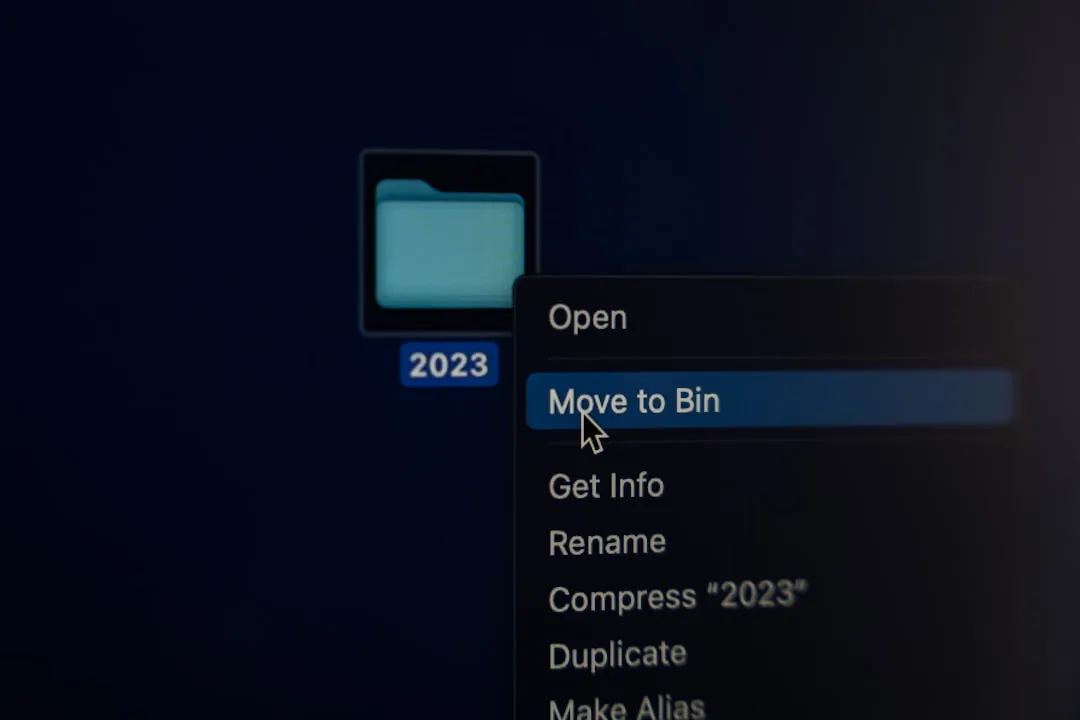
If a backup set is erased or corrupted, Tahoe refuses to create a replacement. The error reads: "Time Machine can only be used if it contains existing Time Machine backups for this Mac," Eclectic Light reported last month. The device is physically present, still connected; Time Machine simply will not initialize a new store on it.
This failure mode is not theoretical. Time Capsule backup sets are notorious for becoming corrupted and needing periodic resets, Michael Tsai observed last month. Under Tahoe, what used to be a routine inconvenience, erase, reinitialize, start fresh, now locks a user out of their backup hardware entirely.
One workaround exists for technically confident users: install macOS Sequoia in a separate container, boot into it, initialize a fresh backup store on the Time Capsule from there, then restart in Tahoe, which will accept the already-initialized store and continue from it, Eclectic Light documented last month. It works. Most users won't manage it.
Apple's own messaging compounds the problem. The company states only that AFP "won't be supported in a future version of macOS" without specifying what happens to HFS+-formatted backup stores in non-AFP network scenarios, Michael Tsai noted last month. Users trying to plan around this transition are doing so with incomplete information from Apple itself.
Why macOS 27 Time Capsule support is ending
The hardware isn't being left behind arbitrarily. There are two distinct technical gaps, and Time Capsule can't close either of them.
Starting with macOS 27, Apple is steering network Time Machine targets to SMB and away from AFP, according to Apple's own system messaging as reported by Michael Tsai last June. Time Capsule relies on AFP for its connectivity and also works with SMBv1, AppleInsider reported last June; modern SMB is simply not in its firmware. Tsai notes he believes Time Capsules support only AFP and SMBv1, though he flags that as his assessment rather than confirmed documentation.
There is also a filesystem problem that creates breakage before the protocol question even arises. When Tahoe sees a freshly erased Time Capsule, it treats the device as a new backup disk and expects APFS format. Since Time Capsule cannot provide APFS, setup fails at that point, Eclectic Light explained last month; the device is rejected before AFP or SMB compatibility is tested at all.
Apple has designated APFS as its preferred Time Machine format since macOS Big Sur, per documentation cited by Eclectic Light. The Time Capsule, discontinued in 2018, was never updated to support either APFS or modern SMB, leaving it permanently behind requirements Apple has been building toward for years.
SMBv1 remains in macOS 26 only as a deprecated fallback for older software and devices, AppleInsider reported last June. Its removal in macOS 27 formalizes what Tahoe's behavior already signals.
Two paths forward: tested replacement vs. unverified proxy
For users who want network Time Machine backups to survive into macOS 27, the evidence currently supports one of two approaches. One is tested against Tahoe today. One is not.
Path 1: Replace the Time Capsule with SMB-native hardware.
A Raspberry Pi project called TimeCapsule-Pi replicates Time Capsule functionality using Samba, Avahi, and Samba's vfs_fruit module, confirmed working against macOS Tahoe 26.2 on a Raspberry Pi 4 as of February 2026. Independent practitioners have validated the same three-layer architecture on Ubuntu-based NAS hardware:
Samba handles SMBv3 file sharing
vfs_fruitprovides Apple metadata compatibilityAvahi handles Bonjour-style network discovery so the share appears automatically in Time Machine
This configuration is documented on Ubuntu 22.04 by jhnr.ch and runs natively on SMBv3, aligning directly with Apple's stated macOS 27 requirements.
Path 2: Keep your existing Time Capsule via a protocol proxy.
A separate project, time-capsule-proxy by leobrigassi, aims to act as a translation layer between a real Time Capsule and macOS's new protocol expectations, intercepting AFP traffic and presenting it as SMBv3. Its stated goal is that "your Time Capsule may not be killed off in macOS 27." Whether that translation works under macOS 27's actual requirements has not been publicly confirmed, and the publicly documented macOS 27 compatibility has not yet been confirmed.
The Samba replacement is usable now and architecturally aligned with where Apple is heading. The proxy is an interesting idea that addresses a real desire, preserving hardware people already own, but it's unverified against the requirements it would need to meet. Don't build a backup strategy around it yet.
One honest caveat about the Samba path: it is not a drop-in appliance replacement. Practitioners describe the configuration as "fiddly" and note it has broken across macOS upgrades, as Al4 documented in April 2024. This is a realistic option for users comfortable with Linux server administration or NAS management, not for someone who wants the plug-and-forget experience the original Time Capsule provided.
What to do before macOS 27 ships
Don't erase your current Time Capsule backup set on Tahoe. Treat it as fragile. It is the only thread keeping your existing backup usable. If it corrupts, you lose both the backup and any path to creating a new one without reverting to Sequoia, Mac user confirmed last month.
If you haven't upgraded to Tahoe yet and Time Capsule support is critical to your workflow, that calculation is worth revisiting before you proceed.
If you want network backups past macOS 27, start building a Samba-based replacement now. The TimeCapsule-Pi project offers confirmed Tahoe 26.2 compatibility as a starting point; the broader Samba/Avahi/vfs_fruit pattern runs on most Linux-capable hardware, from a repurposed NAS to a dedicated Raspberry Pi. Because backup support is being removed in macOS 27, users should not wait until a failure to migrate.
Watch the time-capsule-proxy project, but don't depend on it. It could eventually offer a path for users committed to preserving existing hardware, once it demonstrates macOS 27 compatibility. That evidence doesn't exist yet.
Apple is phasing out a protocol, not the concept of network Time Machine backups. Wireless backup on macOS has a future; it just requires hardware that speaks SMBv3. Time Capsule, eight years after its discontinuation, no longer qualifies.



Comments
Be the first, drop a comment!