




Nintendo Switch 2 Games Running on Mac: How nxnative Works
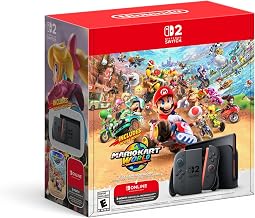
A fork of an open-source project called nxnative reportedly got Mario Kart World, a Switch 2 exclusive, running on a Mac, in what's being described as the first time a Switch 2 game has run on anything besides Nintendo's own hardware (XDA Developers, yesterday). It's a striking claim about Nintendo Switch 2 games running on Mac, but right now it rests on a single reported demo, not something you can download and verify yourself.
The project behind it, nxnative, has already been tested with original Switch games. It reportedly runs titles on Apple Silicon Macs and iPhones by taking game files the user already owns, with something like 70 to 85 titles tested or listed as compatible depending on the source (XDA Developers, yesterday; TechPowerUp, two days ago). It doesn't ship any Nintendo code or decryption keys, and users have to supply both their own game dumps and their own prod.keys file to make anything run (TechPowerUp, two days ago). That design matters for who can realistically use this right now: it's a manual setup rather than a one-click app, built for people who already own the games.
What is nxnative, the Switch game compatibility layer for Apple Silicon?
nxnative is described as a compatibility layer rather than a traditional emulator, closer in concept to Wine, the tool that lets Windows programs run on Linux or macOS without simulating an entire PC underneath them (XDA Developers, yesterday). A compatibility layer translates software to run on the host system directly, rather than recreating another machine's hardware in software first.
That's the shortcut nxnative takes advantage of. The Switch and Apple's own chips both use the Arm64 instruction set, so rather than emulating a whole console, nxnative reportedly rewrites a Switch game's code to run directly on Apple Silicon, swaps out Nintendo's Horizon operating system for a lightweight stand-in, and rebuilds Nintendo's NVN graphics interface on top of Apple's own Metal API (TechPowerUp, two days ago). For shader translation, the project reportedly borrows code from Ryujinx, the Switch emulator Nintendo shut down in 2024 after approaching its lead developer directly (TechPowerUp, two days ago; Video Games Chronicle, last year).
The project is credited to a developer identified only as "seedds," and it's deliberately limited in scope. There's no online multiplayer, no amiibo support, and the whole thing depends on the user supplying their own game files and encryption keys rather than the project shipping any Nintendo code (TechPowerUp, two days ago). That's a different setup than a tool that bundles pirated ROMs, but it doesn't resolve any legal question on its own. How those files and keys were obtained, and whether that process involved bypassing Nintendo's security measures, raises separate questions that nxnative's design doesn't answer.
Nintendo Switch 2 games running on Mac: what's confirmed?
The Switch 2 claim traces back to a fork of nxnative credited to developer Will Faust, who reportedly got Mario Kart World running natively on macOS (Daily.dev, yesterday). That report is tied to a separate exploit called ns2jb, which has reportedly made it possible to dump full Switch 2 game files, including Mario Kart World along with data from other titles like Deltarune and Duskbloods (Daily.dev, yesterday). In other words, Mario Kart World running on Mac depends on two separate pieces working together: a method for pulling files off a Switch 2, and a fork of nxnative capable of reading them.
The evidence behind that claim is thinner than it might first appear. Both reports in current coverage trace back to the same claim, there's no benchmark data, frame rate figure, or public demo footage attached to it, and nothing in the research here describes an independent party reproducing the result.
The original-Switch compatibility list doesn't carry over to this claim, either. The 70-to-85-game figure covers original Switch titles tested against the main nxnative project; Mario Kart World comes from a separate fork paired with the ns2jb file-dumping method, a different codebase tested against a different console. Readers can't infer Switch 2 compatibility from the original project's track record.
What's confirmed is narrow: a fork of nxnative reportedly ran one Switch 2 title once, as reported by two outlets citing the same underlying claim. What's not established is how many other Switch 2 games it handles, how stable the result is, what hardware it was tested on, or whether it's reproducible outside the original demo. Until that changes, it's best treated as an early, unverified report rather than proof that playing Switch 2 games on a Mac is a practical option.
Nintendo Switch games on Apple Silicon: compatibility and performance for original titles
The original-Switch side of nxnative has more evidence behind it. YouTuber Andrew Tsai reportedly tested the project and got a locked 60 fps in Monster Hunter Rise on a base, fanless M1 MacBook Air with 8GB of RAM, modest hardware for a game that can tax even the Switch itself (TechPowerUp, two days ago). Unicorn Overlord, Dragon Quest XI S, and Dark Souls Remastered reportedly also ran, though Doom Eternal failed to boot at all (TechPowerUp, two days ago). That mix is a useful reality check: this isn't a project where everything just works.
Compatibility requirements are specific enough to matter before anyone gets curious. The project's documentation reportedly lists around 70 tested games and targets iPhone 15 Pro or newer along with iPads running M1 chips or later, and Mac builds require an extra manual build step (TechPowerUp, two days ago). That's slightly different from XDA's figure of 85 compatible titles, a gap worth noting rather than smoothing over, since it suggests the compatibility list is still changing (XDA Developers, yesterday).
It's also worth being honest about where these performance numbers come from. The most-cited results trace back to one YouTuber's hands-on testing, not a controlled benchmark suite or figures published by the developer. That doesn't make them worthless, but it does mean readers should treat them as early impressions rather than verified specs.
Before you try nxnative: what to check first
Anyone tempted to try this on their own Mac should go in with a clear list of what's actually required, rather than assuming it works like a typical app install:
- The documented targets are Apple Silicon Macs, iPhone 15 Pro or newer, and iPads with M1 chips or later (TechPowerUp, two days ago)
- An extra manual build step specifically for Mac versions (TechPowerUp, two days ago)
- Your own dumped game files and a
prod.keysfile, since the project doesn't provide either (TechPowerUp, two days ago) - No online multiplayer and no amiibo support, regardless of which game is running (TechPowerUp, two days ago)
- Uneven results even among tested titles, since reported outcomes range from a locked 60 fps to a game that won't boot at all (TechPowerUp, two days ago)
- No basis yet for expecting reliable Switch 2 support, since that side of the project is currently one reported demo tied to a separate file-dumping exploit (Daily.dev, yesterday)
What Nintendo's Yuzu and Ryujinx enforcement history does, and doesn't, tell us
Nintendo has laid out a specific theory for when emulation crosses a line, according to comments from Nintendo attorney Kouji Nishiura reported by VGC. At a legal lecture last year, Nishiura said emulators aren't automatically illegal, but can become unlawful if they copy a console's protected programs or defeat security measures like encryption (Video Games Chronicle, last year). That's Nintendo's own framing of where the line falls, not an independent legal standard, and it leaves plenty of room for the company to act against specific tools depending on how they're built and used.
The company's track record backs that framing up. Nintendo's dispute with Yuzu reportedly ended with a $2.4 million settlement, a permanent end to the emulator's development, and the transfer of the yuzu-emu.org domain to Nintendo (Managing Intellectual Property, last year). A DMCA notice from Nintendo also reportedly led GitHub to pull more than 8,500 repositories hosting versions of Yuzu, and Ryujinx shut down on its own after Nintendo contacted its lead developer directly (Video Games Chronicle, last year). Together, those cases show that Nintendo has used multiple enforcement routes, lawsuits, DMCA takedowns, and direct contact with developers, against prominent Switch projects.
What that history shows is enforcement willingness, not a ruling on nxnative specifically. There's no lawsuit, DMCA notice, or public Nintendo statement about nxnative in current reporting, and nothing here establishes how a court would treat a tool built around user-supplied files rather than bundled ROMs. The "bring your own files" design may end up mattering legally, since the standard Nishiura described focuses on copying protected programs and defeating security measures, not the mere existence of a compatibility layer. But that's a distinction a court would have to weigh, not something settled by Nintendo's past cases against very differently built projects.
What to do now
Original Switch games on Apple Silicon have real, if preliminary, testing behind them. Technically confident owners of Apple Silicon Macs curious about that side of the project can treat it as worth monitoring, not worth setting up expecting consistent results, since the performance data still traces to one YouTuber's testing rather than independent benchmarks.
Switch 2 support isn't there yet. The Mario Kart World on Mac demo is a single reported case tied to a separate file-dumping exploit, with no independent reproduction in current coverage. Watch the project's documentation and compatibility list, watch for independent testing of the Switch 2 fork, and watch for any response from Nintendo given its history with Yuzu and Ryujinx. Until then, don't plan around playing Switch 2 games on a Mac.

Comments
Be the first, drop a comment!