




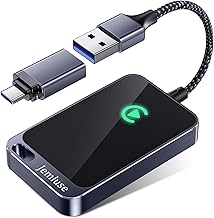

How to Improve Apple CarPlay Experience: 4 Key Settings
CarPlay automatically adds every compatible app on the iPhone to the display, with no ranking of what actually matters while driving (Pocket-lint, two months ago). That means the default layout may not reflect what's useful behind the wheel. Apple built CarPlay to put iPhone tasks, navigation, calls, messages, onto the car's built-in display rather than the phone screen (Apple Support, last year). Connecting the phone gets those tasks on screen, but the deeper controls, app order, notification limits, message announcements, still need to be set up by hand. If you're trying to figure out how to improve your Apple CarPlay experience, the fix is four specific settings worth configuring once, not a new car or a new phone.
iOS 15 and later includes a Driving Focus built to limit notifications in the car, but it won't automatically activate through CarPlay until that option is turned on (Apple Support, earlier this year). This guide covers the app layout, appearance and widgets, Driving Focus, and Siri's message announcements, then closes with Google Maps settings worth reviewing before a longer trip. There's a short troubleshooting section first, for anyone whose CarPlay connection, not the settings, is the actual problem.
Fix a shaky connection before touching any settings
If CarPlay won't stay connected, that's often a compatibility issue rather than something a setting will fix. Confirm the car and region actually support CarPlay before troubleshooting further, since support depends on both (Apple Support, earlier this year). Apple also recommends keeping iOS and the vehicle's stereo firmware current as a general troubleshooting step (Apple Support, last year).
For a wireless connection, check that Bluetooth and Wi-Fi are both on and that Auto-Join is enabled for the CarPlay network. For a wired connection, try a different cable or USB port, and check the charging port for debris before assuming the phone or the car is at fault (Apple Support, last year). If the iPhone isn't detected at all, confirm Siri is turned on and check Settings > Screen Time > Content & Privacy Restrictions to make sure CarPlay isn't blocked there (Apple Support, last year).
If none of that helps, restart the iPhone and the car, then go to Settings > General > CarPlay, select the car, and tap Forget This Car before reconnecting. Apple lists this as its next recommended step, not a guaranteed fix, so if the problem persists, it's worth contacting the vehicle manufacturer rather than digging deeper into iPhone settings (Apple Support, last year).
How to customize Apple CarPlay so the right apps come first
Every CarPlay-compatible app installed on the iPhone gets added to the display automatically, with no ranking of what matters most behind the wheel (Pocket-lint, two months ago). Customizing that layout is worth doing once, before the app order itself becomes a distraction.
Go to Settings > General > CarPlay > [car name] > Customize on the iPhone. The Add and Delete buttons control which apps show up, and dragging an app changes where it sits on the display (Apple Support, last year).
Keep navigation, phone, and audio apps in the first few slots. Push messaging and AI-assistant apps further down, or remove them from the display. Pocket-lint notes that typically only the first 8 to 10 apps appear on CarPlay's initial screen, so that space is worth reserving for what's actually needed while driving, and its author specifically flags ChatGPT and WhatsApp as apps that don't need front-row placement (Pocket-lint, two months ago).
One limit worth knowing: reordering only works on apps that already support CarPlay. No amount of dragging in Customize will surface an app that Apple's CarPlay framework doesn't recognize (Apple Support, last year).
Adjust appearance and widgets for actual driving conditions
Icon style and light or dark mode live in CarPlay's own Settings app, under Appearance (Pocket-lint, two months ago). Widgets are configured separately, from the iPhone itself, under Settings > CarPlay > [car name] > Widgets (Pocket-lint, two months ago).
Pocket-lint recommends setting icon style to Default or Dark rather than Clear, arguing Clear can make icons harder to pick out at a glance, and setting overall appearance to Dark or Auto rather than Light, since a Light theme can be uncomfortably bright once the sun goes down (Pocket-lint, two months ago).
Widget usefulness depends on the driver. Pocket-lint's author calls most of them skippable but flags Weather and Calendar as worth turning on, since they surface basic information without needing to ask Siri for it (Pocket-lint, two months ago). If a full app grid feels like too much to scan while driving, the built-in Dashboard, available on iOS 13 and later, already combines Maps, audio controls, and Siri Suggestions like upcoming Calendar events into one view (Apple Support, last year).
Set up Driving Focus to limit interruptions
Driving Focus, available on iOS 15 and later, silences or limits notifications once it's turned on (Apple Support, earlier this year). Getting the best Apple CarPlay settings for cutting down interruptions means configuring this once, then confirming it actually fires, since it won't activate automatically through CarPlay until that option is selected. Go to Settings > Focus > Driving on the iPhone and choose Activate With CarPlay so it turns on when the phone connects, rather than relying only on motion detection (Apple Support, earlier this year).
Under Allowed Notifications, add specific people so close contacts can still reach you while everything else stays quiet. Then set up Auto-Reply, either limited to favorites or opened to all contacts, with a message explaining why an immediate response isn't coming (Apple Support, earlier this year). Turning on Focus Status also lets messaging apps show contacts that notifications are silenced, without revealing which Focus is active (Apple Support, earlier this year).
Two limits are worth knowing before relying on this. Auto-Reply isn't absolute: anyone it covers can still get through by sending "urgent" as a follow-up message, and that override only applies to people the Auto-Reply setting actually covers, not every contact by default (Apple Support, earlier this year). Incoming calls only get through while Driving Focus is active if the iPhone is connected to CarPlay, a car's Bluetooth system, or another hands-free accessory (Apple Support, earlier this year).
Turn on Siri message announcements
Driving Focus decides what interrupts a drive. Announce Messages decides whether Siri reads incoming texts out loud instead of leaving them for a glance at the screen. Go to Settings > Notifications > Announce Notifications > CarPlay on the iPhone, then turn on Announce Messages. The same toggle is also available directly from CarPlay's Settings app on the car's display (Apple Support, last year).
Choose Time Sensitive and Direct Messages rather than All Notifications, so Siri only reads what's actually relevant instead of narrating every alert that lands (Apple Support, last year).
One catch worth remembering: for long messages, Siri only announces the sender's name and says a message arrived, not the full text. Hearing the rest means asking Siri directly (Apple Support, last year).
Apple CarPlay Google Maps settings worth checking before a road trip
This section only applies to Google Maps users. Skip it if the car runs Apple Maps, Waze, or a manufacturer's native navigation.
Under Profile > Settings > Navigation > Route Options in Google Maps, toll, highway, and ferry avoidance settings determine which routes the app is allowed to suggest. Pocket-lint's author points out that avoiding tolls makes sense on a short commute, where saving a few minutes isn't worth paying several dollars extra, but on a drive spanning dozens or hundreds of miles, that same avoidance can add real time and fuel cost that outweighs the toll itself. The same logic applies to Avoid ferries and Avoid highways, unless the route is already familiar enough to rule those out (Pocket-lint, two months ago).
Download offline maps along the planned route too. They can help keep navigation running if cell service drops out somewhere along the way, though larger map regions can use several hundred megabytes of storage, so check available space first (Pocket-lint, two months ago).
Under Settings > Your Vehicles, set the vehicle type to gas, diesel, hybrid, or electric. EV drivers especially should confirm this is set correctly: there's no reason to get gas station suggestions with a full EV, and Pocket-lint notes that some charging stations may not be compatible with a given vehicle (Pocket-lint, two months ago).
One claim is worth treating carefully rather than taking at face value. Pocket-lint reports that Google may further tailor routing based on vehicle make, model, and trim, potentially producing more efficient or safer routes, but that specific claim comes from a single outside source and isn't confirmed in Google's own documentation. It's worth testing against a specific vehicle rather than assuming it applies across the board (Pocket-lint, two months ago).
What to do next to improve your Apple CarPlay experience
Set the app layout and appearance once, while parked, and revisit them only if a new car enters the picture or new CarPlay-supported apps get added (Apple Support, last year). Driving Focus and Announce Messages need a second step beyond configuration: verification. Before the next drive, with the car still parked, check that the Driving icon shows up on the lock screen once CarPlay connects, and have someone send a test message to confirm Auto-Reply fires and Siri announces it the way it's set up.
Save the Google Maps route and vehicle settings for right before a longer trip, since commute-friendly defaults aren't automatically right for a multi-hour drive. If CarPlay still won't connect reliably after all four changes, that points back to the compatibility and firmware checklist above; a settings problem and a connection problem look similar but need different fixes.

Comments
Be the first, drop a comment!