





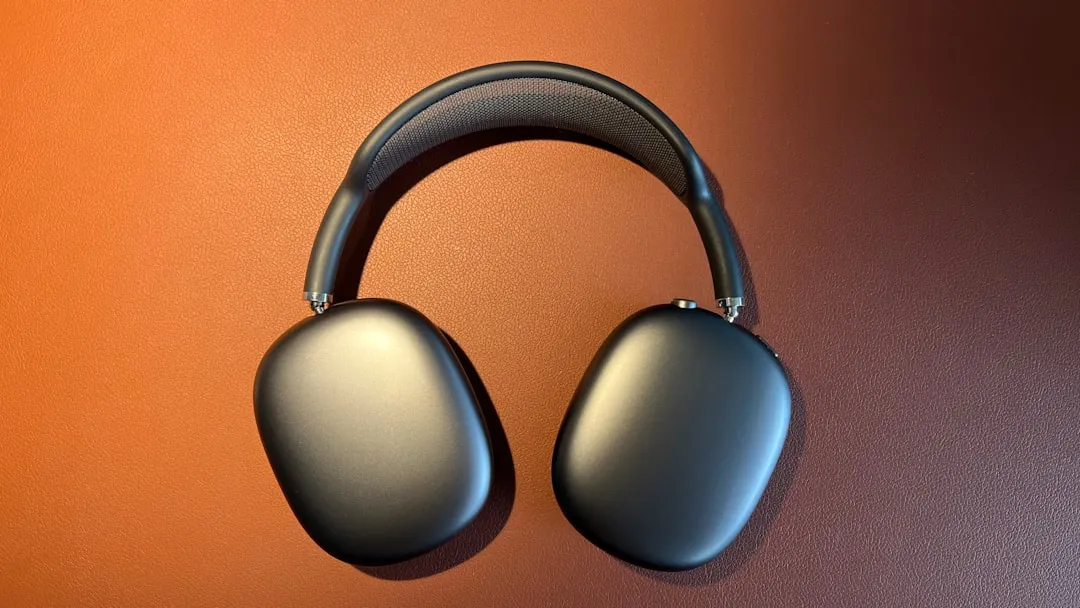
AirPods Max 2 H2 Chip Upgrade Explained: Gains, Gaps, and Who Should Upgrade
The AirPods Max launched in December 2020 with a genuinely strong physical design: premium aluminum ear cups, custom 40mm drivers, and noise cancellation that earned real respect from reviewers. What it lacked was a chip capable of running the software Apple was about to build around its entire AirPods line. The original model shipped with the H1. AirPods Pro moved to the more powerful H2 in September 2022. AirPods Max sat still for three and a half years.
The AirPods Max 2 H2 chip upgrade, announced March 16, 2026, finally closes that gap. It's the same silicon that delivered a major feature leap for AirPods Pro, now arriving in Apple's over-ear headphones for the first time, as Ars Technica reported this month. The chassis is entirely unchanged: same aluminum ear cups, same stainless steel headband, same 386.2-gram weight, same non-folding structure, same Smart Case design from 2020, per MacRumors. The price stays at $549.
That combination, a meaningful silicon upgrade inside an untouched body, is the most revealing thing about this product. Apple deliberately decoupled its silicon roadmap from any industrial redesign, treating AirPods Max as a managed platform where compute advances independently of hardware. The result is a genuinely improved product that also makes visible exactly how much upgrade headroom remains.
One clarification on product history: the September 2024 refresh added a USB-C port and new color options; it was not a chip or feature upgrade. AirPods Max 2 is the first substantive update since the 2020 original, and those are the two products being compared here: H1-era original versus H2-powered Max 2.
AirPods Max 2 H2 chip upgrade: what it actually changes
ANC improvement and audio performance
Apple's headline claim is that Max 2 delivers ANC up to 1.5x more effective than the previous generation, achieved through H2 paired with new computational audio algorithms tuned specifically for the Max's existing microphone array, according to Apple's Newsroom. That figure comes directly from Apple. Independent lab verification hasn't happened yet, but it's consistent with the jump H2 delivered on AirPods Pro 2 when it replaced H1. Treat it as Apple's stated claim and wait for third-party testing to confirm the magnitude.
Transparency mode receives a new DSP algorithm optimized for H2, which Apple says produces more natural-sounding passthrough, per 9to5Mac. Overly processed transparency, sound that feels artificial rather than real, ranks among the most common criticisms of high-end ANC headphones. That makes it a meaningful target even when Apple is describing its own improvement.
The 40mm drivers carry over unchanged. Gains come from a new high dynamic range amplifier delivering cleaner output while preserving the Max's established sound character, with Apple claiming improved instrument localization, more consistent bass, and more natural mids and highs for Spatial Audio content, per PCMag. Bluetooth steps up from 5.0 to 5.3, reducing wireless latency in ways Apple positions as useful for gaming via Game Mode across iOS, macOS, and iPadOS, per Ars Technica.
One clarification on lossless audio: 24-bit/48 kHz playback via USB-C cable is a real upgrade for owners of the original Lightning-port model, but it was already available to 2024 USB-C refresh owners running iOS 18.4 or later, MacRumors confirms. Wirelessly, lossless audio is still not supported. Worth flagging now because it becomes relevant again when evaluating the platform's remaining gaps.
New features enabled by H2
The feature story is where the chip's impact is most visible. A suite of capabilities that AirPods Pro users have had for years arrives on AirPods Max for the first time, bringing the over-ear line into genuine feature parity with the rest of Apple's audio lineup, as TidBITS observed.
The additions that change daily use most directly:
- Adaptive Audio automatically blends ANC and Transparency based on ambient conditions, with no manual mode switching required
- Conversation Awareness lowers playback when you start speaking to someone nearby
- Voice Isolation uses H2's computational audio to prioritize your voice on calls while suppressing background noise
These three together represent a fundamentally different listening experience from the original H1-era Max, per 9to5Mac. They're also the features that most directly prove what held the old Max back, not its drivers, not its design, but its chip.
AirPods Max 2 live translation and the ecosystem play
The most conditional addition is Live Translation: real-time in-person language translation powered by Apple Intelligence, covering English, French, German, Japanese, Spanish, and other supported languages, per Lewis Lovelock. The feature requires iOS 26 and an Apple Intelligence-capable iPhone, and availability varies by region, Apple notes. How accurately it performs at conversational speed, which languages are covered in practice, and whether processing is on-device or server-dependent all remain open questions at launch.
Beyond the big four, Apple also claims studio-quality audio recording capability for podcasters and vocalists, and goes further, stating that AirPods Max 2 are the only headphones that let musicians both create and mix in Personalized Spatial Audio with head tracking when connected via USB-C, per Apple's Newsroom. That's a bold and specific claim; whether the microphone quality holds up against dedicated recording equipment is untested. Smaller additions include a camera remote function via the Digital Crown, which triggers the iPhone or iPad shutter and starts or stops video recording in compatible third-party apps, per 9to5Mac. Personalized Volume, Loud Sound Reduction, and Siri Interactions (nod to accept, shake to decline, no voice required) fill out the rest.
Taken together, H2 expanded the Max from a listening device into a more versatile ecosystem tool. Whether any given buyer uses Live Translation or the camera remote daily matters less than what those features signal: Apple is positioning the Max as something more than a high-end pair of headphones, and the chip is what made that positioning possible.
AirPods Max 2 vs AirPods Max: what the chip didn't fix
The unchanged elements are the more analytically interesting half of this product, because they define what the next generation needs to address.
The physical design is identical to 2020 in every measurable dimension: aluminum ear cups, stainless steel headband frame, knit mesh canopy, telescoping arms, weight (386.2 grams), and non-folding structure, MacRumors confirms. The headphones still ship with the same Smart Case that partially covers the ear cups while leaving the headband exposed, a design criticized since launch and never revised, as TidBITS noted. Because there's no power button, the Smart Case is effectively the only reliable way to put the headphones into low-power standby; without it, they stay active and drain the battery, per MacRumors. The canopy fabric, also unchanged, has a documented tendency to stretch or lose tension with extended use, with some users reporting the material creases and damages over time.
Battery life is 20 hours with ANC enabled, the same figure from 2020, per PCMag. Apple now advertises that a five-minute charge delivers 1.5 hours of listening, a new metric per 9to5Mac. Apple added a quick-charge stat while overall endurance held flat. Notably, TidBITS observed that Apple quietly dropped some comparison specs from its documentation, adjusting what it publishes rather than what it delivers.
None of this is a design collapse. The aluminum and steel construction has aged better aesthetically than most plastic-framed competitors at this price. But at $549, the ergonomic complaints, portability, the case, the absent power button, are the same ones buyers have had since launch. H2 answered the software question. It left the physical ones untouched.
That's precisely what makes the headroom argument credible. Swapping the chip alone, without changing a single physical component, delivered better ANC, smarter contextual audio, a translation feature, and full feature parity with AirPods Pro. The Max platform still has obvious vectors for meaningful improvement: longer battery life, a folding mechanism for portability, a redesigned case, wireless lossless audio, and potentially health sensors following the direction AirPods Pro 3 already demonstrated. None of those require waiting for a new chip generation. The engine finally matches the chassis. The chassis hasn't yet been asked to match the engine's ambitions.
Who should actually care about upgrading
Original Lightning-port AirPods Max owners have the most to gain. Moving from H1 to H2 means up to 1.5x better ANC (Apple's claim), the full H2 feature suite, USB-C charging, wired lossless audio, Bluetooth 5.3, and every software capability outlined above. For anyone still on the 2020 model and embedded in the Apple ecosystem, this is the upgrade Apple should have shipped years earlier.
2024 USB-C refresh owners face a narrower calculation. They already have USB-C and wired lossless with iOS 18.4 or later. What they're missing is the H2 chip and everything it enables: Adaptive Audio, Conversation Awareness, Voice Isolation, Live Translation, studio recording, and Apple's claimed ANC and Transparency improvements. Those are real additions. Whether they justify $549 again depends on how many of those features a buyer would actually use day to day.
New buyers evaluating the Max 2 against competitors face the standard Apple trade-off: exceptional ecosystem integration, Spatial Audio depth, and a sound profile that earns genuine respect, inside a non-folding chassis with a 20-hour battery, at a price point where Sony and Bose offer more portable options with comparable or better endurance. At $549, unchanged since 2020 per MacRumors, the Max 2 is a better product than its predecessor. The ergonomic constraints remain unaddressed, and the feature depth is heavily Apple-ecosystem-dependent. Live Translation, for instance, requires iOS 26 and an Apple Intelligence-capable iPhone. It doesn't function in isolation.
A platform managed deliberately, with room still to run
The H2 chip debuted in AirPods Pro 2 in September 2022. It arrived in AirPods Max in early 2026, roughly three and a half years later, as Ars Technica notes. During that window, AirPods Max owners paid $549 for headphones that couldn't access the features Apple was actively developing for the rest of its audio lineup. That's a long time to wait at a premium price.
The Max 2 corrects the most significant of those omissions. Better ANC, feature parity with AirPods Pro, and a broader ecosystem role represent genuine value delivered without raising the price from its 2020 launch level. The platform has been upgraded in the dimension that was holding it back most.
What makes this product strategically interesting is what it leaves visible. Apple demonstrated that the physical chassis can stand entirely still while the software and processing picture transforms completely. That's efficient product management, but it also means the next AirPods Max generation arrives with an unusually obvious brief: address the battery, the portability, the case, and wireless lossless. Battery life at 20 hours with ANC has not moved since 2020, per PCMag. Wireless lossless audio remains absent despite Apple now marketing these headphones to professional musicians and creators. Those are the gaps the AirPods Max 2 H2 chip upgrade revealed by filling everything else.
The compute argument has been answered. The physical argument has barely been started. As BusinessWorld put it at launch, these are the headphones Apple built the chassis for in 2020, finally fitted with an engine to match. The chassis still has some catching up to do.




Comments
Be the first, drop a comment!