



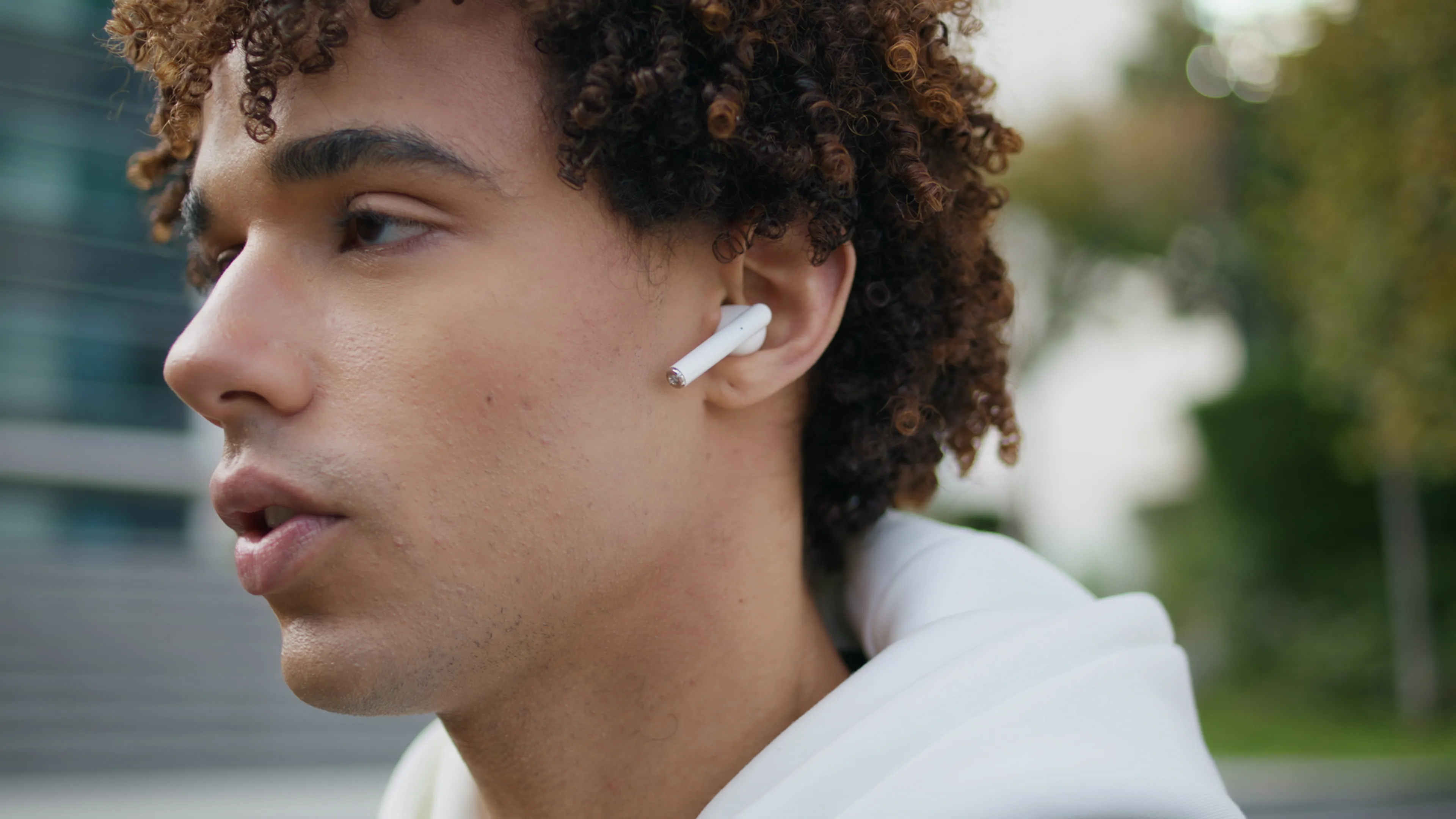
Rumors about camera-equipped AirPods have circulated for years without a fully convincing explanation. Health sensors? Gesture recognition? The concept kept resurfacing without anyone quite explaining what job the cameras were supposed to do. That ambiguity made the rumor easy to dismiss.
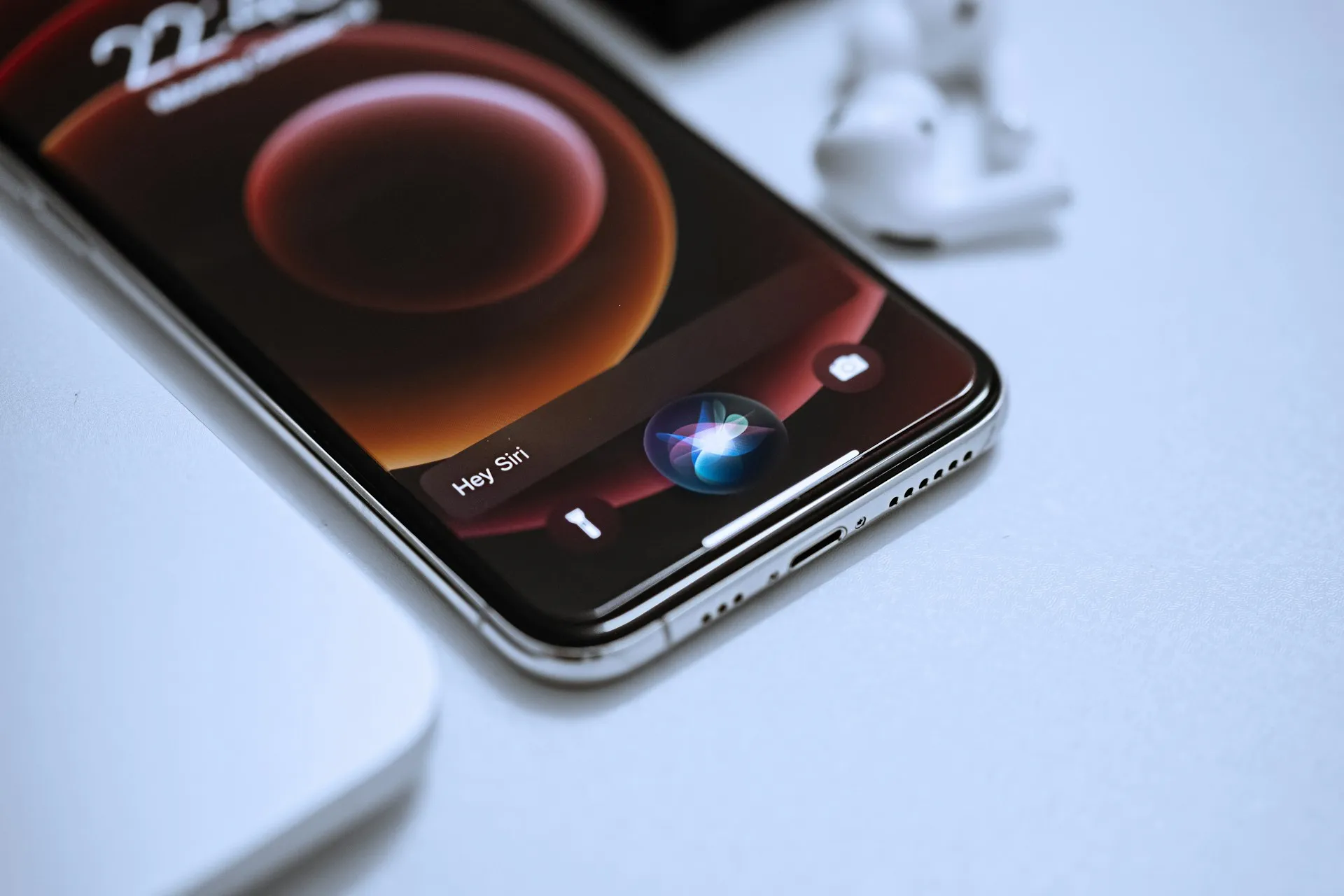
Recent reporting from Bloomberg's Mark Gurman, per MacRumors, points to a clearer explanation: the cameras would act as Siri's eyes. Both earbuds would reportedly carry small infrared sensors that feed low-resolution visual data to Apple's AI assistant, letting users ask questions about what is in front of them without pulling out a phone. That clarification gives the rumor a clearer purpose: Visual Intelligence, Apple's existing iPhone feature for AI-powered queries about the real world, untethered from the phone entirely.
The idea now appears to be in a much more advanced stage of development, according to 9to5Mac, though Apple has not announced camera-equipped AirPods or confirmed the AirPods Ultra name. Recent reports say Apple testers are using prototypes in design validation testing, a late preproduction stage, with the design and feature set said to be close to final. The product was reportedly once targeted for the first half of 2026 before Siri-related delays pushed it back, and recent coverage from Engadget frames a fall 2026 launch as possible but still dependent on Apple's delayed Siri upgrades.
The reporting helps answer the 'why cameras?' question. The harder question is whether Apple's AI can do the job.
What camera-equipped AirPods would actually do
The reported purpose is not photography or video recording. Instead, the sensors are described as capturing low-resolution visual data for machine interpretation, with Siri using that context rather than saving media to a camera roll, according to MacRumors.
Earlier reporting had circled three possible purposes for the cameras: health sensing, gesture recognition, or AI visual assistance. Gurman's latest reporting lands firmly on the third, 9to5Mac noted in a recent analysis. According to Macworld's reporting on Gurman's findings, the cameras are located on each earbud stem, with the earbuds expected to have longer stems than current AirPods Pro to accommodate them, plus a small LED that activates when visual data is being sent to the cloud. Gurman frames these as an enhancement to the Visual Intelligence system already available on iPhone 15 Pro and newer, not a standalone feature, but a natural extension of Apple's current AI stack into wearable form.
That detail matters for how to read the product. If the reporting is accurate, Apple would not be starting from scratch; it would be moving an existing Visual Intelligence-style interaction off the phone and onto hardware people already wear. The interaction shifts from raising a phone and pointing it at something to simply looking and asking. That reduction in friction is the entire value proposition. Whether it justifies the price depends completely on how reliably it works.
The most useful rumored features
Scanning ingredients and asking Siri what to cook explains the basic mechanic, but stronger use cases are navigation and accessibility. Two other use cases carry more genuine weight.
The stronger one is navigation. Current GPS audio directions communicate in abstract distances. "In 300 feet, turn left" is far less clear than "turn left immediately after the gas station," as 9to5Mac observed. If ear-level sensors can reliably recognize nearby landmarks, Siri could make directions feel less like parsing coordinates and more like being guided by someone who can reference what is actually around you. That inference isn't sourced from Gurman's report directly; it's the logical extension of the landmark-directions use case he describes. The improvement works specifically because the camera is on your body, not in your hand.
The other case, largely buried in the coverage, is accessibility. Ambient camera AI that identifies objects or describes surroundings hands-free could also have accessibility value, especially if Apple connects it to its broader work on AI-assisted image descriptions and environmental understanding. That the coverage has mostly treated this as a footnote understates how clearly it demonstrates the product's real value ceiling.
The speculative features, proactive reminders triggered by passing a store, context-aware surfacing from a calendar, illustrate what the platform might eventually do, not what it will do at launch. A few practical features at launch is the more realistic expectation; a full set of camera-driven Siri reminders within a year or two would be surprising. Treat those scenarios as roadmap signals, not confirmed features.
Why Siri is the biggest risk
Recent reports suggest the hardware is far along, with prototypes in testing and the design close to final. But everything the product is supposed to do depends entirely on a next-generation Siri that Apple has not yet shipped, and has already delayed at least once.
The camera AirPods were reportedly targeted for the first half of 2026 before Siri delays moved them back. A fall 2026 release would likely hinge on whether Apple's upgraded Siri is ready alongside the next major software updates. Recent reporting still points to a fall 2026 window for the upgraded Siri, which would align with Apple's typical fall software cycle, Engadget noted. That's plausible. It's also a timeline Apple has already slipped once on this specific product.
This isn't a timing footnote; it's a structural constraint on the product's entire premise. An infrared camera on an earbud stem, capturing low-resolution imagery from ear level, already has real physical limitations: constrained field of view, lighting sensitivity, and hardware resolution that the AI has to compensate for. A capable AI can make that workable. A mediocre one makes it frustrating. If Siri returns slow answers, misidentifies objects, or hedges on questions where confidence is what the user needs, people may simply stop invoking the feature.
The hardware reveal is the good news story. Whether Apple's AI team can hold up its end in actual use, rather than a controlled demo, is the question that remains genuinely open.
The privacy question
The planned transparency mechanism, a small LED on the earbud stem that illuminates when visual data is being uploaded, is a real concession worth acknowledging, The Verge reported. But an LED on an earbud stem may be easy to miss in a meeting, gym, or subway car.
Meta's Ray-Ban smart glasses drew sustained criticism for ambient surveillance concerns, and those are at least visually distinctive hardware, SoundGuys noted. AirPods are socially invisible, worn in gyms, offices, and kitchens without a second glance, and not identifiable as camera-equipped without close inspection. The people who buy these will opt in. The people around them will not.
The reported claim that the sensors would capture low-resolution imagery for machine interpretation, rather than photography, is an important distinction. But privacy questions will not end with launch-day limitations, because software updates and developer access can change what a sensor-equipped platform is capable of over time. What ships in fall 2026 and what the platform enables two years later are genuinely different questions.
That said, the privacy objection has a ceiling. Smartphones already go everywhere, carry cameras, and support camera-based AI features. The practical leap from iPhone-based Visual Intelligence to AirPods-based Visual Intelligence is smaller than critics tend to frame it. The social perception problem is real; the framing that this represents a categorically new surveillance risk is not quite right. Apple will need to make that case clearly, rather than assuming privacy goodwill it hasn't yet earned here. The LED is a start. It is not an answer.
Why this matters beyond AirPods
If Apple ships this product, current reporting suggests it would sit above the $249 AirPods Pro 3 as a higher-end model, with 'AirPods Ultra' floated as a possible name. Gurman places it within a broader wave of AI-centered Apple hardware that includes smart glasses and a pendant, with the earbuds further along in development than either, Macworld reported.
That is why the rumor matters beyond AirPods. AirPods are already normalized, worn everywhere without a second glance. They are the least-friction path Apple has toward making ambient AI wearables mainstream. If the camera AirPods demonstrate that Visual Intelligence can work reliably in an everyday wearable, the argument for smart glasses and an AI pendant becomes much easier to make. If they land poorly, because Siri underdelivers, because the privacy conversation turns hostile, or because ear-level cameras prove too limited in practice, the whole pipeline takes the hit.
The case for camera-equipped AirPods is now straightforward: these are not a camera product. They are an AI interface product, and the earbuds are simply the most plausible hardware Apple already owns to deliver ambient visual AI at scale. The hardware question is clearer than it was, but not settled until Apple announces the product. Everything from here is on Apple's AI team, and on how clearly Apple communicates what it's asking people to accept in return.


Comments
Be the first, drop a comment!