



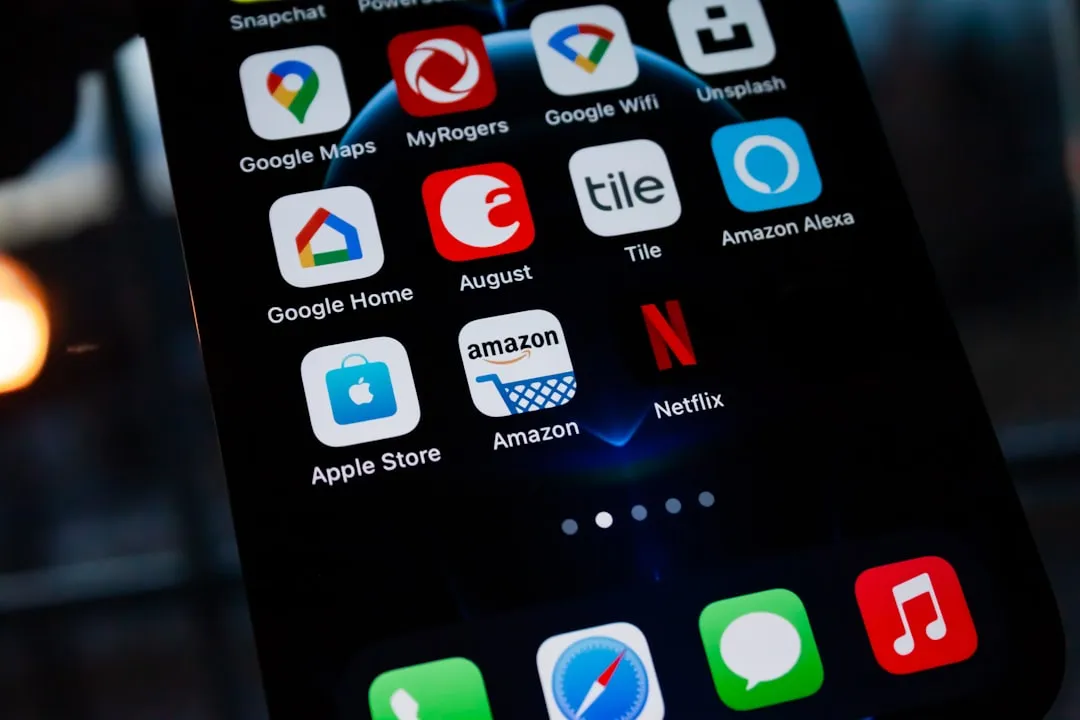
The app economy just hit a major turning point, and the numbers tell a fascinating story. While traditional app downloads continue their downward slide, subscription revenue has emerged as the undisputed champion of mobile monetization. Recent comprehensive analysis covering billions in revenue across thousands of apps reveals that subscriptions have become the backbone of app economics, with weekly plans now driving nearly half of all iOS app revenue. The shift represents more than just a trend—it's a fundamental transformation in how developers monetize their creations and how users consume digital services.
What makes this transformation particularly compelling is how it signals a complete reversal of traditional mobile commerce patterns. Industry reports drawing from $1.9 billion in revenue across more than 15,000 apps paint a clear picture of subscription dominance, while broader ecosystem data shows the App Store facilitated nearly $1.3 trillion in total billings and sales in 2024. Perhaps most tellingly, nearly 96% of app spending on both iOS and Google Play now comes from subscriptions, cementing this model as the primary revenue driver for mobile apps and effectively ending the era of one-time purchase dominance.
Weekly subscriptions are reshaping mobile revenue streams
Here's where things get really interesting—weekly subscription plans have become an absolute powerhouse in the revenue game, but their success reveals fascinating insights about regional payment psychology and user behavior patterns. These short-term commitments aren't just popular, they're dominating. Weekly plans now contribute 46% of iOS app revenue, which is pretty remarkable when you think about how recently this pricing model gained traction. What's particularly revealing is how this varies by region—Latin America is leading the charge with weekly plans generating 60% of revenue, followed by the Middle East and Africa at 53%. This regional variation suggests that in emerging markets, lower commitment barriers and cash flow considerations make weekly payments more attractive than traditional monthly or annual plans.
The pricing dynamics behind this shift reveal a fascinating elasticity story that challenges conventional subscription wisdom. Average weekly subscription prices have surged 12.2% in Europe and 12.5% in the United States, reaching $8.3 and $8.1 respectively. This price growth happening alongside increased adoption tells us that users aren't just willing to pay premium rates for flexibility—they're actively choosing higher per-unit costs in exchange for reduced psychological commitment and perceived control over their spending.
From a developer perspective, the strategic appeal becomes crystal clear when you examine conversion patterns and their underlying psychology. Research shows that simple weekly plans paired with short trial periods achieve the highest conversion rates, while annual plus weekly combinations create clear upgrade pathways that maximize both immediate revenue and long-term customer value. It's like offering customers a test drive that's just long enough to get hooked, but short enough that the commitment doesn't feel overwhelming—tapping into the behavioral economics principle that smaller, frequent payments feel more manageable even when they cost more overall.
The retention challenge reveals subscription's double-edged nature
But let's talk about the elephant in the room—retention rates that would make any subscription business owner break out in a cold sweat, and what they reveal about the fundamental mismatch between subscription promises and user expectations. The statistics here are honestly pretty sobering: nearly 30% of annual subscribers cancel within their first month. Think about that for a second. These are people who committed to a full year and then bailed within 30 days, suggesting that the initial value proposition either wasn't clearly communicated or wasn't actually delivered in the user's first experience with the app.
The retention picture gets even more complex when you break it down by subscription type and pricing, revealing deep psychological patterns about commitment and perceived value. Apps offering cheaper annual plans retain up to 36% of users after a full year, while high-priced monthly plans see only 6.7% retention. What's fascinating about these numbers is they reveal that the upfront commitment of annual plans actually creates a psychological investment effect—users who pay more upfront are more likely to justify their investment by continuing to use the service. Meanwhile, monthly subscribers maintain the flexibility to leave easily, which paradoxically makes them more likely to do exactly that.
Regional differences add yet another layer to the retention puzzle, connecting back to the cultural payment preferences we saw with weekly plans. The data shows that developers offering trial periods before subscriptions see 64% and 58% increases in lifetime value in the US and Europe respectively. This suggests that in markets where consumers are more cautious about subscription commitments, investing in trial experiences isn't just nice to have—it's a significant revenue multiplier that builds the trust necessary for longer-term retention.
AI and hybrid models are driving the next evolution
Artificial intelligence has emerged as a genuine game-changer in the subscription landscape, and the revenue numbers back this up in a way that goes beyond typical tech hype cycles. AI-powered applications generate revenue per install above $0.63 after 60 days, double the overall median of $0.31. What makes this particularly significant is that this performance level matches only Health & Fitness apps, which have traditionally been the undisputed kings of subscription monetization due to their deeply personal, habit-forming nature. This suggests AI apps are achieving similar levels of personal value and daily integration that make users willing to pay premium subscription rates.
Meanwhile, the pure subscription-only model is evolving into something more sophisticated as developers recognize the diverse monetization preferences across their user bases. Thirty-five percent of apps now combine subscriptions with consumables or lifetime purchases, with gaming leading this hybrid charge at 61.7% adoption. This trend reflects a growing understanding that different user segments have fundamentally different payment psychologies—some users prefer the ongoing relationship of subscriptions, others want to make one-time purchases, and still others enjoy the micro-transaction flexibility of consumables.
The concentration of success in the subscription space continues to intensify alongside these innovations, creating a winner-take-all dynamic that's becoming impossible to ignore. The top 5% of newly launched apps now generate over 400 times more revenue than the bottom 25%, up from 200x just the previous year. This widening gap suggests that while subscription models offer tremendous revenue potential, success increasingly depends on mastering multiple complex elements simultaneously—AI integration, hybrid monetization, retention psychology, and trial optimization—creating significant barriers for new entrants.
What this means for the Apple ecosystem moving forward
The subscription economy's dominance carries profound implications for Apple's platform strategy, particularly given how concentrated this revenue remains within their ecosystem. With the United States contributing 48.9% of in-app purchase revenue and over 67% of apps earning at least 80% of their revenue from iOS users, Apple's App Store remains the primary battleground where subscription success is won or lost. This concentration creates both tremendous opportunity and significant platform risk for developers who become overly dependent on a single revenue channel.
Regulatory pressures are simultaneously reshaping the competitive landscape in ways that could fundamentally alter the economics driving this subscription boom. Recent federal court rulings requiring Apple to allow external payment options without standard commissions have created new strategic considerations for developers, though many are treating external checkout as temporary arbitrage while planning for potential future Apple cuts. The cautious response suggests developers recognize that the current regulatory advantage may be temporary, much like getting a discount on rent—beneficial in the short term, but not something to build your entire business model around.
Bottom line: we're witnessing a fundamental maturation of the app economy where subscription revenue hasn't just supplemented traditional download-based monetization—it's created an entirely new set of success requirements. For developers, this means survival increasingly depends on mastering retention psychology, optimizing trial-to-paid conversion funnels, potentially integrating AI-powered value propositions, and embracing hybrid monetization models that cater to different user payment preferences. For users, it represents a shift toward ongoing relationships with apps rather than one-time purchases, fundamentally changing how we budget for and interact with mobile software in our daily lives. The numbers suggest this transformation is only accelerating, making it more critical than ever for both sides of the equation to understand what drives sustainable subscription success in an increasingly competitive and sophisticated marketplace.








Comments
Be the first, drop a comment!