



Reviewed by: Y. Garcia
Let's break down what's happening with Apple Car Key testing right now (because it's actually pretty fascinating). Apple hosted CCC's 13th Plugfest in Cupertino with participating companies including Apple, BMW, Ford, Google, Hyundai Motor Company, Lucid, Motorola Mobility, and Rivian Volkswagen Group Technologies (among others), all working together to validate next-generation digital key functionality.
What makes this particularly noteworthy is the focus on strengthening CCC Digital Key Version 4 interoperability and certification readiness (Business Wire). Version 4 introduces enhanced security protocols, improved battery optimization, and standardized cross-platform communication that Version 3 couldn't achieve — imagine your iPhone working seamlessly with any compatible vehicle regardless of manufacturer quirks or regional variations. This testing represents the critical final phase before widespread consumer deployment.
What's actually being tested in these real-world scenarios?
Here's where things get really technical (but stick with me, because this affects how you'll unlock your car in the future). The comprehensive testing program evaluates multiple approaches to digital vehicle access that go way beyond just "tap phone, unlock car."
Cross-version compatibility testing examines how Version 4 implementations work alongside existing Version 3 devices, helping identify trusted reference devices for future validation (Business Wire). Think of this as ensuring your new iPhone 16 can still unlock a 2023 BMW that only supports the older standard — backward compatibility that prevents you from being locked out during the industry transition period.
The Bluetooth Low Energy communication aspect is receiving structured analysis to resolve remaining technical issues and support future certification requirements (Business Wire). You know those moments when your phone's Bluetooth acts up? Now imagine that happening when you're trying to unlock your car after a long day. Version 4 specifically addresses connection reliability through improved signal management and faster authentication protocols.
Near Field Communication scenarios are also undergoing refinement based on recent testing findings, alongside passive entry and remote keyless entry evaluations (Business Wire). The testing validates whether you can seamlessly transition from tapping your phone on the door handle to passive proximity unlocking as you walk up to different vehicle models with varying hardware capabilities.
PRO TIP: Ultra-wideband tool evaluations are happening simultaneously, with vendor demonstrations showing how UWB equipment can support member development and future certification processes (Business Wire). This means manufacturers are testing the most advanced proximity detection available — technology that can pinpoint your iPhone's location within centimeters.
Why Tesla's potential adoption changes everything
Now here's what's really got my attention: Tesla's internal testing suggests a major shift toward industry-standard digital keys. Recent app updates reveal code references supporting wallet-based key functionality, indicating preparation for Apple Car Key integration (Gadget Hacks). This represents a significant philosophical shift for Tesla, which has historically maintained proprietary ecosystems to control the entire user experience.
Tesla's current phone key system depends on Bluetooth connectivity and faces challenges with background app management policies (Gadget Hacks). If you've ever had your Tesla app get killed in the background and then couldn't unlock your car, you know exactly what I'm talking about. It's one of those modern problems that sounds ridiculous until it happens to you at 11 PM in a parking garage.
Apple Car Key would eliminate these limitations by storing digital credentials directly in the iPhone's Secure Enclave, operating independently of apps (Gadget Hacks). Beyond app independence, this approach provides hardware-level cryptographic protection and maintains functionality for up to five hours after the iPhone dies, operating through power reserve mode (Gadget Hacks). Tesla's over-the-air architecture means existing vehicles could gain this capability through software updates rather than requiring new hardware.
How the technology actually works across different manufacturers
Let's get into the nuts and bolts of how this technology actually functions (because it's more sophisticated than you might think). Apple Car Key operates through multiple wireless technologies depending on vehicle capabilities, storing digital credentials in Apple Wallet and enabling vehicle locking, unlocking, and engine starting through NFC or Ultra Wideband wireless technology (The Weekly Driver).
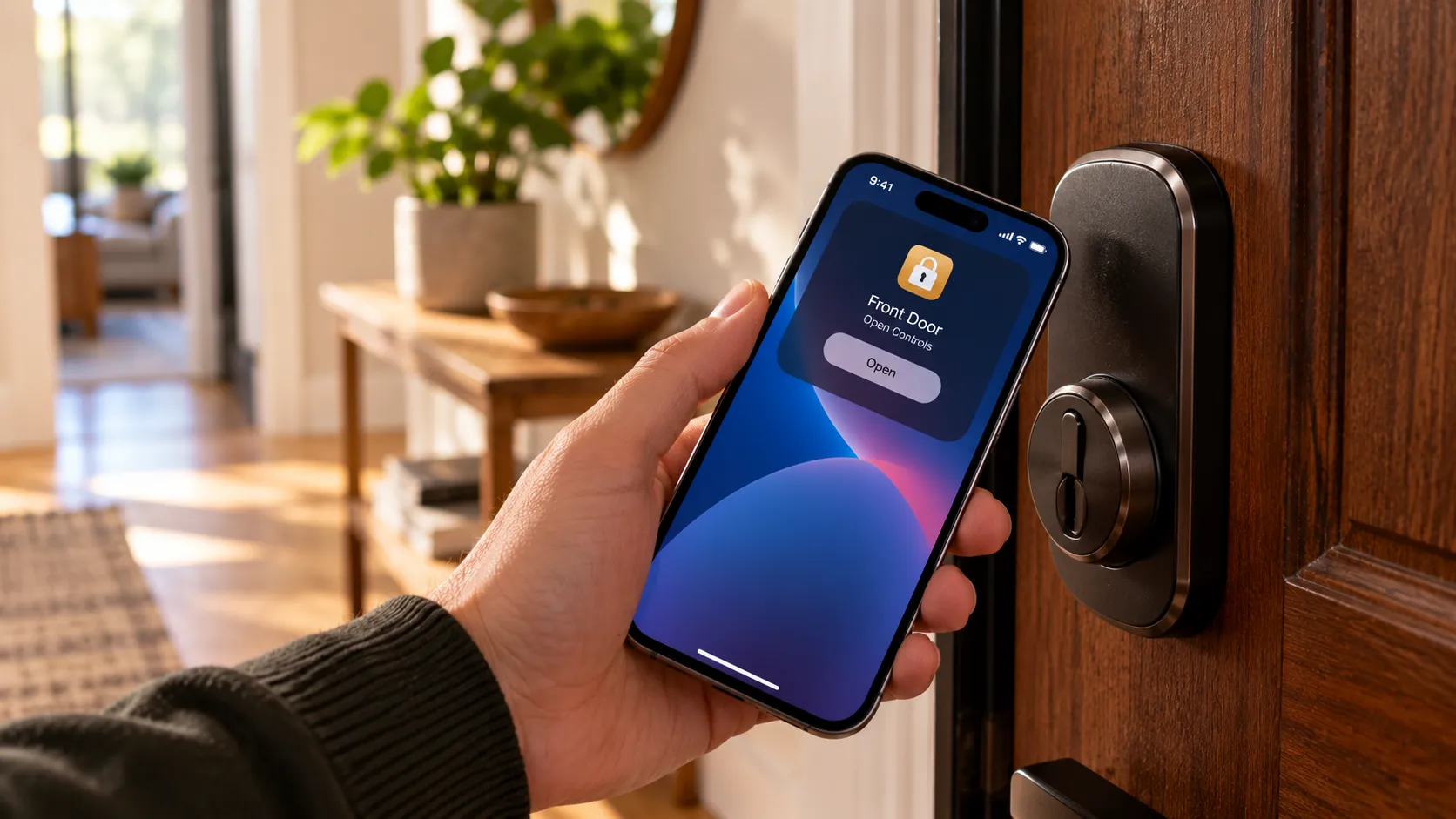
The NFC implementation requires tapping your iPhone against the door handle to unlock the vehicle (The Weekly Driver). Think of it like using Apple Pay, but instead of buying coffee, you're accessing your car. This approach works reliably even when your phone's battery is nearly dead, making it the fallback option for most implementations.
Ultra Wideband eliminates physical contact entirely, allowing passive entry where the vehicle tracks your iPhone's location in three dimensions (The Weekly Driver). UWB provides secure, centimeter-level accuracy for vehicle access (Gadget Hacks), meaning your car can distinguish between you approaching the driver's door versus walking past on the sidewalk. The technology prevents relay attacks by confirming your iPhone's exact position rather than just its presence within Bluetooth range.
Manufacturers choose between NFC and UWB based on cost considerations and target market positioning — luxury vehicles typically include UWB for the premium experience, while volume models often start with NFC implementation to keep costs manageable.
Which manufacturers are leading the charge?
BMW deserves credit for being the early adopter here — they pioneered Apple Car Key support, becoming the first manufacturer to ship vehicles with the technology in July 2020 (The Weekly Driver). BMW supports both NFC and UWB implementations, with UWB available on models equipped with the Comfort Access keyless entry system (The Weekly Driver). This dual approach demonstrates how manufacturers can offer tiered digital key experiences across their product lines.
Hyundai's implementation started with the 2023 Palisade three-row SUV and IONIQ 6 electric sedan, then expanded to the volume lineup (The Weekly Driver). This rollout strategy makes sense — test the technology on higher-end models first, work out any integration issues, then deploy across mass market vehicles where support volume becomes critical.
The expansion into American trucks represents a significant market milestone. RAM became the first American full-size pickup to support Apple Car Key with the refreshed 2025 RAM 1500 (The Weekly Driver). This signals that digital keys aren't just for luxury sedans or electric vehicles — they're becomina g standard expectation across truck buyers who increasingly demand smartphone integration features.
Mercedes-Benz implemented support with the redesigned 2024 E-Class, requiring the Premium or Pinnacle trim packages (The Weekly Driver), while Genesis adopted the technology in 2023, limiting initial availability to top trims (The Weekly Driver). This pattern reveals how automakers are positioning digital keys as premium features that justify higher trim levels.
Where this technology is heading next
The momentum behind digital keys is accelerating rapidly, driven by consumer demand for seamless smartphone integration. Apple announced support from 13 additional manufacturers at WWDC 2025, including Acura, Porsche, GMC, Cadillac, Chevrolet, Rivian, Smart, Lucid Motors, and others (The Weekly Driver). This expansion brings digital keys into virtually every automotive segment, from luxury sports cars to mainstream family vehicles.
The global expansion reveals the technology's universal appeal. The CCC certified 115 Digital Key products in 2025, including the first vehicles in China, reinforcing the global standard for secure access (Business Wire). Chinese market adoption is particularly significant because it validates the technology across different regulatory environments and mobile payment ecosystems.
Digital Key Version 4.0 will further improve cross-platform interoperability and cross-version compatibility as adoption accelerates (MacRumors). The technical improvements include enhanced security protocols, better battery optimization, and standardized authentication procedures that eliminate manufacturer-specific compatibility issues. This means rental cars, car sharing services, and fleet vehicles can seamlessly support any compatible smartphone regardless of brand or model year.
PRO TIP: Key sharing happens through iMessage with configurable access levels (The Weekly Driver). Parents can share vehicle access with teenage drivers while limiting engine start permissions, or provide temporary access to service technicians without compromising primary key security.
The convergence of Apple's testing initiatives with major automakers signals a transformative period for vehicle access technology. These collaborative efforts ensure seamless integration across diverse automotive ecosystems while maintaining the security and convenience users expect from Apple's ecosystem approach. Bottom line: we're moving toward a future where your phone truly becomes your universal car key, and these real-world testing programs are ensuring that future works reliably for everyone, from luxury car buyers to pickup truck owners to electric vehicle enthusiasts.




Comments
Be the first, drop a comment!