





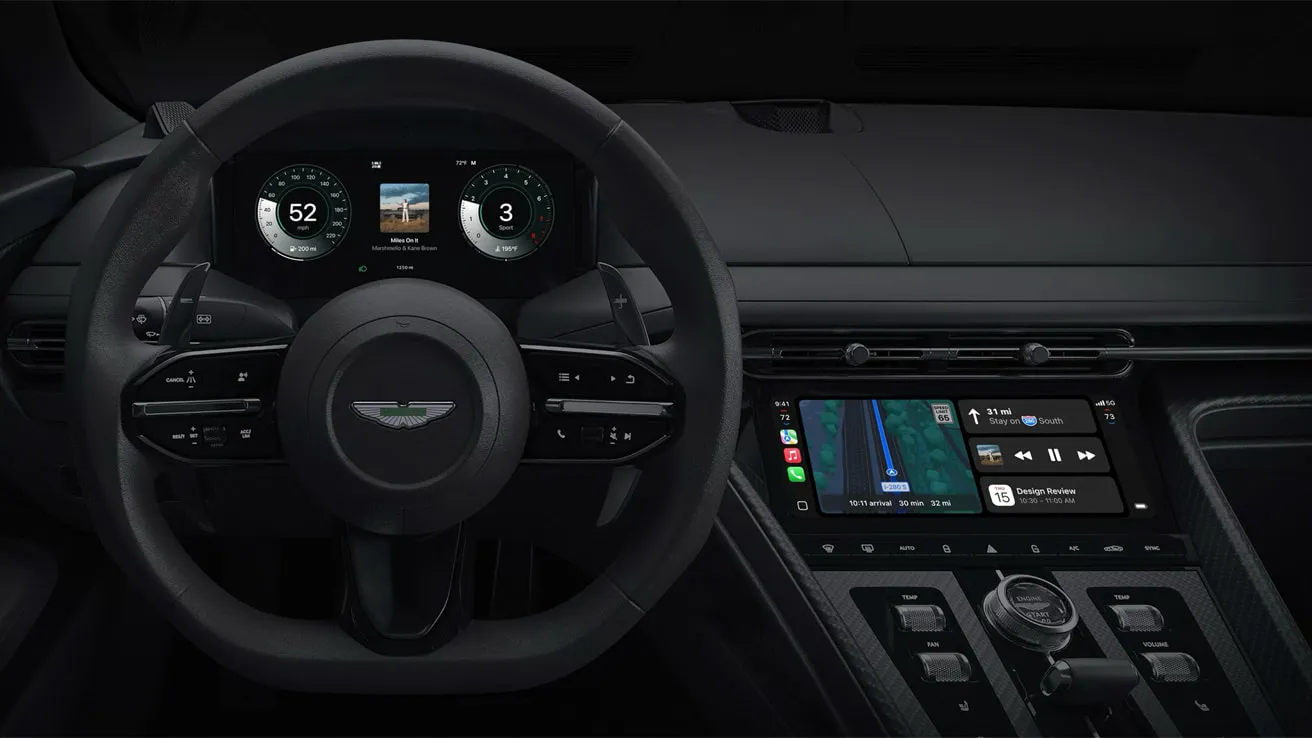
Apple's CarPlay Ultra has officially launched, marking a significant leap forward from the familiar smartphone mirroring system we've known for years. The enhanced platform has begun its rollout with Aston Martin vehicles in the U.S. and Canada, bringing deeper vehicle integration than ever before.
Unlike traditional CarPlay, which simply mirrors your phone's interface, CarPlay Ultra extends beyond basic phone functions to encompass comprehensive vehicular integration, including climate control, drive modes, and complete gauge cluster management. This is Apple's new approach to automotive software that transforms a simple mirroring solution into a comprehensive vehicle operating system that maintains the familiar Apple experience while accessing deep car functionality.
What makes CarPlay Ultra different from regular CarPlay?
Here's the bottom line: CarPlay Ultra is a complete reimagining of in-car technology. While traditional CarPlay essentially mirrors selected apps from your phone, Ultra creates what Apple calls a "parallel user interface" that seamlessly blends iPhone functionality with native vehicle systems. The system takes control of multiple displays throughout your car, including the instrument cluster, center screen, and any additional displays.
What's particularly impressive is how Ultra handles data processing. The system now incorporates data points and controls sourced from the car itself, creating a hybrid experience where iPhone apps work alongside vehicle-specific information like tire pressure, advanced driver assistance systems, and performance settings. Apple has also reportedly introduced something called "punch-through UI," which allows content from the car's native system to appear within CarPlay, such as reversing camera feeds.
The new platform includes iPhone-powered widgets that perfectly fit the car's screen or gauge cluster, providing at-a-glance information from Calendar, Weather, Reminders, and other apps. Unlike the previous system, drivers can now control climate settings, radio stations, and even vehicle-specific features like audio configurations without ever leaving the CarPlay interface.
This architectural approach is different from traditional mirroring. Rather than your phone simply displaying its screen on the car's display, the iPhone provides a display surface while the car uses that surface to display information using Apple's interface framework. This means the vehicle handles its own data rendering, ensuring responsive performance and maintaining privacy while delivering a cohesive Apple-designed experience.
Which cars will get CarPlay Ultra and when?
The rollout strategy is more measured than Apple's typical product launches, but the commitment from automakers is substantial. Aston Martin is currently the exclusive launch partner, with the system available on new vehicle orders and coming to existing models with compatible infotainment systems through dealer-installed software updates. The experience launches on the 2025 Aston Martin DBX and DB12, with broader availability across Aston's lineup expanding globally over the next 12 months.
However, the automotive industry's relationship with CarPlay Ultra has been more complex than initially anticipated. Five automakers have reportedly backed out of their initial commitments, including Mercedes-Benz, Audi, Volvo, Polestar, and Renault. The hesitation appears to stem from concerns about brand identity, as CarPlay Ultra takes over every screen in the vehicle, potentially diminishing automaker-specific design elements.
The industry's mixed response reflects the complex balance between technological advancement and brand autonomy. While some manufacturers worry about losing their distinctive interface identity, others see the opportunity to leverage Apple's proven user experience expertise while maintaining their brand character through collaborative design.
Despite these setbacks, multiple major brands remain committed to the platform, including newly announced partners Hyundai, Kia, and Genesis. Over a dozen automakers have signed agreements to support CarPlay Ultra, including established names like Ford, Honda, Nissan, Porsche, Jaguar, Lincoln, and Land Rover.
For those wondering about timelines, each manufacturer will work with Apple to create customized implementations that suit their specific vehicle characteristics. This collaborative approach means implementations will vary between brands, but it also explains why the rollout is happening gradually rather than all at once.
What are the technical requirements and limitations?
Getting CarPlay Ultra running in your vehicle requires meeting specific technical criteria that go beyond traditional CarPlay compatibility. The system requires an iPhone 12 or newer running iOS 18.5 or later, which is a higher barrier to entry than the current CarPlay system. More significantly, vehicles must have a digital gauge cluster to support Ultra's multi-display functionality.
The initial setup process is more involved than traditional CarPlay, highlighting the deeper integration Ultra provides. Connecting via Bluetooth takes a minute or two longer and includes additional consent screens, as the system establishes deeper integration with vehicle systems. During this setup, your iPhone uploads a package to the car containing UI instructions that enable the vehicle to render its own information using Apple's interface framework.
There are some notable restrictions that users should understand. The gauge cluster can only display Apple Maps for navigation, meaning Waze and Google Maps users won't see their preferred navigation apps in the instrument cluster, though they remain available on the main screen. This limitation might feel restrictive for those who've grown attached to alternative navigation solutions.
However, Apple has implemented robust privacy protections that address the deeper system integration concerns. According to Apple, the car doesn't retain personal data once the iPhone disconnects, and data sharing is limited to multimedia information and basic vehicle status like speed and engine status. This means Apple isn't creating a comprehensive profile of your driving habits or accessing sensitive vehicle data unnecessarily—a crucial consideration given CarPlay Ultra's expanded access to vehicle systems.
How does the real-world experience measure up?
Early hands-on testing reveals a system that delivers on Apple's promises while highlighting both impressive capabilities and areas for refinement. The system launches each time quickly after initial pairing, providing the reliable connectivity that users expect from Apple products. The interface responsiveness is particularly noteworthy—any latency in gauge displays comes from the car itself, not the phone, as the vehicle handles rendering using Apple's provided framework.
The performance consistency stems from CarPlay Ultra's intelligent architecture. Since the car processes its own information using Apple's interface guidelines, system responsiveness depends more on the vehicle's computing power than the iPhone's processing load, creating a more stable experience even during demanding tasks.
The customization options represent a significant step forward from traditional automotive interfaces. Drivers can choose from curated instrument cluster themes and customize colors and wallpapers to match personal preferences. What makes this particularly meaningful is how these personalization options work within each automaker's brand identity—creating a truly tailored experience that feels both distinctly Apple and appropriately suited to the specific vehicle.
However, some design elements reveal the challenges of creating universal automotive interfaces. Generic Apple templates don't always suit premium vehicles, with simple graphics that may feel inappropriate for high-end cars. One tester noted that some templates featured "simple graphics that looked to have been designed with an EV in mind, including a lack of numbered scales for the rev counter and speedometer."
The system's strength lies in its seamless integration of vehicle functions. Controls for climate, seat heating, and radio work naturally within the CarPlay environment, eliminating the jarring transitions between different interface systems that plague many current vehicles. You can adjust your car's temperature or change drive modes without ever leaving the familiar Apple interface, creating a truly cohesive experience.
What's impressive is how the system handles the blend of iPhone and vehicle information. You might see your next calendar appointment alongside your tire pressure readings, or have your podcast controls sitting next to climate controls, all presented in a unified design language that feels distinctly Apple while respecting the vehicle's character.
What does this mean for the future of car technology?
CarPlay Ultra represents more than just an incremental update—it signals Apple's serious commitment to becoming a major player in automotive software. The system's architecture suggests a future where the boundaries between smartphone and vehicle become increasingly blurred, with the iPhone providing a display surface while cars handle their own information rendering. This approach could fundamentally change how we think about car ownership and technology integration.
The platform's modular design philosophy means each manufacturer works with Apple to create customized implementations that suit their specific vehicle characteristics. This flexibility could help address automaker concerns about brand identity while maintaining the consistent user experience that makes Apple products appealing. Apple's restriction of data access to essential functions also suggests the company understands the importance of privacy in automotive applications.
The implications extend beyond just making cars easier to use. As vehicles become increasingly software-defined, CarPlay Ultra positions Apple as a key player in determining how we interact with our cars' growing array of digital features. Whether it's managing charging schedules for electric vehicles, coordinating with smart home systems, or integrating with future autonomous driving features, Apple is establishing a foundation for deeper automotive integration while maintaining the user privacy and experience quality that defines their ecosystem.
Looking ahead, CarPlay Ultra's success will likely depend on Apple's ability to balance deep integration with automaker autonomy. The system already demonstrates sophisticated capabilities like seamless control of vehicle functions and intelligent data presentation, but widespread adoption will require convincing more manufacturers that partnership with Apple enhances rather than diminishes their brand identity.
PRO TIP: For consumers considering their next vehicle purchase, CarPlay Ultra compatibility might become as important a consideration as traditional features like engine performance or safety ratings. The seamless blending of iPhone functionality with vehicle systems creates an experience that feels both familiar and revolutionary—exactly what you'd expect from Apple when they decide to reimagine an entire category of technology.
For consumers, CarPlay Ultra offers a glimpse of a future where car technology finally matches the sophistication and reliability we've come to expect from our mobile devices. The seamless blending of iPhone functionality with vehicle systems creates an experience that feels both familiar and revolutionary, potentially setting new standards for what we expect from automotive interfaces across the industry.




Comments
Be the first, drop a comment!