



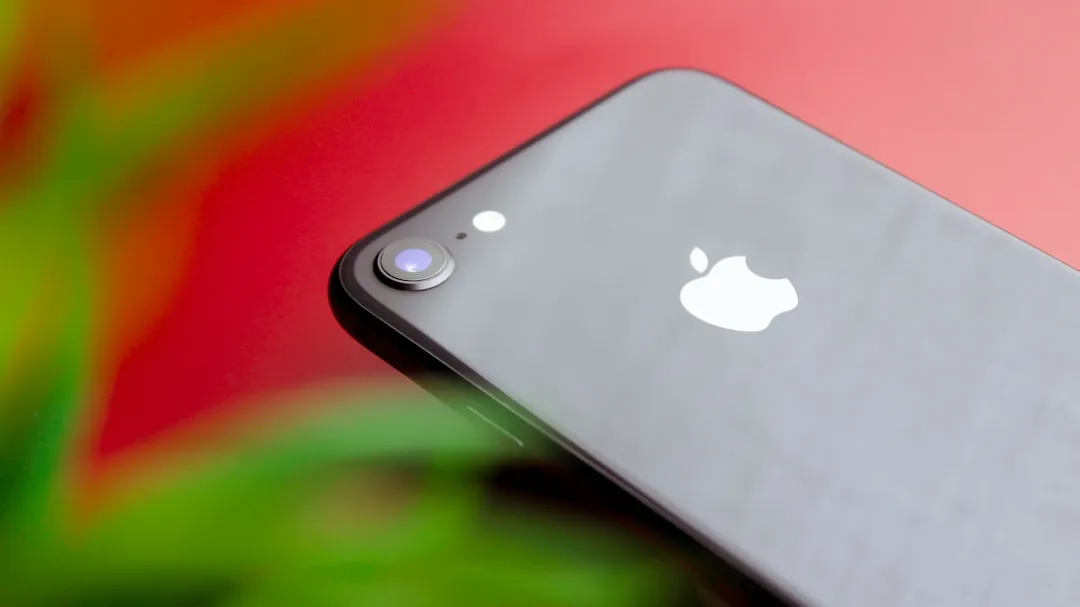
Apple's display supply chain drama rarely makes front-page news, but when it does, you know something significant is happening. The latest chapter involves BOE, China's largest display manufacturer, facing serious production challenges that have forced Apple to make some major adjustments to its iPhone OLED sourcing strategy. Recent reports indicate that BOE continues to struggle with manufacturing issues that first emerged back in November and December of last year—and here's the thing, these problems still aren't resolved months later.
What makes this particularly striking is the scale of the disruption. We're talking about millions of panel orders being redirected from BOE to Samsung Display—a shift that represents approximately $400 million in redirected orders, according to industry estimates. This isn't just a minor hiccup in the supply chain—it's a fundamental shift that reveals the technical challenges of modern smartphone display manufacturing and Apple's unwavering commitment to quality standards.
What's behind BOE's production troubles?
The technical challenges BOE is facing go far beyond typical manufacturing growing pains. These are fundamental production issues that have become serious enough to force the company to suspend or sharply reduce production for certain iPhone models. Problems in specific processes have created a domino effect throughout BOE's operations, affecting panels destined for multiple iPhone generations.
What makes this situation particularly puzzling is BOE's previous track record. The company had been reliably supplying LTPS OLED panels for the iPhone 15 and 16 models for an extended period. But here's where the story gets technically interesting—the jump to LTPO (Low-Temperature Polycrystalline Oxide) OLED technology for the iPhone 17 lineup represents a massive manufacturing complexity leap.
Manufacturing reliable LTPO panels requires extreme precision in fabrication processes that are fundamentally different from standard LTPS panels. While LTPS technology uses relatively straightforward polycrystalline silicon structures, LTPO panels incorporate oxide semiconductor layers that enable variable refresh rates while dramatically reducing power consumption. This manufacturing process requires ultra-clean environments, precise temperature control within fractions of degrees, and yield rates that can drop to 60-70% during initial production phases compared to 85-90% for mature LTPS processes.
BOE's struggles have manifested through fundamental product reliability issues, which translate to real-world problems users would notice: uneven brightness zones across the display, subtle color shifting at low brightness levels, and inconsistent response times that could affect Apple's ProMotion technology. These technical issues weren't resolved by the crucial mid-November deadline, despite BOE having months to address the problems.
The challenge is compounded by the fact that BOE has no prior experience producing LTPO OLED panels at the scale and quality standards Apple demands, making this essentially a leap into uncharted technical territory.
Samsung steps up to fill the gap
Samsung Display has once again demonstrated why it remains the gold standard in OLED manufacturing. The Korean giant seamlessly absorbed the redirected orders, with Samsung picking up millions of redirected orders over the past two months. This isn't just about having spare capacity—it showcases the kind of manufacturing flexibility that comes from years of perfecting complex production processes.
Here's where the numbers tell a compelling story: Samsung's iPhone 17-series supply increased from around 80 million units to roughly 90 million. That 10 million unit increase represents roughly 15% additional capacity utilization, demonstrating Samsung's operational flexibility. Given that Samsung's current OLED facilities have monthly substrate capacity in some Samsung facilities has been reported at ~200,000 (industry reporting varies), absorbing this additional volume showcases their manufacturing efficiency without requiring new production lines.
Samsung's technical dominance becomes clear when you consider their LTPO manufacturing advantages. As the long-established global leader in OLED technology, Samsung achieves yield rates of 85-90% on LTPO panels compared to industry averages of 70-80%. Their M14 OLED technology, which Apple will use across all four iPhone 17 models, represents the most advanced mobile display technology available, supporting refresh rates from 1Hz to 120Hz while maintaining color accuracy across all brightness levels.
The timing couldn't be more strategic for Samsung. This supply chain disruption strengthens their negotiating position and reinforces their role as Apple's most dependable high-end display partner, particularly as both companies look toward future innovations like micro-LED technology.
The broader impact on Apple's supplier strategy
This supply chain reshuffling exposes the complex balancing act Apple faces between cost optimization, supply security, and geopolitical considerations. BOE's production shortfall carries significant financial implications—the company had targeted more than 40 million annual OLED shipments to Apple across all iPhone models, representing roughly $1.6 billion in annual revenue opportunity now largely redirected to Samsung.
The strategic implications extend beyond immediate financial impact. Apple relies on BOE to exert pricing pressure on Samsung and LG Display and to geographically diversify its production away from South Korea. With BOE's reduced role, Apple's negotiating leverage diminishes, potentially affecting component pricing across future iPhone generations. Industry estimates suggest this some industry analysts estimate this could have a small (single-digit basis points) impact on gross margins, though estimates vary.
However, BOE isn't disappearing entirely from Apple's ecosystem. The company is now focused on ensuring stable supply for the iPhone 17e, Apple's upcoming budget-focused model. Interestingly, BOE holds the largest panel allocation among suppliers for that model, suggesting Apple views BOE's capabilities as adequate for less technically demanding applications while maintaining the supplier relationship for future development.
The geopolitical dimension adds another layer of complexity. Losing a major Chinese supplier, even temporarily, complicates Apple's China market strategy at a time when the company faces increasing scrutiny in that crucial market. BOE's struggles also highlight the broader challenges Chinese technology companies face in competing with established South Korean suppliers in high-precision manufacturing.
What this means for the future of iPhone displays
This situation serves as a stark reminder of the technical precision required in modern smartphone manufacturing. The incident serves as a warning to all display suppliers about the manufacturing challenges of LTPO displays that enable features like ProMotion, Always-On Display, and the precise brightness control needed for Face ID operation in various lighting conditions.
The competitive landscape data reveals the South Korean dominance more clearly. As of October 2025, Samsung Display accounted for 64.5% of OLED shipments to the iPhone 17 series, while LG Display accounted for 34.1%, and BOE only 1.4%. This market share distribution means Samsung and LG collectively control nearly 99% of Apple's premium display supply, creating significant pricing power that could influence iPhone costs.
Looking toward 2026, the supply projections suggest a gradual rebalancing. Samsung Display is projected to supply around 120 million panels in 2026 while BOE is forecasted to ship around 55 million units in the same timeframe. This suggests BOE will recover and expand beyond their 2024 performance of around 40 million iPhone OLED panels, but primarily in standard models rather than the technically demanding Pro lineup.
The broader implications for display technology evolution are significant. As Apple moves toward even more advanced display technologies—potentially including micro-LED for future flagship models—the technical barriers to entry will only increase. This consolidation around proven suppliers may accelerate innovation in established facilities while making it increasingly difficult for new players to break into the premium smartphone display market.
Where does this leave the iPhone ecosystem?
This behind-the-scenes supply chain management ultimately reinforces why Apple commands premium pricing in the smartphone market. While BOE continues its expansion—the company is expanding AMOLED production lines in Chengdu with a planned investment of approximately $8.86 billion—Apple's quality standards remain uncompromising, even when it means absorbing significant supply chain disruption costs.
The recent resolution of legal tensions also stabilizes the competitive landscape. Samsung successfully settled a patent dispute with BOE regarding OLED technology, securing ongoing royalty payments. This resolution removes some uncertainty around intellectual property conflicts that had complicated BOE's expansion plans and may actually facilitate more stable competition going forward.
For iPhone users, this supply chain resilience ensures consistent display quality across model years without visible compromises. The seamless transition from BOE to Samsung for critical components demonstrates Apple's supply chain sophistication—maintaining multiple qualified suppliers, monitoring quality metrics in real-time, and having contingency plans that activate without affecting product availability or user experience.
Bottom line: While BOE works to prove its technical capabilities in advanced display manufacturing, Samsung and LG Display continue to set the standard for premium smartphone displays. This situation underscores that in cutting-edge technology manufacturing, having the right equipment is only half the battle—consistently executing complex processes with near-perfect precision requires years of expertise, something that can't be replicated quickly regardless of investment levels. Apple's willingness to maintain these exacting standards, even when it complicates supply chain management, is precisely what enables the consistent premium experience iPhone users expect.










Comments
Be the first, drop a comment!