



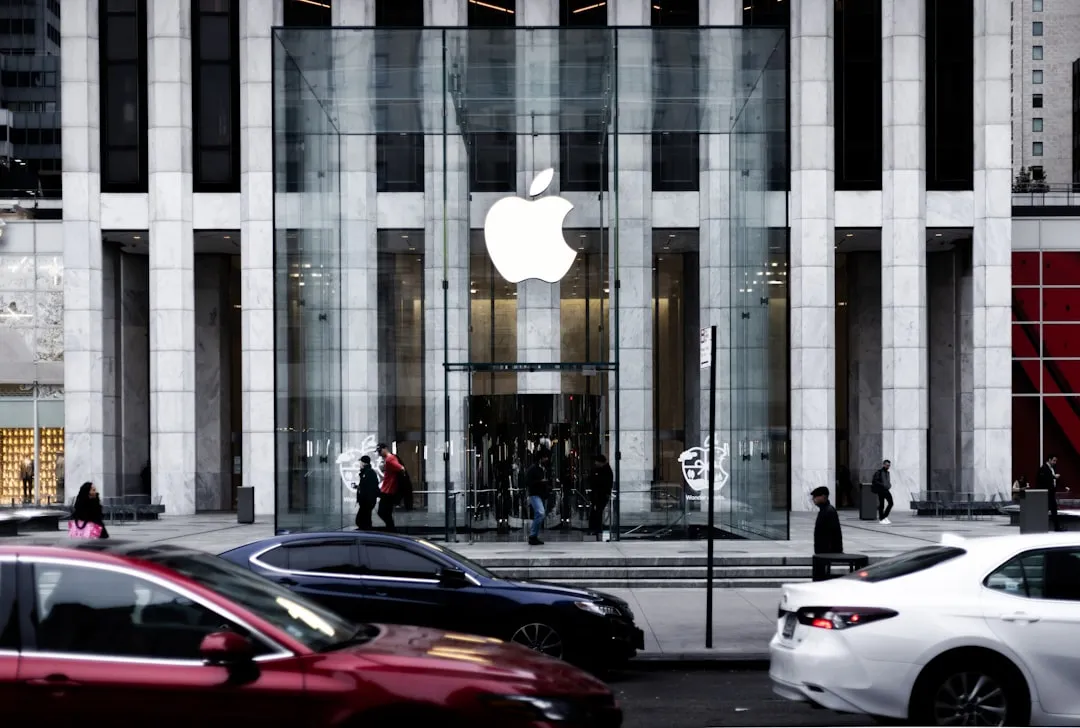
Apple's regulatory troubles are piling up faster than software updates, and the latest developments paint a picture of a company under siege from multiple directions. The tech giant recently faced a $150,000 fine for violating a decade-old agreement in New Jersey, according to Bloomberg. Now, this might sound like pocket change for a company with market capitalization ≈ $3.9 trillion (early Feb 2026), but it's part of a much larger pattern that should have Apple executives losing sleep.
The real eye-opener came from across the Atlantic, where Italy's antitrust authority imposed a hefty $116 million fine on Apple over its App Tracking Transparency policy. Predictably, Apple has indicated it will appeal this decision, but what makes this particularly significant is how it signals a fundamental shift in global regulatory strategy. Rather than simply challenging Apple's market power, authorities are now scrutinizing whether the company uses privacy protections as a competitive weapon. This coordinated global pushback suggests regulators have moved beyond viewing Apple's practices as isolated business decisions to seeing them as systematic attempts to eliminate competition through ecosystem control.
The New Jersey fine: What actually happened?
Here's where things get interesting (and a bit murky). The $150,000 penalty stems from Apple's violation of a longstanding agreement in New Jersey, though the specific details reveal how this seemingly small fine fits into a much more sophisticated legal strategy designed to establish precedent across multiple jurisdictions.
This penalty represents just one component of a broader Department of Justice lawsuit where multiple states including New Jersey are challenging Apple's alleged anticompetitive practices. What makes this approach particularly effective is its legal foundation – the case involves claims under Section 2 of the Sherman Act and various state antitrust laws, creating multiple avenues for enforcement that make it much harder for Apple to defend against.
But here's the kicker: federal prosecutors are now investigating Apple for criminal contempt following the company's alleged failure to comply with court orders regarding App Store reforms. This escalation to criminal referrals represents a qualitative shift in how seriously courts view Apple's resistance to regulatory compliance. When you're facing potential criminal charges, you've moved beyond simple regulatory hiccups into territory where individual executives could face personal liability.
The New Jersey situation exemplifies how regulators have learned to coordinate their efforts. Rather than pursuing isolated cases that Apple can handle separately, we're seeing synchronized pressure from twenty states and territories, all challenging different aspects of the same ecosystem control strategy that generates Apple's extraordinary profits.
App Store battles intensify across multiple fronts
Let's break down what's really happening with Apple's App Store – it's become ground zero for a fundamental challenge to how digital platforms operate in modern markets. A federal appeals court recently upheld a contempt ruling against Apple for defying orders to open its iPhone app store to alternative payment systems, but the court's decision reveals something fascinating about how regulators are threading the needle between competition and platform control.
The financial stakes explain why Apple has fought so aggressively against these changes. The company has historically charged developers up to 30% commission on app sales and in-app purchases. Think about that for a moment – Apple takes nearly a third of every transaction, simply because they control the gateway. It's like owning the only road into town and charging a toll for everything that passes through, which generates billions in revenue from what competitors argue is essentially a monopoly tax.
The courts' increasing frustration with Apple's resistance has produced an interesting regulatory compromise. Courts have been ordering Apple to allow apps to bypass Apple's payment system and connect directly with consumers, fundamentally challenging the company's business model. However, the appeals court decision shows regulators aren't trying to destroy Apple's revenue streams – they're trying to make them competitive. While upholding the contempt ruling, they also reopened a door for Apple to collect commissions on rival payment options, just not at monopoly rates.
This approach represents sophisticated antitrust enforcement that recognizes platform economics while preventing abuse. Apple can still profit from its ecosystem, but it can't use that control to eliminate all competitive alternatives or extract maximum rents without any market constraints.
European regulators take aim at privacy policies
The European regulatory landscape presents Apple with a particularly sophisticated challenge that illustrates how modern antitrust enforcement has evolved beyond simple market power analysis. Italy's competition authority determined that Apple's App Tracking Transparency policy creates unfair barriers by requiring developers to obtain user consent twice for data collection, but the regulatory theory behind this finding reveals how authorities now evaluate whether companies use legitimate business practices as competitive weapons.
Apple's App Tracking Transparency policy, which Apple implemented in April 2021 as part of iOS updates, was genuinely designed to enhance user privacy. However, regulators argue the implementation creates disproportionate obstacles for app developers who need user data to function effectively, particularly those whose business models depend on advertising revenue.
The technical issue revolves around what Italian authorities call a "double consent" problem that demonstrates regulators' increasingly sophisticated understanding of how dominant platforms can weaponize compliance costs. When developers want to collect user data for advertising purposes, European privacy rules require user permission. But Apple's system requires them to ask again through the ATT framework, creating additional friction that makes advertising-dependent apps less viable on iOS compared to Apple's own services.
What makes this case particularly significant is how it connects to broader European enforcement patterns. The Italy antitrust finding is similar to one by the French antitrust watchdog, which in March fined Apple 150 million euros ($162 million) over the consent feature. This consistency across European jurisdictions suggests regulators have developed a coordinated framework for evaluating when privacy protections become anticompetitive barriers – a regulatory approach that could reshape how all major platforms implement user protection features.
DOJ lawsuit reveals broader antitrust concerns
The Department of Justice's comprehensive lawsuit against Apple reads like a prosecutor's masterpiece in modern antitrust enforcement, connecting specific technical restrictions to a broader theory of systematic market manipulation. The numbers alone tell a compelling story: Apple maintains over 70% market share in the U.S. performance smartphone segment, while generating annual revenue of $383 billion in fiscal 2023 with $97 billion in net income. But what makes this case particularly devastating is how it shows these extraordinary profits result from systematically suppressing technologies that could threaten Apple's ecosystem control.
The DOJ's core allegation goes to the heart of modern platform competition: federal authorities allege Apple has suppressed technologies like super apps, cloud streaming games, and cross-platform messaging to maintain its competitive advantages and prevent users from easily switching to rival platforms. This isn't just about high prices – it's about using technical restrictions to eliminate entire categories of innovation that could reduce user dependence on Apple's ecosystem.
Let me explain what this means in practical terms, because it reveals the sophistication of Apple's alleged strategy. Super apps – think of something like WeChat in China – could potentially reduce users' dependence on Apple's App Store by providing multiple services within a single application, directly threatening Apple's 30% commission model. Cloud streaming games could allow users to play high-end games without needing the latest iPhone hardware, reducing upgrade pressure that drives Apple's device sales. Cross-platform messaging could eliminate the infamous "green bubble" problem that makes Android users feel like second-class citizens in group chats, removing a key social pressure that keeps users locked into iPhones.
The genius of Apple's alleged approach is that instead of just charging monopoly prices, the company has systematically blocked or degraded technologies that could enable competition. This creates what economists call "switching costs" that go far beyond simple price comparisons – users become trapped in Apple's ecosystem not because they love paying premium prices, but because leaving would mean losing access to features, services, and social connections they've built around Apple's platform.
What this means for Apple's future strategy
Apple finds itself navigating an entirely new regulatory landscape where traditional defense strategies no longer provide adequate protection. A federal judge has allowed the DOJ's smartphone monopoly case to proceed, setting up what could be years of legal battles that will fundamentally reshape how Apple operates its ecosystem. What makes this situation particularly challenging is how regulators have learned to coordinate their approaches while attacking different aspects of the same core business model.
The company's traditional defense strategy is running into increasingly skeptical audiences who understand platform economics better than previous generations of regulators. Apple has consistently argued that forcing technology sharing with competitors would stifle innovation, but when you're generating $97 billion in annual profits while allegedly suppressing competition, claims about innovation concerns start to sound like sophisticated attempts to preserve monopoly rents rather than genuine efficiency arguments.
The convergence of these various legal challenges creates a strategic dilemma that Apple has never faced before. The New Jersey fine, Italian privacy ruling, DOJ lawsuit, and federal contempt citations aren't just multiple legal problems – they represent a coordinated effort to force Apple to choose between maintaining its current business model and complying with evolving regulatory requirements across its most important markets simultaneously.
This suggests Apple's future strategy will need to evolve from defending fortress-like ecosystem control toward demonstrating that its competitive advantages come from genuine innovation rather than artificial barriers to switching. The company will likely need to maintain its premium brand and user experience benefits while operating within much stricter constraints on how it can leverage platform control to advantage its own services over competitors.
The bottom line is this: Apple built one of the most profitable business models in corporate history by creating a tightly controlled ecosystem that maximizes user engagement and revenue extraction. But that same control is now being challenged by regulators worldwide who view it as systematic market manipulation disguised as user experience optimization. The resolution of these cases will likely determine not just Apple's future profitability, but the broader rules governing how digital platforms can operate in competitive markets. Apple's strategic response to this challenge will define whether the company can adapt its business model to preserve competitive advantages while satisfying regulatory demands for genuine market competition.














Comments
Be the first, drop a comment!