



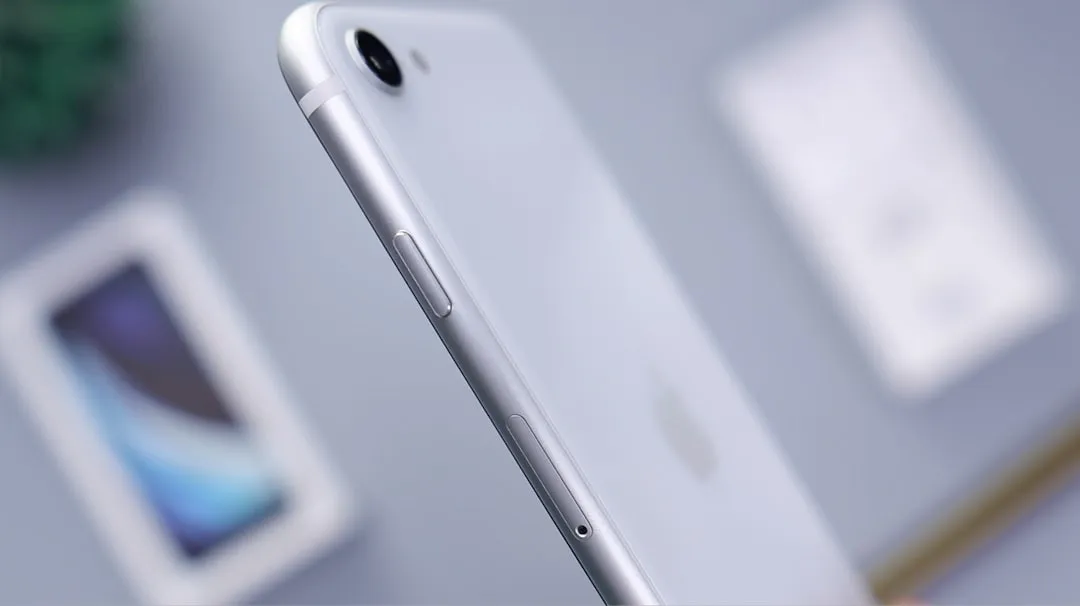
Picture this: You're Apple, the world's most valuable company, and you've just discovered that the memory chips powering your next iPhone could cost 70% more than last year. Welcome to 2026, where the AI revolution has turned the semiconductor world upside down, and even tech giants aren't immune to the chaos.
The numbers tell a stark story. Major memory manufacturers like Samsung and SK Hynix are implementing aggressive price increases, with some components seeing jumps of up to 70% in the first quarter alone, according to The Register. When combined with the 50% increases we saw throughout 2025, The Register reports that memory prices could nearly double by mid-2026. For Apple, whose hardware revenue represents 74% of total income, Seeking Alpha notes this creates massive exposure to memory price inflation—essentially making Apple's entire business model vulnerable to silicon scarcity for the first time in company history.
The AI gold rush is starving consumer electronics
Here's what's really happening behind the scenes: AI companies are literally buying up all the good stuff. The explosive demand for artificial intelligence infrastructure has created what IDC calls a "zero-sum game" where every wafer allocated to an HBM stack for an Nvidia GPU is a wafer denied to consumer devices.
The scale of this shift is unprecedented. Big tech companies are expected to spend $620 billion on AI infrastructure in 2026, up from $470 billion in 2025, with total global AI data center spending projected to reach $2.9 trillion by 2028. This massive capital allocation has fundamentally altered memory manufacturers' priorities—they're experiencing what amounts to a guaranteed revenue gold rush that makes consumer electronics look like small change.
Think about it this way: imagine you're running a bakery, and suddenly everyone in town wants to pay triple for wedding cakes instead of regular bread. You'd naturally shift all your ovens to those high-margin specialty orders, right? That's exactly what's happening with memory manufacturers. The voracious demand for HBM by hyperscalers, such as Microsoft, Google, Meta and Amazon, has forced the three biggest memory manufacturers to pivot their limited cleanroom space toward higher margin enterprise-grade components, creating what's essentially a permanent reallocation of global silicon capacity.
The situation has become so critical that Apple executives have taken up what Notebook Check describes as "permanent residence at a South Korean hotel" to maintain daily oversight of memory production facilities. This isn't just corporate diligence—it's damage control on an industrial scale, representing a complete breakdown of Apple's traditionally smooth supply chain operations.
Apple's defensive strategy: Cash reserves vs. rising costs
While smaller manufacturers are getting crushed, Apple isn't going down without a fight. The company's massive cash reserves and long-term supply agreements provide what IDC calls a structural hedge, allowing them to secure memory supply 12-24 months in advance. Counterpoint Research suggests that Apple's supply chain clout should shield it from the more extreme compromises facing other manufacturers.
But even Apple's fortress-like advantages have structural limits that are being tested for the first time. Memory components represent a significant portion of device costs—for mid-range smartphones, memory can account for 15-20% of total bill of materials, while high-end flagships see around 10-15%. What makes Apple's situation particularly precarious is how this percentage translates across their entire product ecosystem, from base model iPhones to high-end MacBooks, creating cumulative cost pressure that no amount of cash reserves can indefinitely absorb.
TrendForce warns that even for Apple, with its strong profitability, memory costs in iPhone bills of materials are expected to increase significantly in the first quarter of 2026. The company's defensive strategy is already showing cracks—Apple's 2026 flagship models will likely maintain 12GB of RAM rather than upgrading to 16GB, according to ZDNet, as the company prioritizes supply security over specification improvements. This represents a fundamental shift from Apple's traditional approach of pushing hardware boundaries regardless of cost.
It's like watching a fortress under siege—Apple's walls are thick, but the artillery keeps getting bigger, and now we're seeing the company make strategic concessions it's never had to make before.
The pricing pressure cooker: When premium meets reality
Apple faces a perfect storm of cost pressures that could fundamentally alter its pricing strategy. With memory shortage impacts expected to persist through 2027, according to Notebook Check, the company must navigate between maintaining margins and keeping products competitively priced—a balancing act that becomes exponentially harder when your core components are experiencing unprecedented inflation.
The math is brutal. If current trends continue, Apple could face a 4.9% gross margin hit, Seeking Alpha calculates, due to its heavy hardware dependence. While Apple's supply contracts provide short-term buffer against volatility, prolonged high memory costs will eventually force renegotiation at sharply higher prices.
Early signs of pricing pressure are already emerging. Tom's Guide reports that MacBook and iPhone prices could rise in 2026 as Apple's RAM supply advantage begins to fade. The company's traditional strategy of absorbing short-term cost increases to maintain market position may prove unsustainable in this new environment.
Here's what's particularly concerning about the timing: Apple has carefully cultivated a premium brand that commands price elasticity unlike any other tech company, but even that has limits. When you're already charging $1,200 for a base iPhone Pro, adding another $100-200 for memory inflation pushes you into truly rarified pricing territory where even loyal Apple customers start questioning value propositions. The psychological threshold between "expensive but worth it" and "absurdly overpriced" is narrower than many realize.
What this means for the Apple ecosystem
Bottom line: we're entering uncharted territory for Apple's hardware business. The company that built its reputation on premium products at premium prices now faces a scenario where component costs are rising faster than consumer willingness to pay, creating the first genuine existential challenge to Apple's hardware-centric business model in over a decade.
The broader smartphone market provides a glimpse of what's coming. Counterpoint Research projects that global smartphone shipments could decline 2.1% in 2026 while average selling prices rise 6.9% globally. For Apple, this represents both a challenge and an opportunity—if they can maintain supply while competitors struggle, market share gains could offset margin pressure.
The memory crisis signals what IDC calls "the end of an era of cheap, abundant memory and storage", at least in the medium term. For consumers, this means the days of expecting annual spec bumps at stable prices are likely over. We're probably looking at a future where memory specifications plateau while manufacturers focus on efficiency improvements and software optimization rather than raw capacity increases—a fundamental shift that rewards companies with superior software integration.
This shift could actually become Apple's secret weapon in disguise. The company has always been better at software optimization than its Android competitors, squeezing more performance out of less hardware. When everyone's facing memory constraints, that advantage becomes exponentially more valuable. Apple's unified hardware-software approach could be the differentiator that lets them deliver flagship performance while using more cost-effective, lower-capacity memory configurations that competitors can't match through software alone.
For Apple, it means rethinking everything from product roadmaps to pricing strategies in a world where silicon scarcity, not innovation cycles, increasingly drives hardware economics. The company's famous "just works" philosophy may need to extend to "just works brilliantly with constrained resources"—an evolution that could actually strengthen Apple's competitive moat if executed properly.
PRO TIP: If you're planning a major Apple hardware purchase, 2026 might be the year to buy sooner rather than later. With memory prices showing no signs of stabilizing and Apple's cost absorption strategy reaching its limits, the premium you pay today could look like a bargain compared to tomorrow's prices. Consider it an investment in avoiding the coming price inflation wave.






Comments
Be the first, drop a comment!