



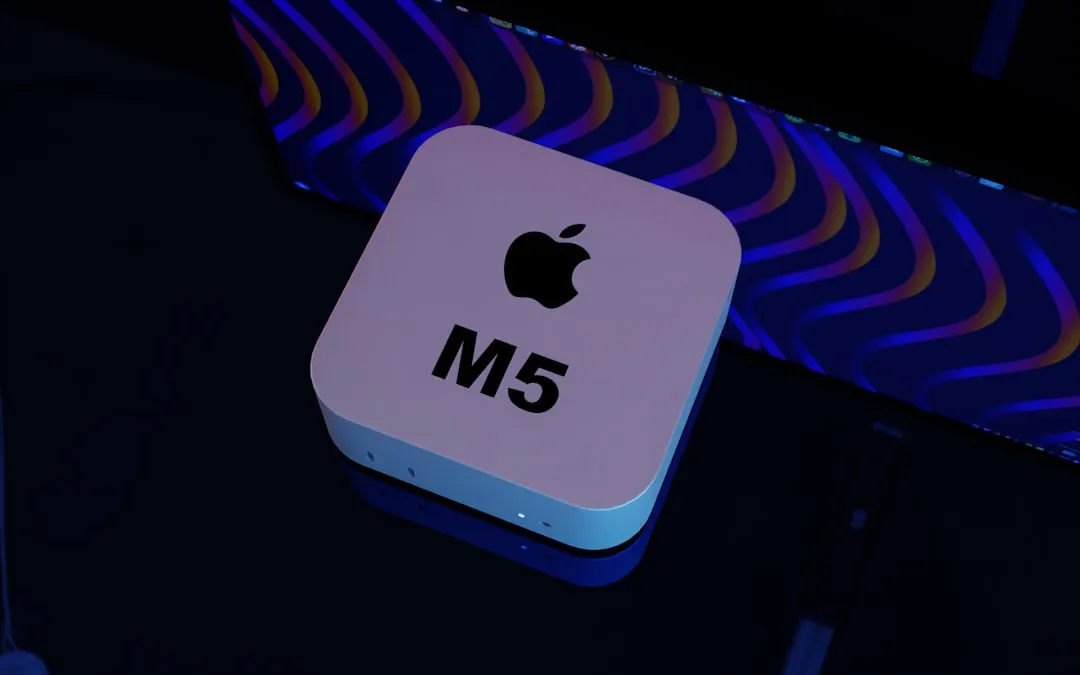
Apple's M5 Mac desktops are shaping up to be an interesting case study in pricing psychology. While the headlines might scream "price increases," the reality is more nuanced—and potentially more favorable for certain buyers than you might expect.
The buzz around M5 desktop pricing isn't just about Apple wanting to squeeze more profit from customers. Instead, we're seeing a strategic recalibration that reflects both market pressures and genuine improvements in value propositions. Recent analysis from 9to5Mac suggests Apple is implementing the same approach across desktop Macs that we've already seen with M5 MacBook models—higher base storage configurations paired with modest price adjustments.
Here's what makes this particularly interesting: if you're someone who would have upgraded storage anyway, these changes could actually save you money. The M5 MacBook Air, for example, doubled its base storage from 256GB to 512GB with just a $100 price bump. Previously, that storage upgrade would have cost you $200, so you're actually getting a better deal if you needed more than the bare minimum configuration.
The storage upgrade shuffle: What's really driving costs up
Let's break down what's actually happening behind the scenes. Apple's pricing adjustments aren't occurring in isolation—they're part of a comprehensive restructuring of how the company approaches Mac configurations across its entire lineup.
The scope of these changes became particularly clear when looking at the last few adjustments in Canada, where Apple appears to be testing market response to higher upgrade costs. According to Daily Hive, storage and memory upgrade costs have increased substantially across multiple Mac models. We're talking about significant jumps: the M4 Pro Mac mini's 8TB storage upgrade went from $3,000 to $3,600, while 64GB memory upgrades rose from $750 to $900.
What's particularly telling is the systematic nature of these increases. The M4 Mac mini, MacBook Pro, iMac, and M2 Ultra Mac Pro are all affected by these pricing shifts, with changes ranging from $50 for basic upgrades to $600 for higher-tier configurations. Apple adjusted prices on its website sometime between February 18th and March 10th without any fanfare or official announcement, suggesting these moves are part of a broader strategic repositioning rather than reactive pricing decisions.
This pattern reveals Apple's preparation for similar adjustments across its desktop lineup when M5 models arrive. The Canadian market often serves as a testing ground for pricing strategies before global implementation, particularly because currency fluctuations there provide cover for what are essentially strategic price increases. The fact that iPhone and iPad prices remained unchanged confirms this is specifically about Mac positioning and supply chain pressures.
Memory market pressures creating perfect storm
The broader memory market situation is creating unprecedented challenges that even a company with Apple's purchasing power can't entirely sidestep. The most dramatic example of this crisis hit just this week: Apple completely removed the 512GB memory upgrade option from Mac Studio models, with the maximum now capped at 256GB.
MacRumors reports that shipping delays for even the 256GB configuration are stretching into May—highly unusual for Apple's typically well-managed inventory. The Mac Studio previously offered memory upgrades ranging from 48GB to 512GB, with higher-tier options limited to the M3 Ultra chip. Now there are only options from 48GB to 256GB available, and the pricing for what remains has increased substantially. The 256GB RAM upgrade that used to cost $1,600 now runs $2,000, while the previously available 512GB option was $4,000 before disappearing entirely.
This shortage stems from global memory demand driven by massive AI server buildouts, creating supply constraints that affect even Apple's substantial purchasing relationships. During Apple's recent earnings call, CEO Tim Cook acknowledged that rising memory costs had minimal impact in the previous quarter but expects "a bit more of an impact" going forward. More significantly, Cook noted that Apple will explore "a range of options to deal with that" long-term corporate speak that likely means passing some costs to consumers through strategic pricing adjustments.
The timing compounds the challenge. Increased demand for Mac Studio specifically comes from consumers seeking machines suitable for running local AI agents, adding consumer demand pressure on top of the industrial AI server shortage. Apple's ability to absorb higher memory costs gives it an advantage over smaller companies, but it also means it's more likely to implement strategic pricing changes rather than dramatic cost increases that would shock the market.
Expected pricing shifts for the M5 desktop lineup
Based on the patterns established with M5 MacBook models, desktop Macs will likely follow a similar playbook that emphasizes value repositioning over simple cost increases. The strategy consistently shows: increase base storage configurations while implementing price adjustments that represent better value for most users.
Here's how the math works across the laptop line. The M5 MacBook Air moved from 256GB to 512GB base storage with a $100 price increase—essentially a $100 discount on what used to be a $200 upgrade. The base 14-inch MacBook Pro gained 1TB standard storage for the same $100 bump, again providing significant value for users who would have upgraded anyway. However, the M5 Pro and M5 Max MacBook Pro models showed a different pattern, receiving 1TB of storage by default but at a $200 price increase—essentially paying full upgrade cost without additional value.
Following this established approach, 9to5Mac projects that desktop pricing could shift as follows: Mac mini from $599 to $699 with 512GB standard storage, iMac from $1,299 to $1,399 with similar upgrades, and Mac Studio from $1,999 to at least $2,199 with 1TB as the new baseline.
The Mac Studio projection deserves particular attention because it might actually increase more dramatically. With the M5 Max MacBook Pro, Apple started including 2TB of storage by default, suggesting Mac Studio could follow suit and push even higher than the projected $2,199 baseline. Mac Observer notes that Apple historically maintains stable Mac mini pricing across chip generations, but current market pressures may force a break from this pattern.
Regional considerations add another layer of complexity. Macworld notes that pricing could be affected by currency fluctuations and potential tariff impacts, which may vary significantly across different markets. The Mac Studio faces particular exposure since its components are manufactured overseas, potentially amplifying both supply constraints and cost pressures.
The value equation: When higher prices actually make sense
Here's where the pricing psychology gets interesting: what appears to be price increases on paper actually represents improved value for a significant portion of Apple's customer base, particularly when evaluated against real-world usage patterns and the company's historically high upgrade costs.
The fundamental issue driving these changes is that 256GB configurations have become genuinely inadequate for modern computing needs. As noted in the Mac Studio analysis, demand has increased specifically for machines suitable for running local AI agents, which require substantial storage and memory resources. But even beyond AI applications, macOS continues to grow in size and complexity, while users routinely work with high-resolution video, large image files, and increasingly sophisticated software.
For users who previously paid for storage upgrades, these new configurations represent significant savings. A $100 price increase for double the base storage delivers far better value than the traditional upgrade path. The MacBook Air essentially became cheaper for anyone who would have upgraded to 512GB storage, demonstrating how Apple's strategy benefits users with realistic storage needs while maintaining entry-level accessibility through base configurations.
The practical benefits extend beyond cost savings. Rather than purchasing a Mac only to quickly discover inadequate storage space—and the associated performance degradation that comes with nearly full drives—users get configurations appropriate for their actual usage patterns from day one. This eliminates the frustration of forced immediate upgrades and the system slowdowns that occur when macOS lacks sufficient space for swap memory functions.
The psychological impact matters too. Apple's traditional approach often left users feeling manipulated by artificially low base configurations that required expensive upgrades to be genuinely usable. The new strategy acknowledges that 256GB simply doesn't provide enough working space for modern macOS, where the operating system itself, combined with essential applications and basic user data, can easily consume half or more of the available space.
What this means for your next Mac purchase
Understanding these pricing dynamics becomes crucial for making smart purchasing decisions as M5 desktop Macs approach their expected release timeline, particularly because the optimal choice depends heavily on your specific workflow requirements and storage management preferences.
First, the encouraging news for most buyers: according to 9to5Mac's assessment, Apple's current unified memory pricing remains stable despite the memory crisis. This suggests that storage upgrades rather than memory configurations will be the primary cost consideration for most buyers, allowing you to focus budget decisions on storage needs rather than worrying about memory price volatility.
For users comfortable with external storage workflows, cost advantages remain significant despite the new baseline configurations. Eclectic Light analysis indicates that 2TB external SSDs are available for $380-400 compared to Apple's typical $600 internal upgrade pricing, providing savings of $200-220. However, this strategy requires managing multiple storage locations, dealing with additional cables, and potentially accepting performance differences for certain workflows.
The external storage calculus shifts with the new baseline configurations. If Apple moves Mac mini and iMac base models to 512GB internal storage, many users may find that the new base configuration meets their needs without requiring external storage complexity. This is particularly true for users whose total storage needs fall between 512GB and 1TB—a substantial portion of the market who previously felt forced into expensive internal upgrades or complex external storage management.
Timing considerations add strategic importance to these decisions. For users considering the Mac Studio specifically, the memory shortage situation creates urgency around high-memory configurations. With 512GB configurations no longer available and extended shipping times for 256GB configurations stretching into May, anyone requiring substantial memory resources needs to plan purchases well in advance.
Regional pricing variations introduce additional complexity worth monitoring. Currency fluctuations and potential tariff impacts could amplify the effect of baseline price increases in certain markets, making timing and regional arbitrage potential factors in purchase decisions.
The bottom line: Apple's upcoming M5 Mac desktop pricing reflects strategic repositioning that aligns with evolving user needs and market realities rather than simple cost increases. While base prices will rise, the enhanced storage configurations provide genuine value improvements for upgrade-minded users, creating scenarios where higher prices actually deliver better overall value.
Smart buyers should evaluate their actual storage requirements against these new baseline configurations, considering both current needs and reasonable growth projections. The apparent price increases often represent better deals for users with realistic storage requirements, while the improved base configurations eliminate the performance penalties and upgrade pressure that characterized Apple's previous approach. For many users, paying slightly more upfront for appropriate storage will prove more economical and satisfying than the traditional cycle of inadequate base configurations followed by expensive upgrades.















Comments
Be the first, drop a comment!