



You probably didn't even notice it was gone. Apple quietly pulled the plug on one of its most visually impressive Maps features – the automated Flyover city tours that let you virtually soar over major landmarks and cities from the comfort of your iPhone. According to MacRumors, this change happened around the iOS 26 launch, but it flew so far under the radar that most users never realized their virtual sightseeing days were over.
Here's what makes this particularly interesting: Flyover wasn't some forgotten relic gathering digital dust. Flyover was introduced with Apple Maps in September 2012; the 'Flyover City Tours' feature was added in iOS 8 (2014). That's more than a decade of development and refinement – enough time for the feature to become embedded in Apple's ecosystem, making its silent removal all the more significant.
What exactly did Flyover city tours offer?
Before diving into why Apple might have axed this feature, let's talk about what we're actually losing here. Flyover was essentially your personal helicopter tour guide, minus the noise and expense. As detailed in Apple's support documentation, the feature allowed users to virtually explore major landmarks and cities from above using their iPhone – think of it as Google Earth's more polished, Apple-designed cousin.
The user experience was pretty straightforward, which was part of its charm. You'd search for a city or landmark, tap its name in the search results, and if Flyover was available, you'd see a dedicated button right there on the place card. According to Apple's support guide, landmarks with Flyover support displayed this prominently – a design choice that reflected Apple's confidence in the feature's appeal. If the button wasn't immediately visible, you could find it under a "More" menu option, though that extra step probably hurt adoption by making discovery less intuitive.
What made Flyover special wasn't just the aerial view – you could get that from satellite imagery. It was the smooth, cinematic quality of the virtual tours, complete with gentle camera movements that made you feel like you were actually gliding over these locations. Whether you were virtually visiting the Statue of Liberty or checking out the Golden Gate Bridge, the experience had a polish that felt distinctly Apple-like.
The technology behind Apple's 3D mapping magic
Now here's where things get fascinating from a tech perspective. Apple's Flyover capability wasn't built from scratch in some Cupertino lab – it came from a Swedish company called C3 Technologies that Apple acquired back in 2011. And the backstory gets even more interesting when you dig into C3's origins.
The mapping process itself was pretty impressive, involving specialized aircraft flying multiple passes over cities at just 1,600 feet altitude. Picture professional photographers hanging out of planes, but instead of capturing that perfect wedding shot, they're systematically documenting entire metropolitan areas with military precision. Which, as it turns out, isn't far from the truth.
Here's the kicker: C3's mapping software was actually based on technology originally developed by Saab for missile guidance systems. This military heritage explains the system's remarkable precision – when your technology was originally designed to guide missiles, civilian mapping accuracy becomes almost trivial by comparison. The company transformed this defense technology into a photography-based 3D mapping solution that could achieve accuracy within six inches.
The technical process was equally impressive. Multiple professional-grade DSLR cameras would capture overlapping images during those low-altitude flights, then C3's proprietary software would compare these overlapping images to determine stereoscopic depth. The end result was a 3D city model that was high-resolution and more accurate than previous automated modeling software – at least most of the time.
Why Apple might have pulled the plug
Despite all this impressive technology, Flyover had some fundamental limitations that may have contributed to its quiet retirement. For starters, the technology had issues at the highest magnification levels, where cities would look distorted, bent, and warped. If you've ever tried to zoom in too far on a Flyover tour, you probably noticed buildings that looked like they'd been through a funhouse mirror – not exactly the premium experience Apple typically aims for.
But the technical limitations were just part of the story. Apple also faced practical constraints that severely limited Flyover's expansion potential. Despite having access to over one hundred 3D cities in C3's database as of 2011, Apple never fully utilized this extensive collection. The company took a deliberately cautious approach to city releases, adding places like Linkoping, Vancouver, and Tulsa as recently as a few years ago – but this conservative rollout created a feature that felt perpetually incomplete.
These constraints were compounded by regulatory hurdles. Apple simply doesn't have permission to create 3D representations of certain cities, creating an interesting legal and diplomatic challenge. Imagine having the technical capability to create stunning virtual tours of major world capitals, but being blocked by regulatory red tape. These limitations, combined with the technical distortion issues, created a feature that was expensive to maintain but limited in its expansion potential – exactly the kind of resource drain that doesn't align with Apple's efficiency focus.
There's also the question of user engagement. While Flyover was visually impressive, it was essentially a one-time experience for most locations. Unlike navigation or local search – features people use daily – Flyover tours were more like digital postcards. Cool to show off to friends, but not exactly essential functionality for most users' day-to-day needs.
Where Apple Maps is heading instead
Rather than mourning the loss of Flyover, it's worth looking at where Apple is actually investing its mapping resources these days. The company has been on a tear recently, launching features that seem designed for people who actually leave their houses and do things in the real world – a strategic shift that directly addresses Flyover's practical limitations.
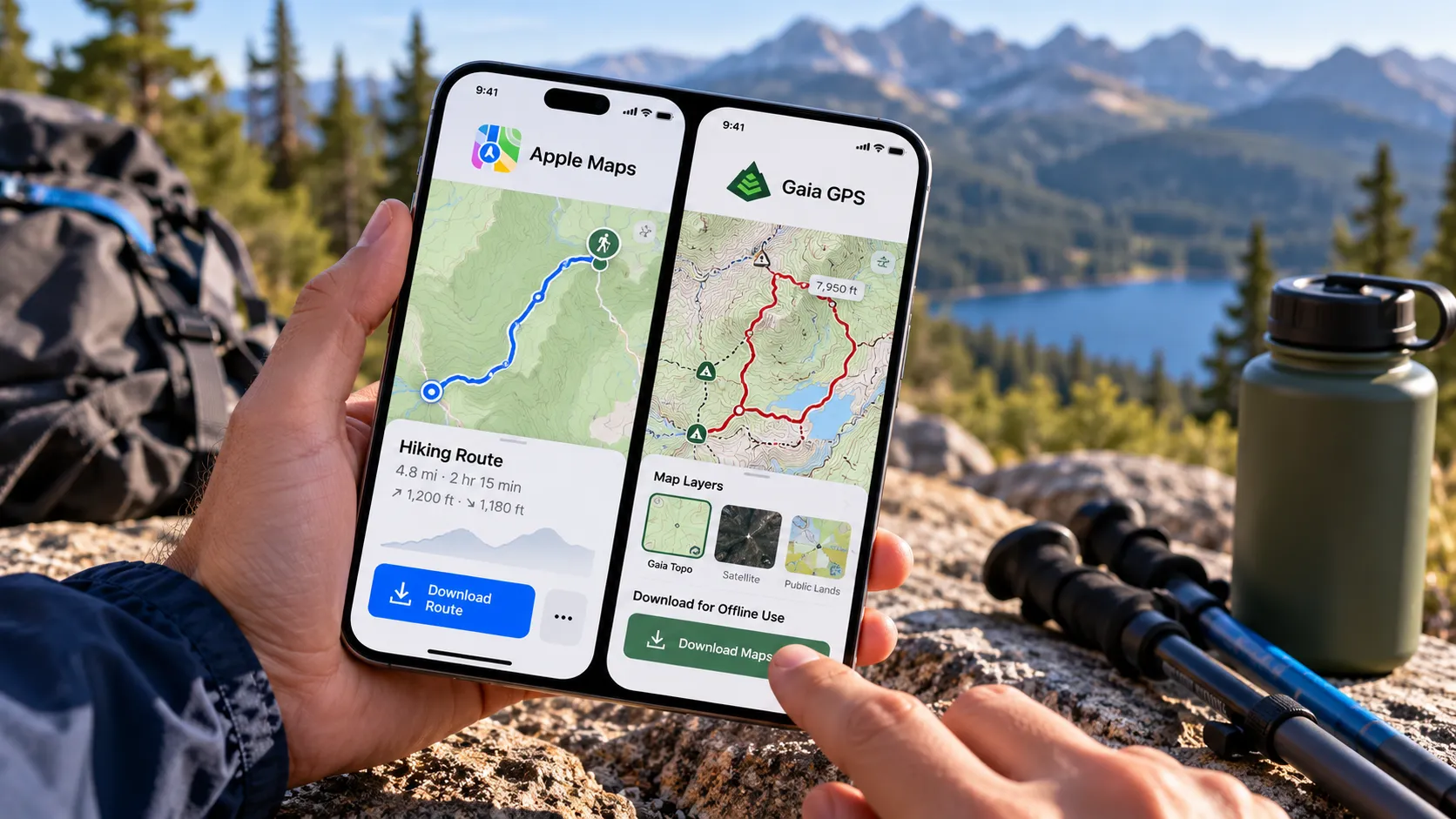
The hiking features alone are pretty impressive. Users can now browse thousands of trails in U.S. national parks, from Acadia in Maine to Yosemite in California to Denali in Alaska, all accessible on iPhone, iPad, Mac, and Apple Watch. Apple has also rolled out topographic maps for the U.S. and Japan, complete with contour lines and detailed trail information – the kind of functionality that transforms how outdoor enthusiasts plan and execute adventures.
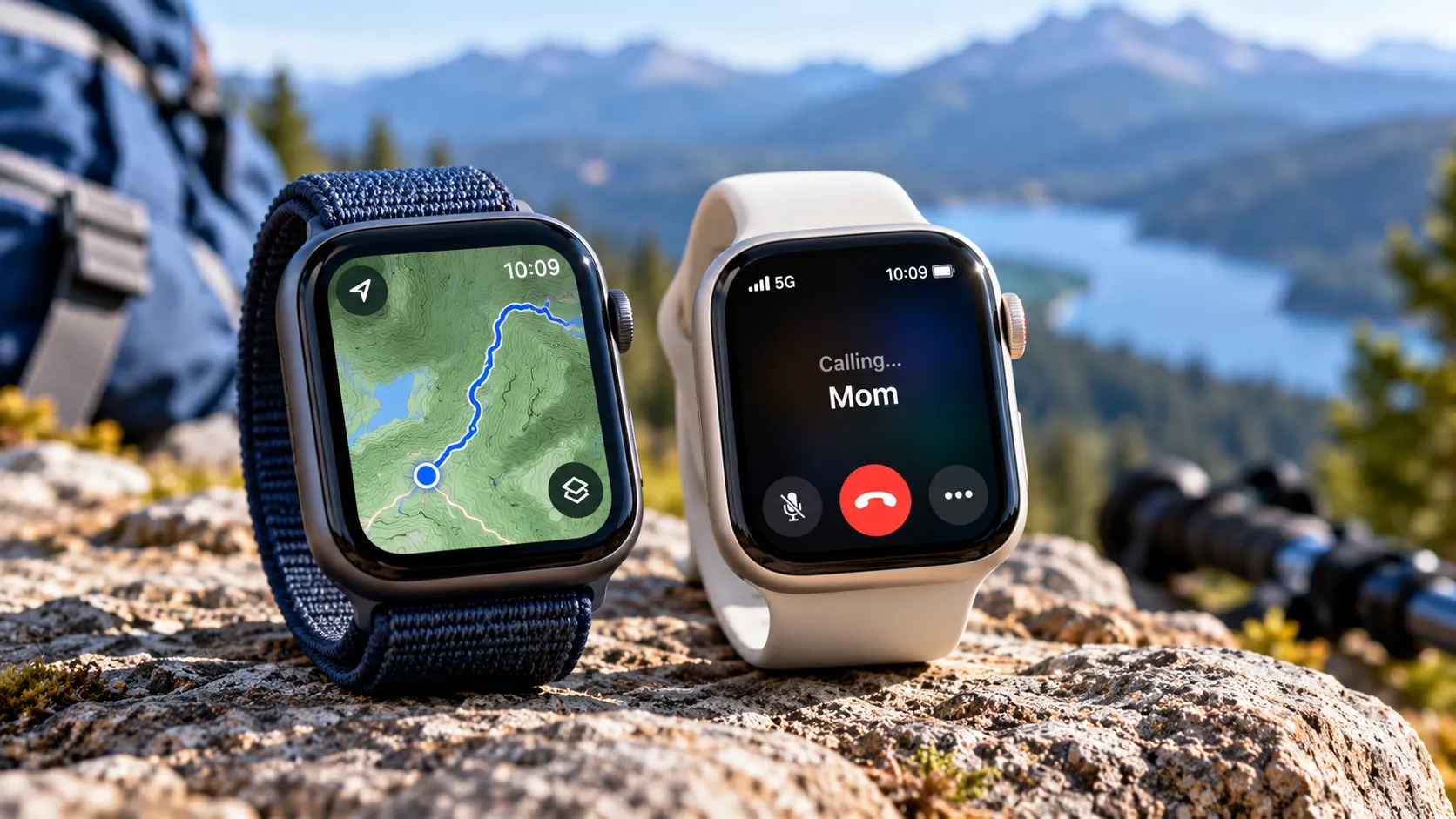
But here's what really shows Apple's new priorities: users can now create and save custom hiking and walking routes globally. This isn't just about consuming pre-made content like Flyover tours – it's about empowering users to create their own experiences. Even better, these custom routes can be accessed offline when synced to Apple Watch, solving the real-world problem of navigating remote areas with spotty cell service.
The practical focus extends beyond outdoor activities. Apple has added shuttle schedules for select national parks like Bryce Canyon and Sequoia, and created a new Places Library feature that lets users organize saved locations, guides, and routes with personal notes. These aren't flashy features that'll wow people at keynote presentations, but they solve genuine pain points that Apple's user research has likely identified as daily frustrations.
The bigger picture: Apple's evolving priorities
The quiet disappearance of Flyover city tours tells us something important about Apple's current philosophy around product development. This is a company that's increasingly focused on utility over spectacle, and the contrast between old Flyover and new Maps features makes that strategic shift crystal clear.
Flyover was always a showcase feature – impressive technology that demonstrated Apple's capabilities, but not necessarily something users returned to regularly. While Apple's 3D cities were more polished than competitors like Google or Nokia's Ovi Maps, this technical superiority couldn't overcome the fundamental mismatch between impressive technology and actual user needs. Being the prettiest showcase doesn't matter much if people aren't actually using the feature.
Compare that to the new features Apple's rolling out. The enhanced search experience now lets users compare places through photos, ratings, and pricing without leaving the search interface – that's the kind of functionality people will use dozens of times per week. The custom route creation and offline access addresses genuine pain points for travelers and outdoor enthusiasts, while features like shuttle schedules provide actionable information that affects real travel decisions.
This shift also reflects the broader maturation of the smartphone market. In 2014, when Flyover launched, companies were still figuring out what amazing things they could do with these powerful computers in our pockets. Features like Flyover served an important purpose – they showed users (and competitors) what was possible, establishing Apple as a technology leader capable of delivering cinematic experiences on mobile devices.
Now, more than a decade later, the novelty of "look what your phone can do" has worn off. Users want their devices to make their actual lives better, not just to demonstrate cool technology. The timing of Flyover's removal, coinciding with iOS 26, suggests this wasn't a hasty decision but rather a deliberate reallocation of resources toward features that provide measurable daily value.
Bottom line: while Flyover's departure marks the end of an era for Apple Maps, the features replacing it suggest the company is more interested in being genuinely useful than merely impressive. And honestly, that's probably the right call – even if it means we'll have to find other ways to take virtual vacations from our desk chairs.









Comments
Be the first, drop a comment!