



When Apple announced their partnership with Google earlier this year, it wasn't just another corporate collaboration—it was a billion-dollar admission that even the world's most valuable tech company sometimes needs outside help to deliver what users expect. Apple's latest strategic move has sent shockwaves through the tech industry, but it's not what many expected. Instead of developing its own cutting-edge AI models for Siri's long-awaited overhaul, the company has chosen to partner with Google, leveraging the search giant's powerful Gemini technology.
This collaboration represents more than just a temporary fix—it's a fundamental shift in how Apple approaches artificial intelligence development. The partnership announcement confirms that Apple and Google have entered into a multi-year collaboration where Google's Gemini 3 AI architecture will be integrated into Siri, fundamentally transforming how users interact with Apple's virtual assistant. Perhaps most notably, Apple will pay an estimated $1 billion annually to Google for the rights to use Gemini 3's advanced AI capabilities.
To put this in perspective, Apple's R&D budget was approximately $31 billion in 2024, making this Google partnership about 3% of their total research investment. This significant financial commitment signals that Apple views this collaboration as absolutely critical to staying competitive in the AI race, especially given how far behind Siri has fallen compared to other AI assistants.
Why Google's Gemini beat out the competition
Here's what you need to know: Apple didn't make this decision lightly. The company's characteristically thorough evaluation process revealed some eye-opening performance gaps in their current technology. Internal evaluations revealed that Siri was failing to execute complex queries approximately 33% of the time, highlighting the urgent need for a more capable foundation. That's a pretty damning statistic for what's supposed to be one of the world's most advanced virtual assistants—imagine asking Siri to help you calculate dinner costs for eight people or plan your morning commute, only to have it fail one out of every three times.
When comparing AI models head-to-head, Google's technology emerged as the clear winner across multiple benchmarks that directly impact user experience. The numbers tell a compelling story about Gemini's superiority, particularly in areas that matter most for a consumer-facing AI assistant. Public benchmark leaderboards show Gemini-3-class models leading recent ARC-AGI-2 results; reported values vary by run and source — cite leaderboard for exact numbers. This benchmark measures abstract reasoning and general intelligence—the kind of thinking that helps Siri understand when you ask it to "reschedule my meeting with Sarah for next week" without having to specify which Sarah or which meeting.
In mathematical reasoning tasks, the gap was even more dramatic—and this translates directly to practical benefits. Gemini 3 Pro scored 23.4% on the MathArena Apex benchmark, while GPT-5.1 managed only 1.0%. This isn't just about solving algebra problems; it's about calculating tips, converting currencies during travel planning, or figuring out how much paint you need for a room renovation. Even in multimodal reasoning—where an AI needs to understand both text and visual information simultaneously—Gemini 3 Pro reached 81.0% in the MMMU-Pro benchmark compared to GPT-5.1's 76.0%. This capability is crucial for features like asking Siri to identify objects in photos or understand what's happening on your screen.
But technical performance wasn't the only factor in Apple's decision. Apple spent months on technical evaluations—scrutinizing benchmarks and reliability while holding firm to its renowned privacy standards. Beyond raw performance metrics, Apple also considered crucial business factors like scalability, long-term support, and operational stability—areas where Google's established cloud infrastructure provided significant advantages over newer AI companies that might struggle with the massive scale of Apple's user base. Google's proven track record of serving billions of users daily gave Apple confidence that the partnership could handle the demands of over 1.5 billion iPhone users worldwide.
How Apple maintains control while leveraging Google's power
One of the most impressive aspects of this partnership is how Apple managed to maintain their legendary privacy standards while incorporating Google's AI technology. The integration works through Apple's sophisticated infrastructure rather than directly exposing users to Google's systems. Apple's Private Cloud Compute (PCC) infrastructure is a 'Stateless AI' system designed to process complex reasoning tasks without storing user data on external servers. This means your personal information never leaves Apple's controlled environment, even when leveraging Google's AI capabilities.
The technical implementation showcases Apple's engineering prowess. Tasks too complex for on-device processing are routed to PCC nodes utilizing custom Apple silicon, ensuring optimal performance while maintaining security. Think of it as a secure computing fortress where Google's AI models can run but can't see or access your personal data. The architecture is so sophisticated that it can process your request for "show me photos from last Christmas with Mom" without Google ever knowing you have a mother, what she looks like, or when your Christmas celebration occurred.
Within this carefully controlled environment, the user experience remains distinctly Apple. Gemini 3 models are deployed within the PCC environment and are effectively 'white-labeled' so no Google branding appears to end users. You'll never know you're interacting with Google's technology—it's completely invisible to the end user, maintaining Apple's seamless user experience philosophy.
This arrangement allows Apple to have the best of both worlds: cutting-edge AI capabilities without compromising their design principles or privacy commitments. The integration of Gemini 3 into Siri allows Apple to maintain complete control over the user interface while leveraging Google's 1.2 trillion parameter model. Users will experience a dramatically improved Siri without any indication they're interacting with Google's technology behind the scenes.
What this means for Siri's future capabilities
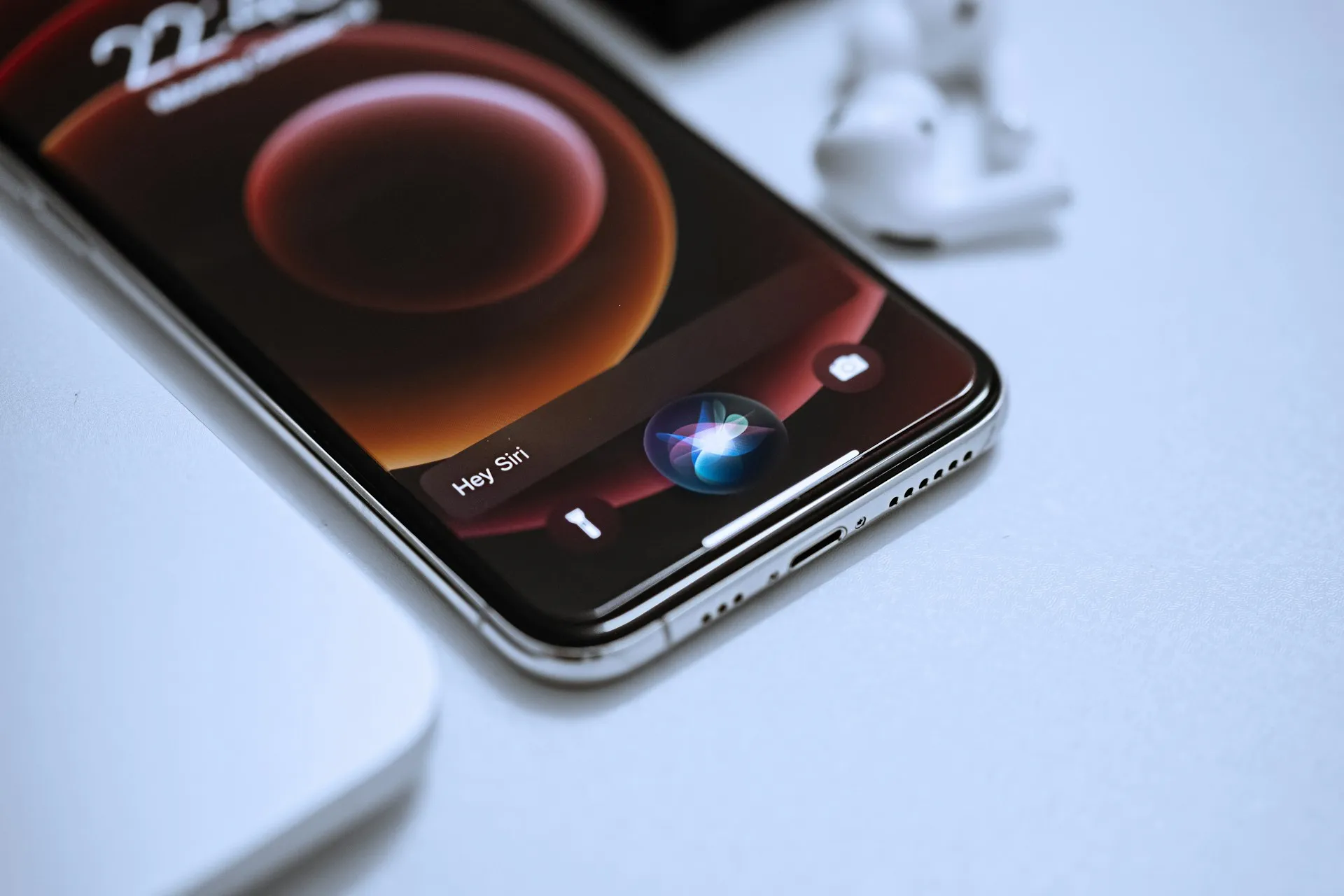
The upgraded Siri promises to be a game-changer for Apple users, moving far beyond the simple command-and-response interactions we're used to today. The reimagined Siri includes features like on-screen awareness, conversational memory, and multi-step task execution—capabilities that will make the assistant feel genuinely intelligent rather than just responsive.
Imagine asking Siri to help plan a vacation, and having it remember your previous conversation about preferring mountain destinations while actively understanding the hotel booking website currently displayed on your screen. Or telling it to "book that restaurant I was just looking at for my anniversary dinner next Friday" and having it not only understand the context but also remember that your anniversary is important enough to suggest making a reservation for a romantic table. These contextual capabilities, powered by Gemini's superior reasoning abilities, represent a massive leap forward from Siri's current limitations.
The rollout timeline shows Apple's characteristically methodical approach to this transformation. The first half of 2026 will see initial testing of Apple Foundation Models and Gemini logic integration, allowing Apple to fine-tune the experience before wider release. iOS 26.4, introducing the upgraded Siri interface, is scheduled for March 2026, giving users their first taste of what's possible with the new architecture.
The most exciting developments will come later in the year. Advanced agentic features are expected to be previewed at WWDC in June 2026, where we'll likely see demonstrations of Siri performing complex multi-step tasks and acting more like a genuine digital assistant than a simple voice command interface. Hardware improvements will support these software advances, as the iPhone 17 series standardizes 12GB of RAM across its Pro lineup to support AI capabilities—a 50% increase from previous models that ensures the devices can handle the computational demands of advanced AI features. The complete transformation culminates with full deployment of the new Siri anticipated in late 2026 alongside the iPhone 17 launch.
The bigger picture: Winners, losers, and market implications
This partnership creates clear winners and losers in the AI landscape, with implications that extend far beyond just Apple and Google. For Google, the deal represents massive validation of their AI capabilities and provides access to Apple's enormous user base. The financial benefits are substantial and strategically significant. Alphabet's market capitalization reached $4 trillion in January 2026, surpassing Apple, marking a significant shift in the tech hierarchy that many attributed directly to Google's AI resurgence.
Following the Apple deal, Alphabet's market cap became the second most valuable company on Wall Street. But the benefits extend beyond the direct payments from Apple—the partnership has created a powerful halo effect for Google's broader enterprise strategy. The Apple endorsement serves as the ultimate credential for enterprise customers evaluating AI providers, as Google Cloud signed more contracts worth over $1 billion during Q3 2025 than in the previous two years combined. When Apple—arguably the most selective technology company in the world—chooses your AI technology, enterprise customers take notice.
OpenAI emerges as the most significant casualty of this partnership shift, losing what could have been their most important enterprise validation. While Apple gains access to top-tier generative AI, one clear loser emerges: OpenAI. The company that arguably started the current AI boom finds itself sidelined by Apple's most important AI initiative. The reasons for OpenAI's exclusion reveal the challenges facing even well-funded AI startups when competing for enterprise-level partnerships that demand guaranteed performance and reliability.
Persistent challenges with model consistency, reports of strategic project delays, and overwhelming operational costs damaged confidence in OpenAI's ability to meet Apple's exacting standards for a consumer-facing product. When you're dealing with billions of users and need guaranteed uptime and consistent performance across diverse use cases, startup-level operational challenges become deal-breakers, regardless of how innovative your technology might be.
The partnership also raises important questions about market concentration and competitive dynamics. The partnership has attracted attention from antitrust regulators in the United States and European Union, particularly given the companies' existing search partnership where Google pays Apple billions annually to be the default search engine. This AI deal further deepens their interdependence, potentially creating regulatory challenges down the line.
For app developers and AI startups, the implications are equally significant and challenging. Deep integration of agentic AI into the operating system challenges many AI startups and app developers, as Apple's enhanced Siri could potentially replace many third-party AI applications that users currently rely on. Making matters more challenging for smaller companies, developers are now required to adopt Apple's App Intents framework to keep their apps discoverable via Siri, creating additional technical barriers and dependencies that favor larger, more established developers.
What comes next in Apple's AI journey
Bottom line: This Google partnership represents a strategic bridge rather than a permanent dependency for Apple. Apple's long-term AI strategy includes developing its own Ferret-3 models for deployment around 2027, suggesting this collaboration serves as a stepping stone while Apple develops its internal capabilities. This approach is classic Apple—partner strategically when necessary, but always with an eye toward eventual independence and control over their technology stack.
Apple's partnership with Google functions as a 'bridge strategy,' enabling it to refine its own models while licensing state-of-the-art technology. Think of it as Apple buying time to solve the fundamental challenges of building AI models that can run efficiently on mobile devices while maintaining their privacy standards. The company has successfully executed this approach before—they partnered with chip manufacturers for years, learning and refining their understanding, before developing their own industry-leading Apple Silicon that now outperforms many traditional processors while using significantly less power.
The implications extend far beyond Siri improvements and signal a broader industry trend. This partnership demonstrates how even the most self-reliant tech companies must adapt to the realities of AI development, where the computational resources, specialized talent, and expertise required often exceed what any single company can efficiently develop in-house. Apple's long-term goal remains self-sufficiency in AI, with a focus on on-device models and private cloud environments, but they're pragmatic enough to partner strategically to deliver immediate value to users rather than forcing them to wait for internal development cycles.
For Apple users, this strategic partnership means experiencing dramatically improved AI capabilities much sooner than would have been possible with Apple's internal development timeline alone. The collaboration ensures that when you interact with the new Siri in 2026, you'll be getting world-class AI performance wrapped in Apple's signature user experience and privacy protections. It's a win-win scenario that showcases how strategic partnerships can accelerate innovation while maintaining each company's core strengths and values—and it sets the stage for Apple's eventual transition to their own AI technology when they've had time to perfect it.





Comments
Be the first, drop a comment!