





Apple's Q1 2026 earnings report arrives at a pivotal moment for the tech giant, with analysts and investors eagerly awaiting confirmation that the iPhone 17 launch momentum can sustain the company's growth trajectory. Early indicators suggest robust demand patterns, according to The Motley Fool, with the company struggling to meet initial consumer interest. Meanwhile, Wall Street sentiment has shifted positively, as JPMorgan recently upgraded its price target to $315, representing potential upside of 27% from current levels. The earnings call, scheduled for Thursday at 5 p.m. ET, as noted by The Motley Fool, will provide crucial insights into whether Apple's AI strategy is finally resonating with consumers and driving the anticipated upgrade supercycle.
iPhone 17: The make-or-break hardware story
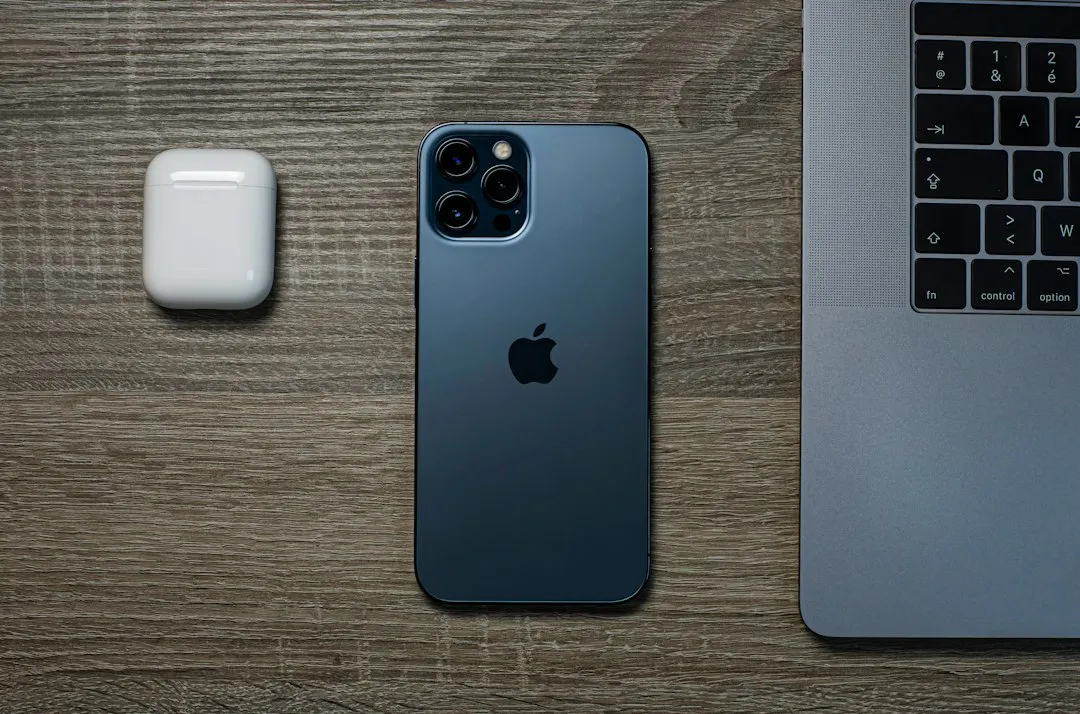
Here's what you need to know about Apple's most critical product line: the iPhone remains Apple's cornerstone product, typically accounting for approximately half of total company revenue, according to The Motley Fool. This quarter's results will be particularly telling, as they represent the first complete reporting period for the iPhone 17 lineup since its launch.
What makes this demand story particularly compelling isn't just the volume—it's what it signals about Apple's pricing power and market positioning. The supply constraints we've seen suggest Apple maintained premium pricing while introducing significant AI capabilities, potentially expanding gross margins even as memory costs increased. Analysts are now projecting revenue between $137.47 billion and $138.45 billion, based on market research, with management's guidance suggesting double-digit iPhone sales growth that could exceed Wall Street expectations.
The iPhone 17 Pro models represent Apple's most significant AI hardware advancement to date. These devices feature comprehensive on-device Apple Intelligence capabilities powered by the A19 Pro chip, as reported by Market Minute. The 12GB RAM configuration isn't just about raw computational power—it enables Apple to process complex AI tasks locally, reducing cloud dependency and operational costs while delivering the instantaneous responses users expect from premium devices.
However, consumer preferences are revealing strategic validation for Apple's tiered approach. Early market data suggests the iPhone 17 Air has captured only a modest single-digit market share, according to the same analysis. This concentration of demand in Pro models, where AI capabilities are most pronounced and margins are highest, could actually accelerate Apple's path to premium market dominance while supporting stronger financial performance than a more distributed sales pattern would deliver.
Apple's AI strategy takes center stage
The artificial intelligence conversation surrounding Apple has undergone a dramatic transformation over the past year, and it's fascinating to watch this evolution unfold. Software chief Craig Federighi has assumed direct oversight of the company's AI initiatives, as reported by MacRumors, marking a significant organizational shift that reflects AI's strategic importance within the company.
What makes this particularly interesting is how Federighi's cost-conscious approach is shaping Apple's competitive strategy. He was initially quite skeptical of artificial intelligence, preferring deterministic software behavior, according to MacRumors. But his stance shifted dramatically following ChatGPT's emergence in late 2022, when he became convinced of large language models' potential after experimenting with the technology himself—and crucially, he maintained his focus on controlled costs and measurable returns.
This cost-consciousness is now driving Apple's differentiated AI approach. The company is emphasizing on-device processing and its Private Cloud Compute system to limit infrastructure spending, according to MacRumors. While competitors are spending billions on cloud infrastructure and GPU farms, Apple's strategy could deliver superior margins once AI monetization accelerates—exactly the kind of long-term competitive advantage that justifies premium valuations.
The company recently announced plans to integrate Google's Gemini AI models for future upgrades, including an enhanced Siri experience, as detailed in the same report. But that's just the foundation for a more ambitious AI rollout. Apple is developing a ChatGPT-style chatbot codenamed "Campos," expected to launch in September with deep integration across iPhone, iPad, and Mac operating systems, according to Intellectia.
The timing of this AI progression addresses a critical investor concern. Market reception of Apple Intelligence has been lukewarm thus far, as noted by The Motley Fool, but the April Siri overhaul and September chatbot launch create two near-term catalysts that could demonstrate meaningful progress. This strategic sequencing—combining organizational restructuring under Federighi with clear product milestones—offers investors concrete benchmarks for measuring AI strategy success.
Services growth faces headwinds but maintains momentum
Apple's Services segment continues to be a bright spot, though the growth dynamics reveal how AI investment costs are reshaping this high-margin business. The segment now includes traditional offerings like the App Store and iCloud, alongside newer initiatives such as the "Apple Intelligence+" subscription tier, according to Market Minute. Management maintains expectations for double-digit growth in this high-margin business, as noted by AI Invest.
But here's where Federighi's cost-conscious AI strategy becomes particularly relevant. Analysts anticipate some near-term challenges, with JPMorgan projecting Services revenue growth of approximately 7% year-over-year for the current quarter, according to CNBC. That's falling short of the company's 14% guidance, but this temporary moderation likely reflects the investment phase of Apple's AI transition rather than fundamental market saturation.
JPMorgan believes Apple has "multiple levers" beyond the App Store to drive stronger growth over time, as reported in the same analysis. The Apple Intelligence+ subscription tier represents exactly this kind of new monetization model—transforming AI capabilities from hardware features into recurring revenue streams. As AI features mature and user adoption increases, this subscription approach could generate significantly higher lifetime customer value than traditional app store commissions.
The Services business remains crucial to Apple's overall valuation story because it demonstrates the company's ability to monetize its installed base through recurring revenue streams that extend well beyond hardware sales. What's particularly compelling now is how AI integration could exponentially expand this monetization surface, turning every user interaction with Siri, every AI-enhanced photo edit, and every automated workflow into potential subscription revenue.
Market dynamics and the path forward
Let's break down what the market is telling us about Apple's current position and why the AI investment cycle is creating unique valuation opportunities. The stock has gained 11% over the past twelve months, slightly trailing the S&P 500's 13.4% advance, according to CNBC. This modest underperformance reflects investor uncertainty about AI strategy execution, but it also suggests the market hasn't yet priced in successful AI monetization.
What's particularly compelling from a valuation perspective is that Apple's stock is currently trading at approximately 30x forward earnings, as noted by the same source. This sits below the peak multiple of around 32x that we saw during the 5G upgrade cycle, suggesting there's room for multiple expansion if AI initiatives gain meaningful traction with consumers. Given that AI represents a potentially larger transformation than 5G, this valuation gap could prove significant.
International markets are providing crucial validation for the iPhone 17's AI-driven appeal. Apple has reclaimed a 22% market share in China by the end of 2025, according to Market Minute. This recovery in one of the world's most competitive smartphone markets—where local competitors offer AI features at significantly lower prices—suggests Apple's premium positioning for AI capabilities is resonating with sophisticated consumers willing to pay for superior integration and privacy.
Looking at the longer-term picture, analysts project the company could achieve approximately 12% annual share price appreciation through 2030, based on research from Seeking Alpha. But the AI monetization opportunity could accelerate this timeline considerably. Successful AI integration could add $75 to $100 per share to Apple's valuation, according to Wedbush analysis. The firm notes that current stock prices don't yet reflect any AI-related premium, suggesting significant upside potential if Thursday's results demonstrate meaningful progress in translating AI capabilities into user engagement and revenue growth.
What Thursday's results will reveal
Bottom line: this earnings report represents more than just quarterly numbers—it's a litmus test for Apple's ability to execute on two critical fronts simultaneously while validating a fundamentally different approach to AI monetization than its competitors. The iPhone 17 hardware cycle needs to demonstrate sustained consumer demand beyond the initial launch enthusiasm, while the AI strategy requires evidence of meaningful user adoption and clear pathways to recurring revenue generation.
Consensus expectations call for $2.72 earnings per share, as noted by AI Invest. A beat would potentially validate Apple's premium pricing strategy for AI-enhanced devices and reinforce confidence in the company's ability to monetize artificial intelligence through its integrated ecosystem approach. A miss might signal either peak iPhone growth or delayed AI adoption—scenarios that would force investors to reconsider the timeline for Apple's AI transformation.
The market's reaction will likely hinge on three key areas of management commentary that connect to broader strategic themes. First, specific metrics around iPhone 17 Pro preference patterns and international demand sustainability, particularly evidence that AI features are driving purchase decisions rather than routine upgrade cycles. Second, concrete progress indicators for Apple Intelligence adoption—not just feature rollouts, but usage patterns that suggest users are engaging with AI capabilities enough to justify future subscription models. Third, Services segment trajectory and how the Apple Intelligence+ tier is performing relative to traditional app store revenue streams.
Here's what makes this particularly intriguing: analyst price targets currently range from $230 to $350, according to Intellectia, representing the market's fundamental disagreement about whether Apple's cost-conscious AI strategy will prove superior to competitors' infrastructure-heavy approaches. Current market sentiment appears cautiously optimistic, as noted by Seeking Alpha, with institutional hedging having moderated, suggesting sentiment may be stabilizing ahead of results that could definitively resolve this strategic uncertainty.
The upcoming earnings call will provide crucial insights into whether Apple can maintain its premium positioning in an increasingly competitive landscape while successfully navigating the transition from hardware-centric to AI-enhanced user experiences. For investors, Thursday's results will offer the clearest picture yet of whether Apple's ambitious AI pivot—with its emphasis on cost-effective, on-device processing and recurring subscription revenue—is beginning to translate into the kind of sustainable competitive advantages that justify the company's premium valuation and support the path toward a $4 trillion market cap.











Comments
Be the first, drop a comment!