





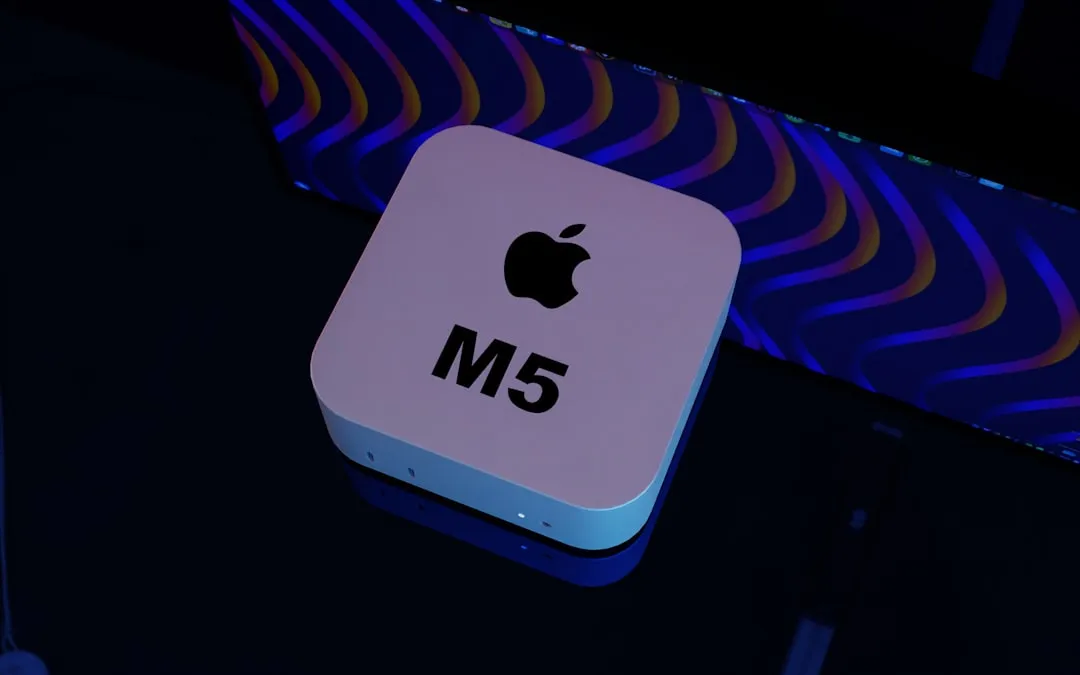
As CES 2026 floods the tech world with announcements and flashy presentations, Apple's making a different kind of statement. The company just dropped the price on its M5 MacBook Pro to $1,399, slashing $200 off the original $1,599 sticker price. What makes this move particularly strategic is how it positions Apple ahead of an unprecedented product launch cycle.
This timing isn't coincidental. Apple is preparing for an aggressive 2026 product roadmap that includes more than 20 new products throughout the year. The M5 chip, which launched across three products last fall—MacBook Pro, iPad Pro, and Vision Pro—represents the foundation of this strategy. Apple is gearing up to launch enhanced 14-inch and 16-inch MacBook Pros with M5 Pro and M5 Max chips early this year, making this discount a calculated move to establish market dominance before flooding the zone with premium-tier hardware.
Why this discount reveals Apple's market expansion strategy
This price drop represents a fundamental shift in Apple's competitive approach. While the broader notebook industry braces for declining shipments, Apple appears better positioned than its rivals to weather the storm. By making the M5 MacBook Pro more accessible now, Apple is creating a larger installed base for upcoming software and hardware integrations—a strategic move to capture market share while competitors struggle with industry headwinds.
The M5 chip itself demonstrates why Apple feels confident making this aggressive pricing move. Apple claims the 10-core CPU configuration delivers up to 15% faster multithreaded performance (Apple's claim) compared to the M4, but the real competitive advantage lies in graphics and AI capabilities. Each of the 10 GPU cores includes a Neural Accelerator, providing up to 3.5x better AI performance than the previous generation—a generational leap that positions these machines for the AI-driven computing landscape ahead.
Real-world benchmarks validate Apple's performance claims and justify this strategic pricing. The M5 achieved a Geekbench 6 multi-core score of 17,938 compared to the M4's 15,596, representing meaningful productivity gains. More striking is the AI performance transformation: GPU-based AI capabilities scores leaped from 8,602 to 23,391. For professionals running AI-powered creative tools or local language models, these numbers translate to immediate workflow improvements that justify the investment even at full price.
The 2026 roadmap makes this discount strategically brilliant
Understanding Apple's upcoming product strategy reveals why this discount creates exceptional buyer value. The company plans to release M5 MacBook Air models in both 13-inch and 15-inch configurations early this year, with improvements mainly centered around the new chip rather than design changes. While these will offer M5 performance, they'll lack the Pro features that distinguish the current discounted model.
More intriguingly, Apple is developing a completely new budget MacBook powered by the A18 Pro chip, expected to cost well under $1,000 with a 12.9-inch screen. This represents Apple's most aggressive entry into affordable computing in years—potentially reshaping the entire laptop market by bringing Apple's ecosystem benefits to Chromebook price territory. However, this budget option will use phone-class silicon, making the current M5 MacBook Pro discount even more valuable for users requiring full desktop-class performance.
The broader ecosystem refresh adds context to Apple's pricing strategy. Apple has one more iPhone model in the works—the iPhone 17e—expected to launch in February with the same A19 chip as the iPhone 17 along with design improvements like the Dynamic Island and thinner bezels. Apple is also working on new Mac mini and Mac Studio models for mid-2026, indicating a comprehensive silicon transition designed to maintain technological leadership across all product categories.
This accelerated release schedule suggests Apple is moving beyond routine annual updates to strategic market positioning. The M5 MacBook Pro's current discount allows buyers to access cutting-edge performance before Apple segments the market with multiple tiers throughout 2026.
The value proposition: premium performance at accessible pricing
The M5 MacBook Pro at $1,399 delivers exceptional specifications that justify this strategic investment. The machine delivers up to 24 hours of battery life while including premium features like the Liquid Retina XDR display with 1,600 nits peak HDR brightness and a 12MP Center Stage camera. These aren't just specification improvements—they provide immediate benefits for creative professionals and remote workers who demand display quality and video call capabilities.
The timing amplifies this value proposition significantly. The M5 chip only debuted in late October, making this rapid price reduction unprecedented for Apple's typical pricing strategy. Usually, meaningful discounts on Apple's latest hardware require six-month waiting periods. This accelerated timeline demonstrates Apple's confidence in their technology leadership and upcoming product pipeline.
For professionals evaluating this purchase, the M5's neural accelerators in each GPU core provide immediate utility beyond future-proofing. Anyone working with AI-powered creative tools, local language models, or advanced video processing will benefit from these capabilities today. The enhanced graphics performance also supports gaming and 3D rendering workflows that previously required dedicated graphics solutions.
As CES 2026 showcases industry direction, Apple's M5 MacBook Pro discount signals strategic confidence rather than market desperation. While competitors scramble to match Apple's silicon performance, Apple is already positioning for the next phase of computing innovation. This discount creates a compelling entry point into Apple's ecosystem before the company's packed 2026 release schedule potentially creates supply constraints and higher pricing tiers.
The convergence of cutting-edge performance, strategic pricing, and Apple's unprecedented product roadmap makes this moment particularly attractive for MacBook Pro buyers. This window won't remain open indefinitely—especially with Apple's aggressive 2026 launch schedule suggesting they're comfortable reducing current-generation margins to establish market position for the next wave of innovation.











Comments
Be the first, drop a comment!