




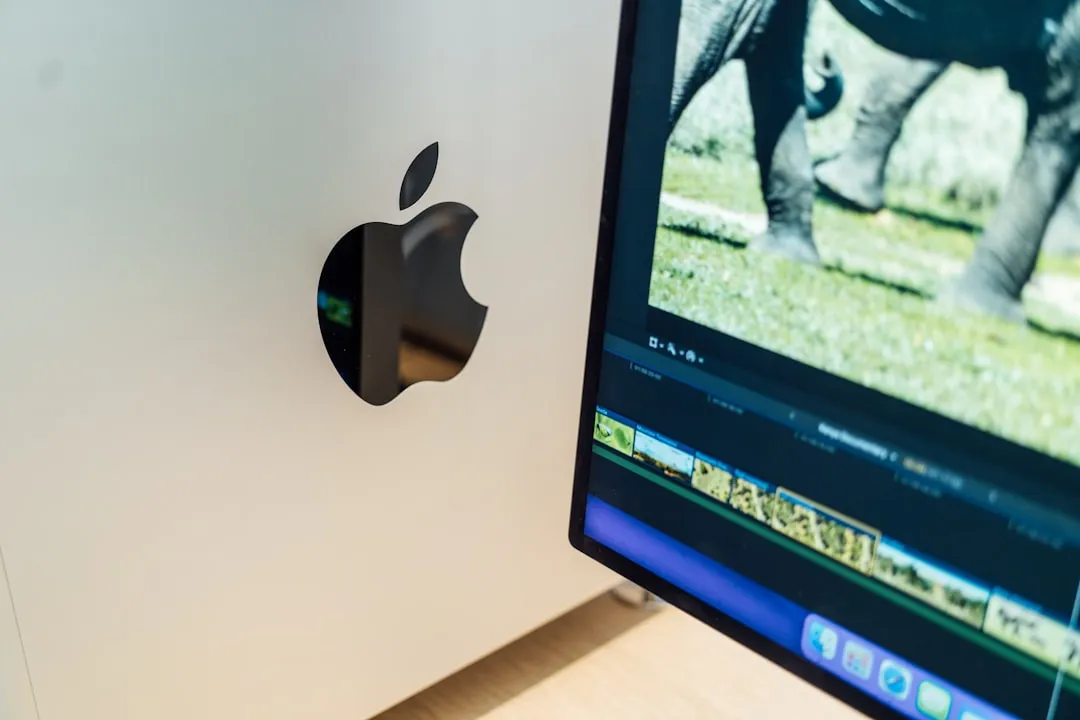
Apple's latest Studio Display update might seem like a minor spec bump on the surface – doubling internal storage from 64GB to 128GB, but it reveals something much more significant about where display technology is heading. When monitors start packing the kind of storage you'd find in a tablet, it's worth asking: what exactly is Apple planning to do with all that space?
The original Studio Display already raised eyebrows when developer discoveries revealed it contained 64GB of storage, with only 2GB actually being utilized for basic operations. Research showed the display essentially matched the specifications of a ninth-generation iPad, complete with the same A13 Bionic chip and storage configuration. Now, with 128GB onboard, Apple has created what amounts to a computer masquerading as a monitor – and that shift tells us everything about the future of smart peripherals.
Why monitors suddenly need serious computing power
The days of "dumb" displays are officially over, and Apple's approach shows exactly why. Modern displays like the Studio Display aren't just showing pixels anymore – they're processing camera feeds for Center Stage, managing spatial audio algorithms, and handling complex USB and Thunderbolt data routing.
Think about it this way: your display now needs to recognize faces, track movement, and adjust camera framing in real-time. But here's the fascinating part – Center Stage isn't just doing basic image processing. It's running sophisticated learning models that predict user movement and anticipate framing adjustments before you even move. This is a shift from reactive image processing to predictive computing right inside your monitor.
The Studio Display's A13 Bionic chip outperforms even Apple's second-generation Apple TV 4K, which only sports an A12 chip with 32GB of storage. This computational superiority isn't accidental – spatial audio processing builds on the same predictive intelligence framework, using the display's processing power to create convincing directional sound that adapts to your position and the room's acoustics. Add in the various USB-C and Thunderbolt protocols the display needs to manage, and suddenly, you understand why Apple needed serious silicon in what used to be a passive piece of hardware.
The storage doubling suggests Apple is preparing for even more computationally intensive features. When you consider that previous analysis showed 62GB of the original 64GB going unused, the jump to 128GB indicates Apple expects future firmware updates to leverage this predictive computing foundation for substantially more storage-hungry applications.
What 128GB enables for display functionality
Here's where things get interesting. With 128GB of storage, Apple's Studio Display transforms from a simple monitor into a platform for advanced features that would have seemed impossible just a few years ago. The expanded storage capacity directly enables the kind of local intelligence processing that makes truly smart displays possible.
Consider the implications for Center Stage and other camera-based features. Apple's implementation already includes a 12MP Ultra Wide camera system that rivals dedicated webcams, but the 128GB storage expansion allows the display to cache multiple user behavioral models, store advanced gesture recognition databases, and even run lightweight apps directly on the display itself.
Imagine walking up to your display and having it instantly recognize not just your face, but your preferred settings, workspace layout, and even your typical meeting patterns – all processed locally without any cloud dependency. The expanded storage makes this kind of personalized intelligence feasible by providing space for the user profile data, behavioral models, and contextual information that power truly adaptive displays.
The expanded storage also suggests Apple might be planning more aggressive firmware update cycles with sophisticated safety mechanisms. Current firmware updates require reserved space beyond the 2GB actively used, but 128GB provides room for A/B update systems, complete rollback capabilities, and beta firmware testing – all while maintaining full functionality. This addresses the fundamental anxiety of firmware updates by ensuring your expensive display can never become a paperweight during the update process.
The economics and supply chain implications
Apple's decision to double storage capacity in the Studio Display reflects broader shifts in component economics and supply chain strategy. When developer analysis initially revealed the display's substantial unused storage capacity, it highlighted Apple's approach of using standardized components across product lines rather than custom configurations for each device.
This is classic Apple efficiency at work. Rather than designing and manufacturing a completely custom storage solution just for displays, they're leveraging the same NAND flash components used across iPads, Apple TVs, and other devices. The move to 128GB likely represents Apple taking advantage of economies of scale – when you're already buying flash storage in massive quantities for tablets, adding it to displays becomes almost trivially inexpensive relative to the engineering costs of custom solutions.
The discovery that Studio Displays essentially contain iPad-level hardware also reveals Apple's long-term strategy for peripheral intelligence. By treating displays as computing platforms rather than passive screens, Apple can iterate on features through software updates rather than requiring new hardware purchases every few years.
This approach makes sense from both a business and user experience perspective. Apple can continue adding value to existing displays through firmware updates, while users get new features without having to replace perfectly good hardware. It's a win-win that also happens to reduce electronic waste – and creates a foundation for entirely new peripheral ecosystems down the road.
Repairability and firmware update implications
The storage increase has significant implications for device longevity and repairability – areas where Apple has traditionally struggled with criticism. With 128GB of onboard storage, Studio Displays can maintain multiple firmware versions simultaneously, enabling safer update processes and easier recovery from failed installations.
Here's how this directly solves the firmware update anxiety we all know too well: instead of the traditional risky approach of overwriting existing firmware, the display can download and verify new firmware in the background, test it in a secure partition, and only switch to the new version when everything checks out perfectly. If something goes wrong, the display instantly reverts to the known-good version without any user intervention.
Apple's acknowledgment that some storage space is needed for firmware updates becomes transformative with 128GB available. The display can maintain full functionality even during complex update procedures, eliminating the nerve-wracking progress bars and potential for bricked devices that have plagued smart peripherals.
The expanded storage also enables more sophisticated diagnostic capabilities that benefit both users and repair technicians. Displays can now store detailed performance logs, usage pattern analysis, and predictive failure indicators. Instead of guessing what went wrong during a repair, technicians could access comprehensive device histories that pinpoint exactly when and why problems began developing.
Where Apple's display roadmap leads next
The 128GB storage bump signals Apple's broader vision for intelligent peripherals that blur the lines between displays, computers, and smart home devices. The fact that Apple hasn't officially confirmed storage quantities in technical specifications suggests the company views this as infrastructure rather than a marketable feature – at least for now.
But here's what's really fascinating: we're likely looking at the foundation for features we haven't yet imagined. Future Studio Displays could leverage this storage foundation for local app stores, advanced gaming capabilities, or even standalone functionality when disconnected from host computers. The computational power already exceeds many dedicated streaming devices, suggesting Apple sees displays as platforms rather than peripherals.
Consider the possibilities: displays that can run lightweight productivity apps independently, serve as smart home hubs when your computer is asleep, or even handle basic computing tasks without needing a connected Mac. With 128GB of storage and iPad-level processing power, these scenarios shift from fantasy to engineering challenges that Apple is uniquely positioned to solve.
Just as smartphones transformed from communication devices into pocket computers, displays are evolving from passive screens into active computing partners that enhance and extend our digital workflows.
The question isn't really whether Apple will unlock more of that 128GB capacity – it's what they'll do with it first. And knowing Apple, whatever comes next will probably make us wonder how we ever lived with "dumb" monitors in the first place.



Comments
Be the first, drop a comment!