



The Apple supply chain has once again found itself in cybercriminals' crosshairs, and this time the stakes couldn't be higher. A critical manufacturing partner responsible for some of Apple's most important products has fallen victim to a sophisticated ransomware attack, potentially exposing sensitive design files and future product plans.
RansomHub, a notorious cybercriminal group, claims to have successfully infiltrated Luxshare Precision Industry and made off with confidential Apple data, according to Computerworld. The breach reportedly includes product specifications, 3D CAD models, and employee personal information from a company that serves as Apple's exclusive Vision Pro manufacturer and assembles iPhones and AirPods.
Here's what makes this particularly alarming: Apple's business relationship with Luxshare generates approximately 70% of the supplier's total income—a concentration that transforms any security incident into a potential existential threat for both companies.
When your weakest link becomes everyone's problem
Here's the uncomfortable truth about modern tech manufacturing: your security is only as strong as your most vulnerable partner. This latest incident perfectly illustrates what cybersecurity experts have been warning about for years—interconnected supply chains create massive attack surfaces that even the most security-conscious companies struggle to protect.
The data tells a sobering story about attack frequency escalation. Data breaches have more than tripled between 2013 and 2022, according to research cited by Computerworld, but what's driving this exponential growth is the shift toward targeting supply chain vulnerabilities rather than attacking primary targets directly.
RansomHub exemplifies this evolved threat landscape. This group has established itself as one of the most prolific ransomware organizations currently operating, with a strategic focus on industrial manufacturing and healthcare sectors where operational disruption creates maximum leverage. CISA data reveals that the group successfully compromised around 210 targets in 2024 alone—roughly four successful attacks per week that demonstrate both their operational capacity and the effectiveness of their targeting methodology.
What distinguishes modern attacks from earlier ransomware campaigns is their sophistication and strategic planning. Today's attacks can involve nation-state financing, complex multi-stage vectors, and months of reconnaissance before execution. These aren't opportunistic smash-and-grab operations—they're intelligence gathering missions designed to maximize both immediate ransom potential and long-term strategic value.
Charl van der Walt from Orange Cyberdefense captures the fundamental challenge perfectly: companies now exist "within a dense web of interdependence where a single weakness can enable mass compromise." What's particularly dangerous is how small businesses and critical services have become force multipliers that can amplify economic and social consequences far beyond their own operational scope.
Why Apple's supply chain keeps getting targeted
Let's break down why cybercriminals find Apple's manufacturing ecosystem so irresistible. The immediate financial incentive is obvious—successful attacks can force entire production lines offline, creating massive delays and financial losses that make companies more willing to pay ransoms. But this surface-level disruption masks a more valuable underlying objective.
The real prize often lies in intelligence extraction. More sophisticated attacks aim to harvest information about upcoming products or long-term manufacturing plans, as noted by MoneyControl. Consider the competitive advantage: obtaining next-generation iPhone design specifications months before launch could be worth millions to competitors or nation-state actors seeking to reverse-engineer Apple's latest innovations.
This pattern of escalating supply chain attacks has been building for years. Apple partner Quanta was hit by ransomware in 2021, while TSMC was forced to shut down multiple chip manufacturing facilities in 2018 after a virus disrupted production lines responsible for making Apple processors. TSMC's CFO Lora Ho called it the first virus attack to directly impact chip manufacturing operations—a watershed moment that demonstrated how cybercriminals could weaponize supply chain dependencies.
What these historical incidents reveal is an evolution in attack methodology. The latest Orange Cyberdefense Security Navigator report confirms that cyber extortion attacks have tripled since 2020, with supply chain components like Luxshare becoming particular targets. The attackers have learned that disrupting a single critical supplier can create cascading effects across multiple product lines and potentially multiple technology companies simultaneously.
What this means for Apple's future product roadmap
The timing of this breach couldn't be worse for Apple's ambitious product plans. Luxshare has become increasingly critical to Apple's manufacturing strategy, recently securing key assembly responsibilities for the iPhone 16 Pro Max and dramatically increasing their iPhone shipment projections from 20 million units in 2022 to an estimated 45-50 million units in 2023, according to AInvest. The company has also demonstrated exceptional yield rates for the iPhone 14 Pro Max, outperforming industry benchmarks—making them not just a large-volume supplier but a high-quality one that Apple has come to depend on.
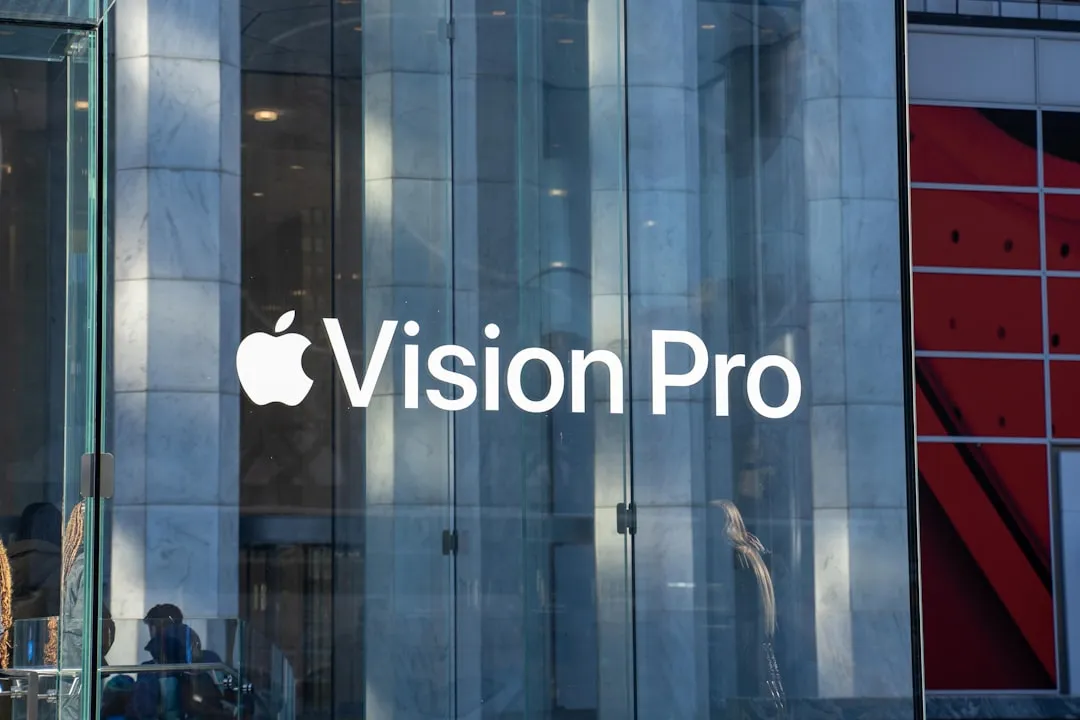
But here's where the strategic implications become truly concerning: Luxshare isn't just another iPhone assembler. They're the exclusive manufacturer of the Vision Pro, Apple's ambitious entry into spatial computing that represents the company's biggest product category gamble since the iPhone. Any disruption to their operations or compromise of their design files could potentially derail Apple's entire AR/VR strategy just as competitors like Meta are gaining ground. The company is also reportedly signed up to manufacture OpenAI's hardware devices, making this breach potentially significant for multiple major tech initiatives beyond Apple's ecosystem.
The scope of compromised data adds another layer of concern. RansomHub claims to have stolen confidential design files, including 3D CAD models, and personally identifiable employee information. Those CAD files could contain detailed specifications for unreleased Apple products scheduled for 2025 and beyond, potentially giving competitors or nation-state actors unprecedented insight into Apple's innovation pipeline and strategic direction.
Apple's response strategy will likely follow their established playbook for supplier security incidents. Rather than immediately shifting production away from affected partners, the company typically requires suppliers to strengthen their cybersecurity infrastructure and demonstrate compliance with Apple's security expectations, as noted by MoneyControl. However, the scale of this breach and Luxshare's exclusive role in Vision Pro manufacturing may force Apple to consider more aggressive risk mitigation measures than they've previously implemented.
The broader implications for tech security
This incident highlights a fundamental challenge that goes far beyond Apple's immediate concerns: the inherent vulnerability of distributed manufacturing models that define modern technology production. While Apple continues investing heavily in security features like Lockdown Mode, Threat notifications, and regular system patches, these protective measures become irrelevant when the attack vector bypasses them entirely by targeting third-party partners with potentially weaker security infrastructure.
The reality check here exposes a critical gap in enterprise security thinking. Companies can no longer rely solely on protecting their own operating systems and internal networks when they must implement comprehensive protections across their entire ecosystem. Consider this alarming baseline: just two years ago, firewalls were disabled on 55% of Macs being used in business environments, according to Computerworld. This reveals how even security-conscious companies struggle with basic protective measures.
Apple's recent decision to push out essential security updates more aggressively is a response to this evolving threat landscape. But the Luxshare incident likely involved a combination of human error and unpatched vulnerabilities at partner companies where Apple has limited direct control over security protocols—illustrating how supply chain security requires a fundamentally different approach than traditional enterprise cybersecurity.
What we're witnessing is the emergence of supply chain security as a distinct discipline that requires specialized tools, processes, and governance frameworks. The traditional model of trusting partners to manage their own security is proving inadequate when a single compromised supplier can expose multiple technology giants to significant operational and competitive risks.
What happens next in the Apple ecosystem?
The Luxshare breach serves as a pivotal moment for supply chain security across the tech industry, but it's unlikely to fundamentally alter Apple's manufacturing strategy in the short term. The company has invested too heavily in diversifying its supplier base and building deep technical relationships with partners like Luxshare to abandon them over a single security incident, regardless of its severity.
Apple's immediate response will likely focus on conducting comprehensive forensic assessments to understand exactly what data was compromised and how it might impact future product development timelines, as suggested by MacRumors. The company will also probably initiate intensive security audits across all major suppliers to identify similar vulnerabilities before they can be exploited by other threat actors who have undoubtedly taken note of RansomHub's success.
However, this incident will accelerate existing trends toward supply chain security standardization and geographic risk diversification. Luxshare is already actively evaluating U.S. manufacturing opportunities to mitigate trade risks, according to AInvest, and Apple continues pushing suppliers in India to triple iPhone production capacity within two years, as reported by AInvest. The cybersecurity concerns will only intensify these efforts to reduce concentration risk in any single region or partner, potentially reshaping global technology manufacturing patterns.
Bottom line: while this breach is concerning, it's more likely to result in enhanced security protocols, mandatory compliance frameworks, and accelerated geographic diversification rather than any immediate disruption to Apple's product roadmap. The real test will be whether the industry can learn from incidents like this to build more resilient supply chains before the next major attack targets an even more critical supplier.
What we're witnessing is the maturation of supply chain warfare, where attacking a single strategic partner can potentially compromise multiple tech giants simultaneously. As the stakes continue to rise, expect to see much more aggressive security requirements, Apple-funded cybersecurity infrastructure upgrades for critical suppliers, and perhaps even the development of industry-wide security standards that treat supply chain protection as a shared responsibility rather than an individual company concern.
















Comments
Be the first, drop a comment!