



![Watch Ultra 3 [GPS + Cellular 49mm] Running & Multisport Smartwatch w/Rugged Titanium Case w/Black Titanium Milanese Loop - L. Satellite Communications, Advanced Health & Fitness Tracking](https://m.media-amazon.com/images/I/814fsV8qwRL._AC_UY218_.jpg)
![Apple Watch Ultra 3 [GPS + Cellular, 49mm] Black Titanium Case with Black Ocean Band (Renewed)](https://m.media-amazon.com/images/I/61kQKDMlzOL._AC_UY218_.jpg)
![Watch Ultra 3 [GPS + Cellular 49mm] Running & Multisport Smartwatch w/Rugged Titanium Case w/Black Ocean Band. Satellite Communications, Advanced Health & Fitness Tracking](https://m.media-amazon.com/images/I/71pdSpwZJiL._AC_UY218_.jpg)
Apple's manufacturing teams are quietly working on something that could fundamentally change how your next iPhone or Apple Watch gets made. The company's design and operations divisions are actively exploring methods to create 3D-printed aluminum components, according to recent reports, marking a significant expansion beyond their current titanium printing capabilities. This isn't just another manufacturing tweak—it's a potential game-changer that could reshape everything from production costs to environmental impact.
The move builds directly on Apple's successful implementation of 3D-printed titanium parts in the Apple Watch Ultra 3, as detailed by industry sources. Apple's manufacturing teams have been refining aluminum printing techniques with the same goals that made their titanium program successful: dramatically reducing material waste while speeding up production timelines. Early applications are expected to focus on Apple Watch casings before potentially expanding to iPhone enclosures, according to Bloomberg's reporting.
Why aluminum 3D printing makes perfect sense
Traditional aluminum manufacturing relies heavily on subtractive methods—essentially carving finished parts from solid metal blocks. Apple's shift toward 3D printing aluminum represents a complete reversal of this approach, building components layer by layer instead of cutting away excess material. The efficiency gains mirror what Apple achieved with titanium, where they managed to cut raw material usage by approximately 50 percent, according to detailed manufacturing reports.
Here's what makes aluminum particularly compelling for 3D printing: while Apple's titanium savings of 400 metric tons this year are impressive, aluminum's widespread use across their entire product lineup could deliver exponentially larger environmental benefits. Every iPhone, iPad, and MacBook contains substantial aluminum components, meaning even modest efficiency improvements would scale to massive material savings across Apple's production volumes.
The environmental benefits align perfectly with Apple's carbon neutrality goals for 2030. All Apple Watch manufacturing already runs on renewable energy sources, according to environmental reports, making the reduced material waste even more impactful. Vice president of Environment and Supply Chain Innovation Sarah Chandler emphasized the significance: "A 50 percent drop [in raw-material use] is a massive achievement—you're getting two watches out of the same amount of material used for one."
Beyond environmental considerations, cost implications become particularly interesting when applied to Apple's most popular devices. The MacBook Neo already demonstrates their commitment to aluminum manufacturing efficiency, using a new aluminum manufacturing process designed to save as much metal as possible while driving down costs and speeding up production, according to recent product analyses. 3D printing aluminum components would extend these efficiency principles to iPhone and Apple Watch production, potentially enabling more aggressive pricing strategies or higher profit margins on devices sold in the hundreds of millions annually.
The technical challenge of printing aluminum
Moving from titanium to aluminum presents unique engineering hurdles that Apple's teams are actively addressing. Their proven titanium process uses laser powder bed fusion with six-laser galvanometer systems, requiring around 900 individual passes and roughly 20 hours to complete a single watch case, as detailed in manufacturing reports. Aluminum's different thermal properties, oxidation behavior, and melting characteristics will require completely different parameter optimization.
The material science challenge starts with powder preparation. Apple's titanium success required gas-atomizing recycled aerospace-grade material into 50-micron particles while carefully controlling oxygen content to prevent unwanted reactions during laser exposure. As senior manufacturing design director J. Manjunathaiah explained, "When you hit it with a laser, it behaves differently if it has oxygen versus not." Aluminum powder will demand its own chemistry optimization, potentially requiring different particle sizes, atmospheric controls, or even entirely different printing approaches.
Apple's decade-plus research into 3D printing has focused heavily on achieving production-ready surface finishes, not just functional prototypes, according to industry sources. This emphasis on cosmetic-grade quality sets Apple apart from typical industrial 3D printing applications. Vice president of Product Design Kate Bergeron noted that "continuous prototyping and data-driven process optimization were essential to validating LPBF for production." The same iterative refinement will be necessary for aluminum, potentially requiring months or years of parameter development.
Quality assurance becomes even more complex when targeting consumer electronics standards. Apple's established system includes ultrasonic depowdering, coolant-assisted wire cutting during singulation, and automated optical inspection to confirm geometry and surface finish, as reported by manufacturing experts. Each process step will need aluminum-specific adjustments, from thermal management during printing to post-processing techniques that achieve Apple's premium aesthetic requirements.
The company's collaboration with manufacturers like Bright Laser Technologies for metal printing systems, according to industry reports, suggests they're leveraging external expertise while developing aluminum capabilities. Apple has also been testing binder-jetting processes for stainless steel components, indicating their research spans multiple printing technologies that could potentially apply to aluminum applications.
What this means for future Apple devices
The implementation timeline suggests Apple Watch casings will serve as the proving ground before any iPhone applications, according to recent reporting. This follows Apple's established pattern of testing new manufacturing techniques on smaller-volume products where potential issues won't disrupt their highest-revenue devices. Apple's manufacturing design and operations departments are actively collaborating on the aluminum printing project, as reported by industry sources, indicating this has moved beyond research into implementation planning.
The design possibilities enabled by aluminum 3D printing could be transformative. Apple's titanium printing has already enabled micro-textures that improve waterproofing around antenna housings in cellular Apple Watch models, according to technical reports. These printed patterns enhance adhesion between metal and polymer components while allowing internal redesigns that reduce part count without compromising structural integrity. Applied to aluminum iPhone enclosures, similar techniques could enable integrated antenna arrays, optimized thermal management channels, or structural geometries impossible with traditional machining.
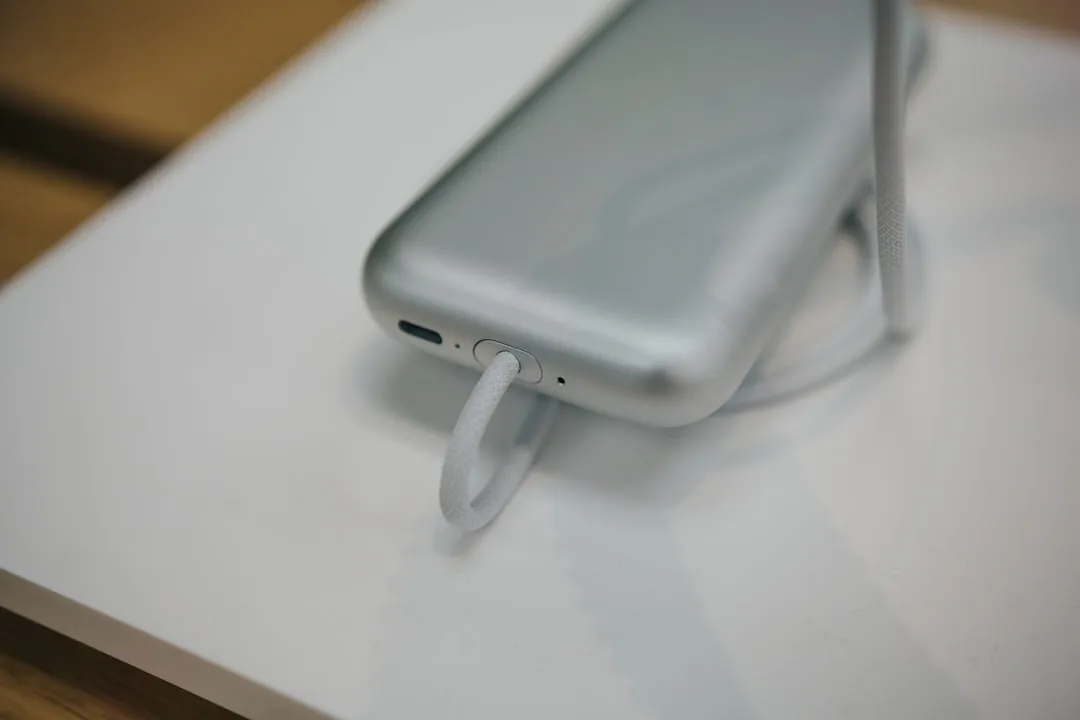
The iPhone Air provides a compelling preview of 3D printing's design impact. Apple achieved the device's ultra-thin 5.6mm profile partly through 3D-printed USB-C ports that used 33 percent less material than conventional forging while maintaining structural strength, according to product reports. Scaling this approach to entire aluminum enclosures could enable even more dramatic form factor innovations—perhaps iPhones with integrated cooling structures, complex internal geometries for improved drop protection, or seamlessly integrated mounting points for MagSafe components.
From a consumer pricing perspective, the potential savings become significant at iPhone volumes. While Apple Watch production benefits from material efficiency, iPhone production operates at 10-20 times the scale. If aluminum 3D printing delivers even half the material savings achieved with titanium, the cost reduction across 200+ million iPhones annually could enable more aggressive pricing strategies or fund additional features while maintaining profit margins. This could be particularly impactful for entry-level iPhone models where component costs directly affect retail pricing.
The bigger manufacturing revolution
Apple's push into aluminum 3D printing represents more than just another production technique—it's part of a fundamental shift toward additive manufacturing that could reshape the entire consumer electronics industry. Their approach, refined over more than a decade of research, emphasizes continuous prototyping and data-driven process optimization to validate new techniques for mass production, according to manufacturing experts.
The integration across multiple product lines tells a broader story about Apple's manufacturing evolution. Both the iPhone Air and Watch Series 11 incorporate 3D-printed components as integral elements of Apple's 2030 carbon-neutral strategy, using recycled materials and contributing to overall waste reduction across manufacturing, as detailed in environmental reports. This isn't experimental—it's becoming core to Apple's manufacturing philosophy.
The industry implications could be profound. Just as Apple's precision machining and assembly innovations eventually influenced competitors across consumer electronics, successful implementation of 3D-printed aluminum enclosures could drive industry-wide adoption. The compelling combination of cost savings, environmental benefits, and expanded design possibilities makes this technology particularly attractive for any manufacturer producing high-volume metal components.
Beyond immediate cost and environmental benefits, aluminum 3D printing could enable entirely new product categories or design approaches that aren't feasible with current manufacturing constraints. Internal geometries optimized for wireless charging, integrated thermal management, or structural designs that improve repairability while reducing assembly complexity all become possible when you're building components layer by layer rather than carving them from solid blocks.
This manufacturing evolution positions Apple to maintain their competitive advantage through production capabilities that competitors can't easily replicate. The decade of research investment, combined with their established quality control systems and supply chain relationships, creates barriers to entry that could preserve Apple's premium positioning even as 3D printing technology becomes more widely available across the industry.












Comments
Be the first, drop a comment!