



When Apple announced its partnership with Google to power Siri with Gemini AI, the tech world did a collective double-take. Here's a company that famously builds everything in-house—from processors to pizza boxes (yes, really)—suddenly choosing to hand over one of its most visible AI features to its longtime rival. But here's what this really represents: a masterclass in strategic pragmatism that signals how even the most self-reliant tech giants are adapting to the AI era.
The partnership makes sense when you dig into what Apple was really evaluating. After months of testing different AI partners, including OpenAI and Anthropic, Apple determined that Google's technology provides "the most capable foundation" for its Apple Foundation Models. This wasn't about convenience or cost—it was purely about technical superiority. That distinction matters because it reveals how enterprise AI decisions are increasingly driven by raw capability assessments rather than traditional partnership dynamics.
The collaboration represents a multi-year commitment that could be worth as much as $5 billion to Google over time, structured as a cloud computing contract that will enable more personalized Siri experiences launching later this year. Apple's decision to announce this directly rather than bury it in a press release signals confidence—they see this as a strategic advantage, not a weakness to hide.
Why Google's Gemini conquered the competition
Apple's selection process reveals crucial insights about what drives AI infrastructure decisions at scale. Google didn't just win on model performance—they won on vertical integration. Google controls everything from Gemini models down to custom Trillium TPUs in its data centers, offering the kind of end-to-end control that Apple demands for billion-device deployments.
The technical differentiator was Gemini's native multimodal architecture. Unlike competitors who retrofitted text models for other content types, Gemini was trained natively on video, audio, and text simultaneously. For Apple's vision of contextual intelligence—Siri understanding your screen, parsing emails, and responding with visual context—this foundational design was non-negotiable.
Google's mobile expertise provided another decisive advantage. While OpenAI has made impressive strides in conversational AI, Google has extensive experience on mobile devices and knows how to optimize better than OpenAI. When you're serving billions of devices that need consistent, low-latency responses, this optimization expertise becomes invaluable.
The competitive landscape also influenced Apple's timing. Google's Gemini 3 release in late 2025 reportedly put OpenAI in "code red" mode, suggesting Google had achieved a significant capability leap that Apple couldn't ignore. This performance momentum, combined with proven deployment at Samsung's Galaxy AI scale, demonstrated real-world reliability that mattered more than laboratory benchmarks.
The strategic architecture behind Apple's AI evolution
This partnership represents more than outsourcing—it's a sophisticated rethinking of AI infrastructure strategy. While Apple maintains its infrastructure spending at roughly 3 percent of revenue compared to Google's expected $90 billion in 2026, this apparent restraint enables a more nuanced approach. A former Apple executive characterized the Google deal as "a necessary byproduct of Apple's decision not to 'go big' on its AI investments like its competitors", but this framing misses the architectural sophistication.
Apple is implementing a three-tier intelligence architecture that strategically balances capability, privacy, and performance. The company Apple uses a ~3B-parameter on-device foundation model and a larger server model for Private Cloud Compute; Apple has not published 7B on-device or '60% of daily tasks' figures—maintaining speed and privacy for routine interactions. Complex requests involving sensitive data route through Apple's Private Cloud Compute, preserving privacy while accessing more computational power. Only "world knowledge" queries that require the most advanced reasoning capabilities hand off seamlessly to Gemini.
This hybrid approach accelerates Apple's AI roadmap without compromising its core values or waiting years to develop comparable capabilities internally. The multi-year agreement structure suggests confidence in Google's development trajectory while maintaining Apple's control over user experience and system integration. Rather than technological dependence, this represents strategic orchestration—leveraging best-in-class components while retaining control over the overall experience.
Privacy preservation in an interconnected AI landscape
Apple's privacy commitments remain intact through careful architectural design. Apple Intelligence will continue to run on Apple devices and Private Cloud Compute while maintaining Apple's industry-leading privacy standards. The arrangement allows Apple to use Gemini instances on its own servers within its own data centers, ensuring data processing remains under Apple's control.
However, this partnership raises broader questions about AI market concentration. Google now powers AI features across both major mobile operating systems through different mechanisms—directly via Android and through this partnership for iOS. Tesla CEO Elon Musk voiced concerns about this concentration, noting that Google already controls Android and Chrome.
The partnership effectively makes many smartphones "Gemini phones," as Google's models become a default layer across the mobile ecosystem. This level of concentration across the mobile landscape creates unprecedented influence over how billions of users access and interact with AI capabilities, warranting attention from regulators considering competition in the AI era.
Transforming digital interaction beyond voice commands
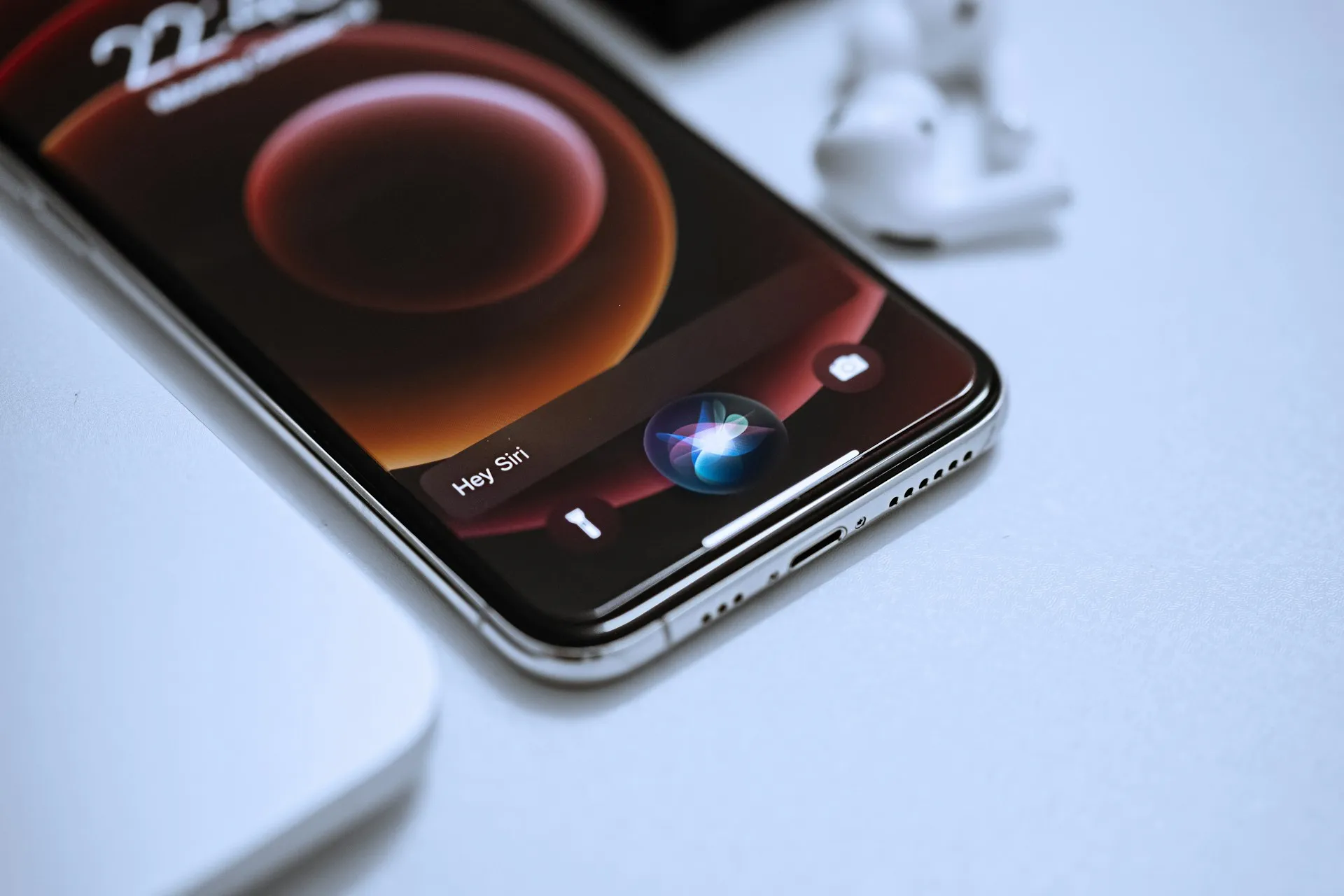
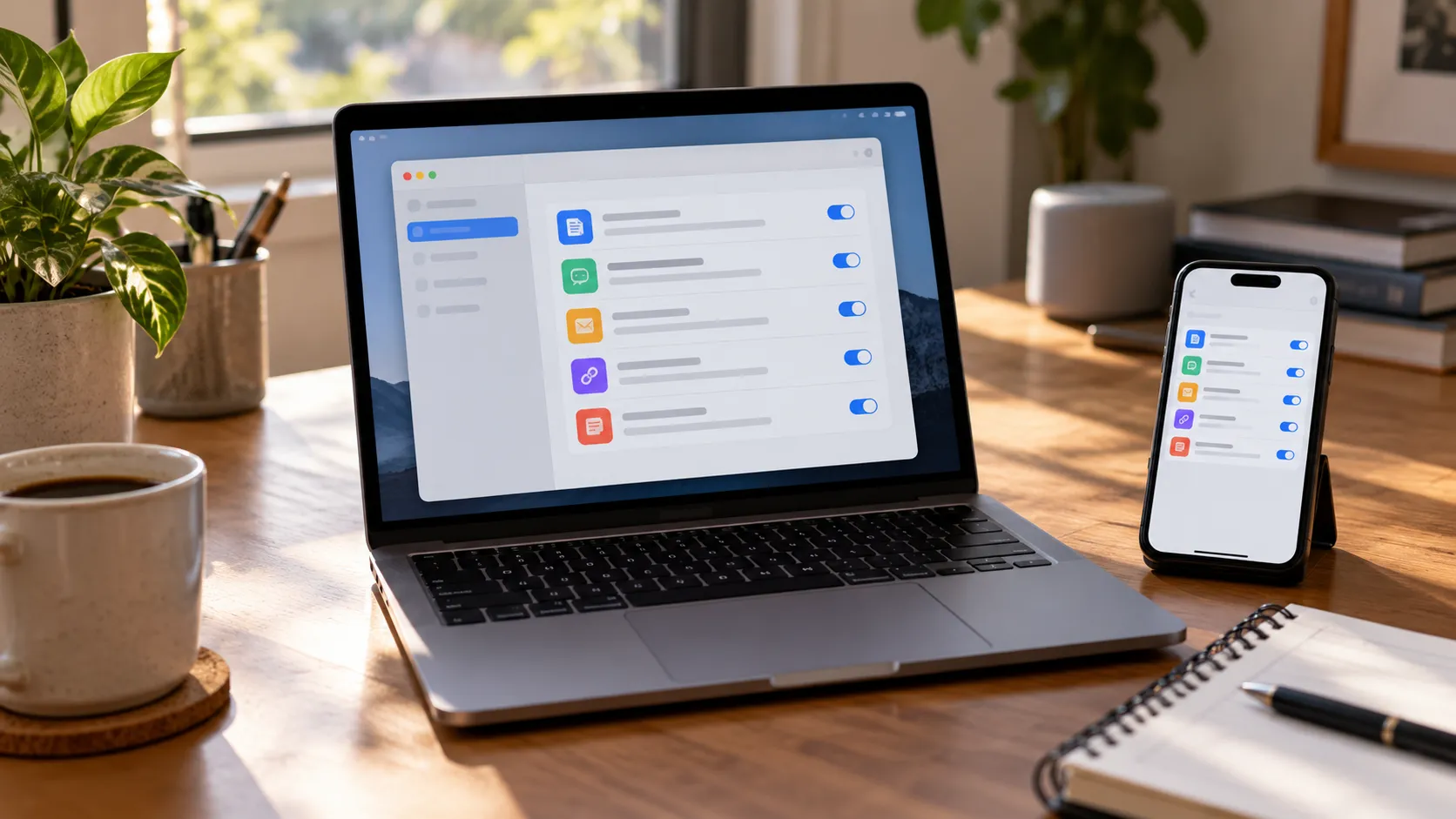
The Apple-Google partnership signals a fundamental shift toward ambient, contextually-aware computing. Apple's goal extends beyond improving voice responses to achieving Siri's original promise as a digital companion that can genuinely make life easier for users. The enhanced Siri will offer more agent-like capabilities, pulling context from emails, texts, calendars, and apps to provide proactive, meaningful assistance.
This transformation has implications that extend far beyond improved voice interactions. AI-powered voice search eliminates traditional results pages in favor of direct answers, fundamentally changing how users discover and interact with information. Rather than opening individual apps to accomplish tasks, users will increasingly tell Siri what they want to achieve and have the AI coordinate between different services seamlessly.
For businesses and developers, this evolution requires new optimization strategies. Traditional SEO focused on ranking first on Google, but in an AI world, there are no results pages; the AI just provides answers. Companies need to optimize for AI visibility through reviews, structured content, and brand mentions rather than traditional search rankings. This shift represents a move toward conversational discovery where AI agents become the primary interface between users and digital services.
The broader implication suggests that apps may become less prominent as Apple Intelligence handles more tasks behind the scenes. Instead of managing multiple apps, users will interact with an intelligent system that understands context, anticipates needs, and coordinates actions across services transparently.
Strategic collaboration over technological isolation
Apple's Gemini partnership ultimately demonstrates how even the most self-reliant technology companies are adapting their strategies for the AI era. Rather than signaling weakness, the deal demonstrates Apple's willingness to adapt its traditional approach when faced with rapidly evolving technology landscapes. This represents a calculated shift from technological independence to strategic collaboration where appropriate.
The partnership provides Apple with immediate access to cutting-edge AI capabilities while maintaining control over user experience, privacy standards, and system integration. This pragmatic approach mirrors Apple's historical strategy of adopting the strongest available underlying technology and wrapping it in Apple's own design, controls, and values. Apple has always been willing to use external components when they're superior—Samsung displays, Qualcomm modems, or Google's search engine in Safari—while focusing on integration and user experience rather than owning every piece of the technology stack.
The collaboration allows Apple to accelerate AI capabilities while preserving what differentiates the company: seamless integration, privacy protection, and user-centered design. This is about infrastructure, not identity—Google provides the underlying reasoning capabilities that enable more sophisticated interactions, while Apple retains control over how users experience and interact with that intelligence.
As the AI landscape continues evolving at unprecedented speed, this partnership may be remembered as the moment Apple chose strategic collaboration over technological isolation, setting a precedent for how even the most self-reliant tech companies approach the AI revolution. The success will ultimately be measured not by whether users know they're using Google's AI, but by whether Siri finally becomes the intelligent, helpful assistant Apple promised more than a decade ago—one that understands context, anticipates needs, and makes technology genuinely more useful in daily life.






Comments
Be the first, drop a comment!