





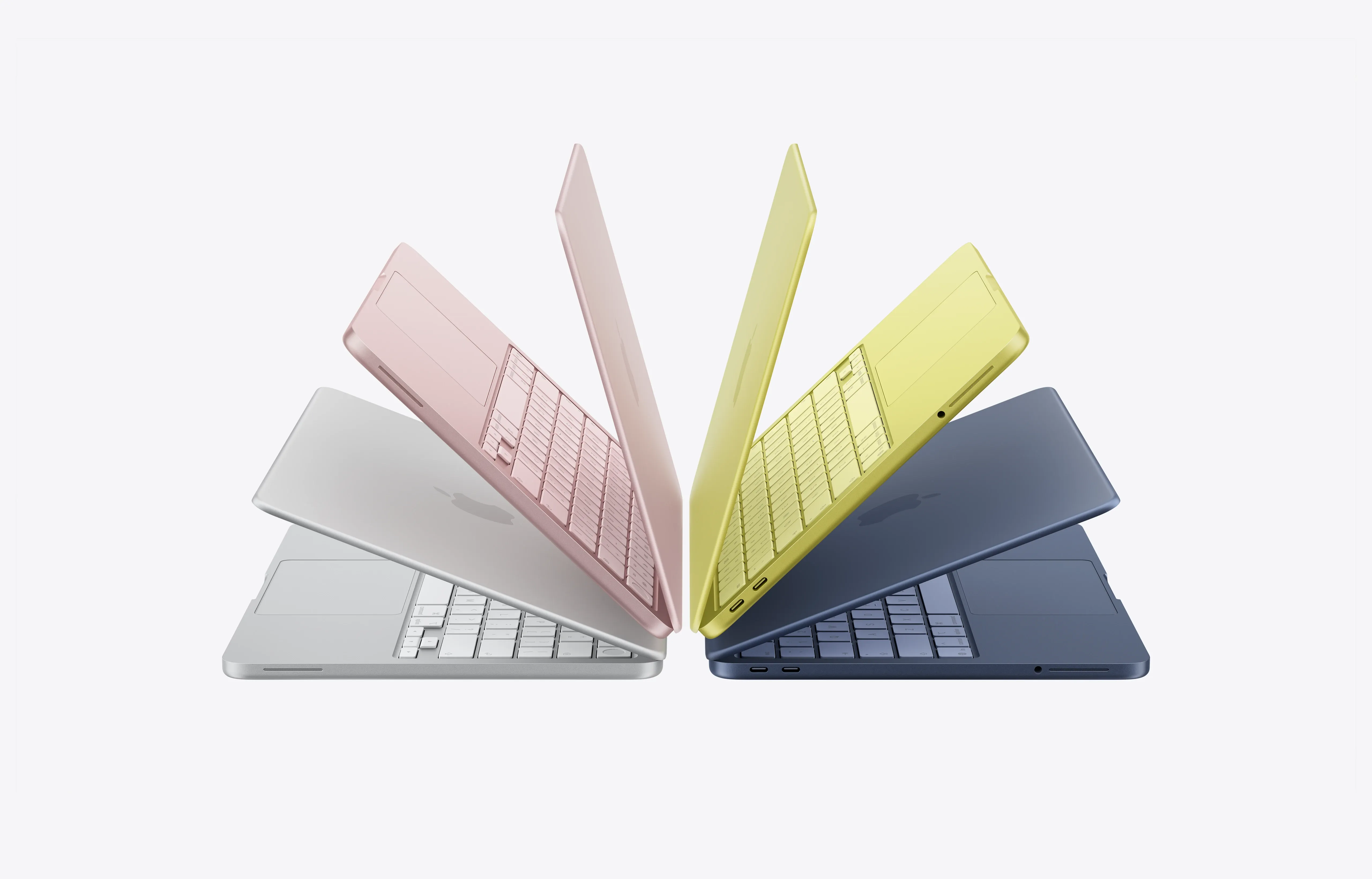
Apple's long-rumored entry-level MacBook has tech enthusiasts buzzing with anticipation, and frankly, it's about time. The prospect of a more affordable Mac laptop could finally bridge the gap between Apple's premium pricing and the budget-conscious consumers who've been eyeing the ecosystem from afar. But here's the thing—while I'm genuinely excited about what this could mean for accessibility and market expansion, there's one nagging concern that keeps me up at night: how will Apple balance affordability with the quality and performance we've come to expect?
What makes a 'cheap' MacBook so compelling right now?
The timing couldn't be better for Apple to shake up its laptop lineup with a budget-friendly option. We're living in an era where the laptop market is fiercely competitive, with clear battle lines drawn around price points. Chromebooks have systematically conquered the affordable computing space, particularly in education, where they command over 60% of the K-12 market. Meanwhile, Windows manufacturers continue pushing out capable machines at the $400-600 range—a territory Apple has essentially ceded entirely.
What really excites me about this potential move isn't just Apple wanting a slice of the budget pie. It's about removing genuine barriers to entry that have kept entire user segments locked out of the Mac experience. The current MacBook Air, starting at $1,099, creates a substantial financial hurdle for students transitioning from high school Chromebooks, small business owners looking to standardize their teams on Apple products, and professionals curious about macOS but unable to justify the premium leap from their current Windows machines.
The educational battleground tells the most compelling story here. While Apple dominated schools in the 1980s and 90s, Google's Chromebooks have reclaimed this territory through aggressive pricing and simplified management. A sub-$700 MacBook could help Apple recapture educational market share while creating long-term ecosystem loyalty—students comfortable with Mac workflows today become the professionals driving purchasing decisions tomorrow.
The delicate balancing act: performance vs. price
Here's where strategic excitement meets engineering reality. Apple has built its reputation on delivering premium experiences across their entire product range, making every compromise a potential threat to brand perception. The challenge isn't simply cutting costs—it's maintaining the essential Mac experience while making trade-offs that enhance accessibility without undermining core value.
The most logical cost-reduction areas each carry distinct implications. Display quality offers significant savings potential—shifting from high-resolution Retina panels to standard 1080p screens could reduce costs substantially while maintaining decent visual quality for basic computing tasks. Build materials present another opportunity, though Apple's aluminum unibody construction has become so synonymous with Mac identity that any compromise here risks diluting brand perception.
Internal specifications provide the most flexibility for strategic positioning. Using previous-generation M-series chips, limiting base RAM to 8GB, or offering smaller default storage configurations could achieve meaningful cost reductions. The critical question becomes: which compromises impact daily usability versus which merely affect perception or future-proofing?
Port selection represents perhaps the most straightforward area for differentiation—fewer Thunderbolt ports, strategic inclusion of legacy connections, or simplified I/O layouts could reduce manufacturing costs while potentially addressing user preferences for more diverse connectivity options.
The key insight here is that successful budget products aren't just stripped-down versions of premium offerings—they're thoughtfully designed for specific use cases and user needs.
How this could reshape Apple's entire laptop strategy
This rumored launch could restructure Apple's laptop ecosystem in ways that mirror their highly successful iPhone strategy. Currently, the MacBook lineup feels somewhat awkward with the Air serving double duty as both an entry-level option and a mainstream consumer choice, while the Pro line targets power users and professionals.
A three-tier approach—budget MacBook, enhanced MacBook Air, and professional MacBook Pro—creates clearer value propositions and natural upgrade paths. The iPhone model demonstrates this perfectly: the base iPhone serves price-sensitive customers, the standard iPhone targets mainstream users, and the Pro models cater to enthusiasts and professionals willing to pay premiums for advanced features.
This restructuring could actually strengthen the MacBook Air's market position. Freed from entry-level pricing constraints, Apple could enhance the Air with better displays, improved performance, and perhaps some Pro-level features like additional ports or upgraded audio systems. The result would be a more compelling mid-tier option that justifies its premium over the budget model while providing clear differentiation from the Pro line.
The strategic implications extend beyond product positioning. Clear tiered pricing creates obvious customer journey progression—students start with budget models, professionals upgrade to Air variants, and power users eventually move to Pro configurations. This approach maximizes customer lifetime value while serving distinct market segments more effectively.
The one concern that keeps me cautious
Despite all the strategic promise, one fundamental worry keeps nagging at me: Apple's historical relationship with "budget" products hasn't always delivered the market expansion they initially promised.
The original MacBook (2006-2010) serves as a cautionary tale. While popular, it suffered from thermal management issues, creaky plastic construction that yellowed over time, and performance constraints that often pushed users toward more expensive alternatives. More recently, the base model iPad—while not unsuccessful—often feels artificially limited in ways designed to encourage Pro model upgrades rather than genuinely serve budget-conscious users.
My concern isn't that Apple will create a flawed product—their quality standards typically prevent that. Rather, I worry they might engineer limitations that function more as marketing tools than genuine attempts to serve price-sensitive consumers. There's a crucial difference between smart cost optimization and artificial constraint designed to maintain premium model appeal.
The sweet spot exists, but reaching it requires Apple to resist their tendency toward hierarchical product differentiation through deliberate limitation rather than natural feature progression. If the budget MacBook feels genuinely capable for its intended use cases—student work, basic professional tasks, casual computing—it could succeed brilliantly. If it feels like a compromised version designed to push upgrades, it risks reinforcing perceptions about Mac accessibility rather than changing them.
Where does this leave the Mac ecosystem?
If Apple executes this correctly, we're potentially looking at one of the most significant Mac launches in years. The impact extends far beyond adding another laptop option—it's about fundamentally changing who considers Mac products accessible and viable.
A successful entry-level MacBook opens doors for user segments that have been effectively priced out of the ecosystem while giving educational institutions a legitimate alternative to Chromebook dominance. The competitive implications are substantial too, potentially forcing Windows manufacturers to reconsider their own premium positioning strategies.
The ecosystem effects could be transformative. Larger Mac user bases typically drive increased developer attention, more comprehensive software support, and stronger accessory markets. Educational adoption particularly creates long-term loyalty patterns that extend well beyond initial purchase decisions.
But success hinges entirely on execution balance—maintaining Apple's commitment to user experience while achieving price points that genuinely serve budget-conscious consumers. It's a challenging engineering and marketing problem, but not an insurmountable one.
If Apple can deliver a MacBook that feels genuinely capable rather than deliberately limited, that opens ecosystem doors rather than reinforcing barriers, we could witness a fundamental shift in Mac market accessibility. The stakes are high, the potential is enormous, and the execution will reveal everything about Apple's true commitment to expanding its user base beyond traditional premium segments.
Either way, it's going to be fascinating to watch this strategy unfold in real time.




Comments
Be the first, drop a comment!