



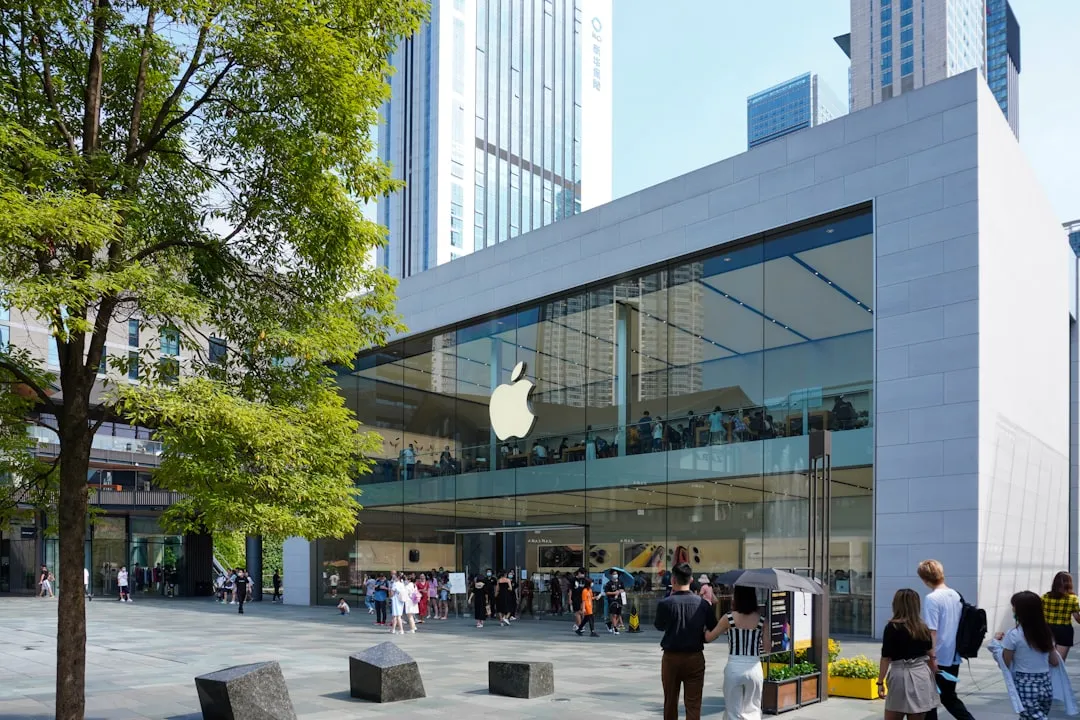
Apple's COO Sabih Khan is making waves in China, and for good reason. The newly appointed chief operating officer recently held high-level meetings with Chinese trade officials, reinforcing the tech giant's commitment to its most crucial manufacturing partnership. Khan's ascension to this role comes at a pivotal moment when Apple is navigating complex geopolitical tensions while maintaining its deep-rooted operations in the world's second-largest economy.
This strategic engagement isn't happening in a vacuum. Apple has recently experienced a remarkable turnaround in the Chinese market, with research from IDC showing the company led smartphone shipments in China during October and November. The company achieved market dominance with more than 20% market share, positioning itself miles ahead of competitors. Perhaps most significantly, Apple expects to return to growth in China for the quarter ending in December, marking a dramatic shift from earlier projections of decline.
Khan's leadership transition signals strategic continuity
The timing of Khan's diplomatic mission reflects Apple's carefully orchestrated leadership transition. Khan has been elevated to COO following Jeff Williams' retirement, bringing three decades of Apple experience to this critical role. His background is particularly relevant for China relations—Khan was born in Uttar Pradesh's Moradabad and joined Apple in 1995, when the company was still primarily known for personal computers.
The current management approach under Khan's guidance emphasizes what analysts call a 'Trust over Speed' philosophy toward new technologies like AI. This measured approach proves invaluable when navigating China's regulatory landscape, where government approval is required for AI services and partnerships with local tech giants like Alibaba and Baidu become essential. Khan met directly with Chinese Vice Commerce Minister Li Chenggang, demonstrating the high-level nature of these ongoing discussions.
What makes Khan uniquely positioned for this role is how his dual expertise enables Apple to execute what amounts to a diplomatic balancing act. Tim Cook himself has praised Khan's strategic capabilities, noting that Khan has helped pioneer new technologies in advanced manufacturing and overseen Apple's manufacturing footprint expansion in the US. This experience managing both American reshoring initiatives and Chinese partnerships gives Khan the credibility to reassure Beijing that diversification doesn't mean abandonment—a crucial message in today's geopolitical climate.
China's economic significance drives partnership commitments
The financial stakes underlying these diplomatic discussions are enormous. Apple's relationship with China represents one of the most significant economic partnerships in modern tech history. By 2015, Apple was investing approximately $55 billion annually in China, a figure that dwarfs many national infrastructure programs. To put this in perspective, that annual investment exceeds the entire four-year budget of the U.S. CHIPS Act by more than four times—Apple alone invests more in China each year than America's signature semiconductor initiative allocates annually.
The scale of this investment becomes clear when considering the human capital transformation it enabled. Since 2008, Apple estimates it has trained at least 28 million workers in China. This wasn't merely assembly line training—Apple created what amounts to a technology university system, sending waves of engineers to establish manufacturing capabilities that didn't exist when the partnership began.
The manufacturing infrastructure Apple has built in China is staggering in scope. By 2012, the value of Apple-owned machinery in China had reached $7.3 billion, representing a massive physical commitment to the region. This investment created a manufacturing ecosystem where Apple's suppliers can bring together 200,000 people, with most living in dormitories near iPhone plants featuring assembly lines longer than football fields.
The economic interdependence runs both ways, creating what economists call a mutually beneficial lock-in effect. IDC forecasts that this calendar year will be a record period for Apple in terms of shipments and value, with projections exceeding $261 billion. China's role in achieving these numbers cannot be overstated, as an estimated 80 percent of iPhones are still manufactured in China despite diversification efforts.
Navigating geopolitical complexities while maintaining growth
Khan's diplomatic engagement comes at a time when Apple faces increasing pressure from multiple directions. President Trump's trade policies have significantly impacted Apple's global supply chain, with tariffs on China and other manufacturing countries creating financial strain. The Trump administration proposed broad reciprocal tariffs on imports and at points threatened high levies on certain imports; some reporting suggested tariffs of up to ~25% on consumer goods—policy proposals that have put pressure on supply-chain decisions.
Here's where Khan's diplomatic skills really come into play. Apple's response demonstrates sophisticated geopolitical maneuvering. The company has pledged $500 billion in investments to expand its U.S. facilities, while simultaneously maintaining its Chinese operations. This isn't just about appeasing both sides—it creates strategic leverage that allows Apple to operate as a stabilizing force between two economic superpowers. The balancing act reflects the reality that a complete breakdown between the United States and China would cut Apple's value in half or more, potentially dropping the company from $3.2 trillion to $1.6 trillion in market capitalization.
The diversification strategy is already showing results. Apple now makes about 20 percent of its iPhones sold globally in India, while Vietnam now produces the majority of AirPods shipped globally. However, these moves complement rather than replace China operations, as demonstrated when Khan has visited long-time supplier Lens Technology, reinforcing ongoing partnerships.
What makes this particularly complex is how AI development intersects with regulatory requirements. Apple has formed critical alliances with Alibaba and Baidu to launch AI features in China, while regulatory requirements mandate that generative AI services obtain government approval before public release. This regulatory framework makes Khan's government relationships essential for Apple's AI ambitions, turning diplomatic engagement into a technological necessity.
What this means for Apple's future strategy
Khan's diplomatic mission represents more than ceremonial relationship maintenance—it signals Apple's recognition that the future belongs to companies that can navigate multipolar complexity. The company faces the complex challenge of rewriting its supply chain playbook for a multipolar world, requiring not just geographic diversification but political sophistication.
The reality is that what China offers—the concentration of 200,000 skilled workers, experienced engineers, and decades of manufacturing expertise—represents a competitive advantage that extends beyond cost savings. It's about innovation velocity and manufacturing precision that would take decades to replicate elsewhere. This gives Apple tremendous influence in shaping how the U.S.-China tech relationship evolves.
China hopes Apple will continue to explore the Chinese market and grow together with Chinese suppliers, while Apple needs China's manufacturing capabilities and market access. The partnership that began with basic manufacturing has evolved into something more sophisticated—a technological ecosystem where innovation happens through collaboration rather than competition.
Looking ahead, Khan's leadership will be crucial in maintaining the delicate balance that has made Apple successful. His message of long-term partnership commitment reflects Apple's understanding that despite geopolitical tensions and diversification efforts, the China relationship remains foundational to the company's success. Rather than viewing U.S.-China tensions as an insurmountable challenge, Apple is positioning itself as a bridge between two economies that need each other more than political rhetoric suggests.
Bottom line: Khan's diplomatic engagement isn't just about maintaining supply chains—it's about positioning Apple as an indispensable player in an increasingly fragmented global economy. The company that helped China become a manufacturing superpower isn't walking away from that relationship, but it's definitely working to make it more resilient and politically sustainable for the long term. In an era where tech companies must navigate geopolitics as skillfully as they navigate markets, Apple's approach may become the blueprint for corporate diplomacy in a multipolar world.










Comments
Be the first, drop a comment!