



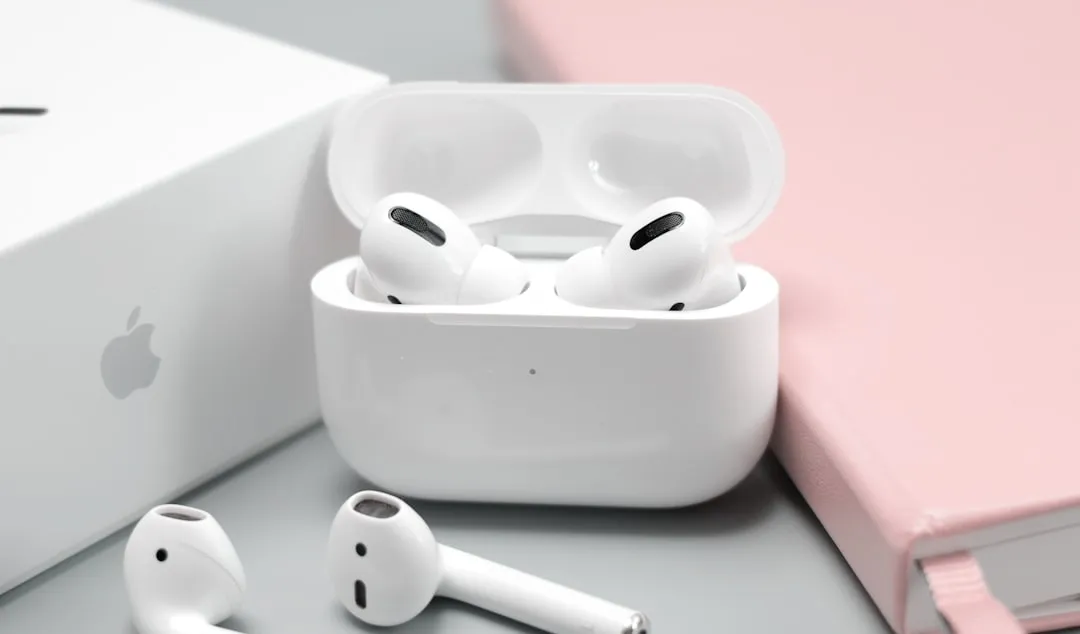
New code buried in a macOS Tahoe 26.7 release candidate is fueling fresh camera-equipped AirPods rumors, showing in granular detail how Apple's prototype earbuds actually capture and process images, according to MacRumors. The details point to a device built for Visual Intelligence, Apple's visual AI feature, rather than conventional photography.
The find follows a leaked demo video discovered last week showing a person holding up a book cover so Siri could identify it and save the information for later. That video hinted at a near-term launch. Bloomberg's Mark Gurman says otherwise: the product remains targeted for 2027, not Apple's expected iPhone event next month.
Between the demo video and the newly surfaced code, a clearer picture of Apple's camera-equipped AirPods rumors is emerging: dual cameras, on-device processing, a possible indicator light, and a launch timeline that keeps sliding. Here's what the leaks actually show, and what they still don't answer.
What the camera-equipped AirPods rumors actually show
The story started with a demo video hidden inside the macOS Tahoe 26.7 release candidate, showing AirPods identifying a book cover and saving it through Siri. A voiceover in Apple's footage says Visual Intelligence makes the world 'saveable' and tells users they can ask Siri to save something for later.
Days later, a MacRumors forum member using the handle mactracker dug up something more technical: a hidden macOS framework called AccessorySensorManager, which manages sensor data from connected AirPods. Where the demo video showed the experience, this framework shows the engineering behind it.
Taken together, the two leaks sketch a product built around ambient AI awareness rather than casual photography. One shows what the AirPods are supposed to do; the other shows how.
Visual Intelligence, not a camera replacement
The code supports single captures and repeated still-image capture at a set rate, but includes no conventional video recording function. That's a meaningful distinction. These are not action cameras strapped to your ears.
Gurman describes the sensors as low-resolution, designed to "scan the surrounding environment and provide context to the Siri digital assistant and other AI tools" rather than take photos or videos. That framing lines up with Apple's long-delayed multimodal Siri overhaul, which will reportedly be able to analyze whatever images the earbuds send it.
The comparison to Meta's smart glasses clarifies more than it obscures. Engadget's own assessment is blunt: an indicator light is good for privacy, "but these are not Meta Glasses," the outlet writes. Apple's approach reads as ambient sensing feeding an assistant, not a wearable built for personal photography.
Inside the camera AirPods leak: sensors, resolution, and motion
The hardware itself is more elaborate than a single lens. The code describes one computer vision camera in each earbud, with left and right working together to capture the same scene from two slightly different angles. Both cameras record synchronized RGB stills tagged with matching frame IDs, letting Visual Intelligence combine two perspectives of whatever the wearer is looking at.
Resolution details point to capture and output figures rather than raw sensor specs. In active mode, likely triggered through Siri, the system captures a 640x640 source image and returns a processed image up to 1024x1024, or a little over one megapixel. Passive mode runs lower, capturing at 320x320 and outputting either 320x320 or 512x512. Mactracker, who surfaced the framework, cautions that these are capture-specific figures and that "the physical sensor's native resolution may be larger."
Apple also built in a fair amount of calibration to compensate for cameras mounted on a head that moves constantly. The framework includes lens-distortion correction, dual-camera calibration, and motion-sensor calibration, along with logic that rejects frames hit by excessive movement or a blocked lens. Some of that analysis happens directly on the earbuds through what Apple calls "peripheral inference," including on-device detection of whether a person is in frame before any data leaves the device.
The privacy questions the leak leaves open
Passive mode appears intended for background environmental awareness, with the framework referencing contextual conditions such as nearby speech, changes in ambient audio, posture changes, head rotation, and movement outside a defined area. MacRumors notes that the code does not establish whether every condition triggers a camera capture. That's a fairly wide net of triggers for a device that sits in someone's ears all day.
The code also lets the system control the brightness of a hardware indicator, suggesting each earbud could include a visible light that signals when its camera is capturing images. That would be a meaningful safeguard, assuming it works as described and stays visible in normal use rather than a controlled demo.
Not everyone is convinced a status light settles the matter. Critics have already started calling the product "pervertpods," a nickname 9to5Mac flagged among skeptics who doubt a small indicator resolves bystander concerns about earbuds that can passively scan a room, the outlet reports.
The leaked code doesn't settle where image processing actually happens, on-device or in the cloud, what gets retained after a capture, or how the indicator performs outside a lab setting. Those are the questions that will matter more than megapixel counts once this product actually ships.
Why the leaked prototype may not be what ships in 2027
The AirPods shown in the demo video carry the internal codename B790, a camera-equipped variant of the AirPods Pro 3. Gurman reports that Apple has dropped B790 from its 2026 plans and is instead developing a newer design, codenamed B798, for release in 2027. B790 had reportedly been on the 2026 road map until recently.
Gurman's own timeline for this product has moved around a lot this year. In May he described the AirPods entering advanced testing ahead of mass production; by June he said the launch had slipped to late 2027; in early August he reversed again and floated a possible September 2026 debut; and now, following last week's leak, he's back to saying 2027 holds, per MacRumors. Apple could pair the eventual release with its 20th-anniversary iPhone in fall 2027.
Even the detailed code leak appears likely to describe the B790 test system, not a finished consumer product. B798, the design Apple is reportedly carrying into 2027, hasn't turned up in any leaked build yet, which means the sensors, resolutions, and Visual Intelligence features documented so far could still change before anything ships.
The hardware question looks largely solved on paper: synchronized dual cameras, active and passive capture modes, on-device person detection, and a possible indicator light all point to a workable system for feeding Siri visual context. What's still open is whether Apple can make that system feel acceptable to the people standing next to someone wearing it, and whether B798, whenever it finally surfaces in code, keeps any of these safeguards intact.



Comments
Be the first, drop a comment!