



ChatGPT Ads vs Apple Intelligence: Why Business Models Matter
If you pay $8 a month for ChatGPT's Go tier, you still see ads. That single fact does more to clarify the ChatGPT ads vs Apple Intelligence comparison than any feature benchmark or privacy policy ever could. One company collects its AI return when you buy a new iPhone. The other has started collecting it mid-conversation.
This is a positioning win Apple didn't have to earn. OpenAI handed it over. Whether it becomes a genuine competitive advantage depends on a narrower question: can Apple Intelligence do enough useful things well enough that trust becomes the deciding factor?
ChatGPT's move into sponsored responses has made Apple's hardware-funded model newly legible to ordinary users, not as a marketing tagline but as a concrete, structural difference in how each company gets paid. That's worth taking seriously, provided we're honest about what Apple hasn't solved yet.
The reversal that made this argument possible
In May 2024, Sam Altman stood in front of a Harvard audience and called ads combined with AI "uniquely unsettling," adding that the model "fundamentally misaligns a user's incentives with the company providing the service." Twenty months later, Lonardi reported that OpenAI began rolling out ads in ChatGPT in early February 2026.
The mechanics: OpenAI announced in January 2026 it would test sponsored content for free users and Go tier subscribers, with ads placed at the bottom of answers when a relevant product or service connects to the current conversation, clearly labeled and separated from the response, per OpenAI's announcement. Plus, Pro, Business, and Enterprise subscribers are exempt. OpenAI has committed to always offering a paid ad-free option.
The carve-out sounds reassuring until you look at the denominator. About 5% of ChatGPT's 800 million weekly users pay for any subscription, Lonardi reported. The ad system is built for the other 95%. OpenAI reportedly lost close to $8 billion in 2025; the math on free users consuming compute at scale made the ad pivot almost inevitable.
The reversal matters not just as a gotcha but because it signals direction. OpenAI's own internal forecasts, per Lonardi, target $1 billion in free-user monetization in 2026, scaling to $25 billion by 2029. That's not a pilot being evaluated for cultural fit. It's a budget line.
ChatGPT ads vs Apple Intelligence isn't really a feature comparison
The case against ads in a conversational AI assistant isn't aesthetic. The data involved, and the persuasion sitting adjacent to it, are categorically different from anything search advertising ever touched.
Search engines infer intent from isolated queries and build profiles through inference. AI assistants receive something different: explicit, ongoing, detailed disclosures. Health concerns shared in natural language. Financial situations explained for context. Personal plans mapped out for help with decisions. Android Authority put the distinction plainly: search guesses at your personality based on scattered questions, while AI gets the details firsthand.
OpenAI's documentation confirms that ad targeting draws on the current conversation topic, the full history of past chats, prior interactions with ads, and stored memories if the user has memory enabled, as Lonardi summarized. The targeting mechanism behind a bottom-of-answer placement is considerably richer than the data behind a sidebar banner.
The persuasion stakes compound this. A meta-analysis of 121 randomized trials found AI models match humans at shifting perceptions, attitudes, and behaviors, as The Conversation summarized the research. An ad system operating alongside that capability is a different animal from keyword-matched display advertising.
OpenAI's safeguards deserve acknowledgment rather than dismissal. Ads won't appear near sensitive topics including health, mental health, or politics. Users can opt out of personalization and dismiss individual ads. Conversations stay private from advertisers, and data is not sold to them, per OpenAI's announcement. These are real design choices.
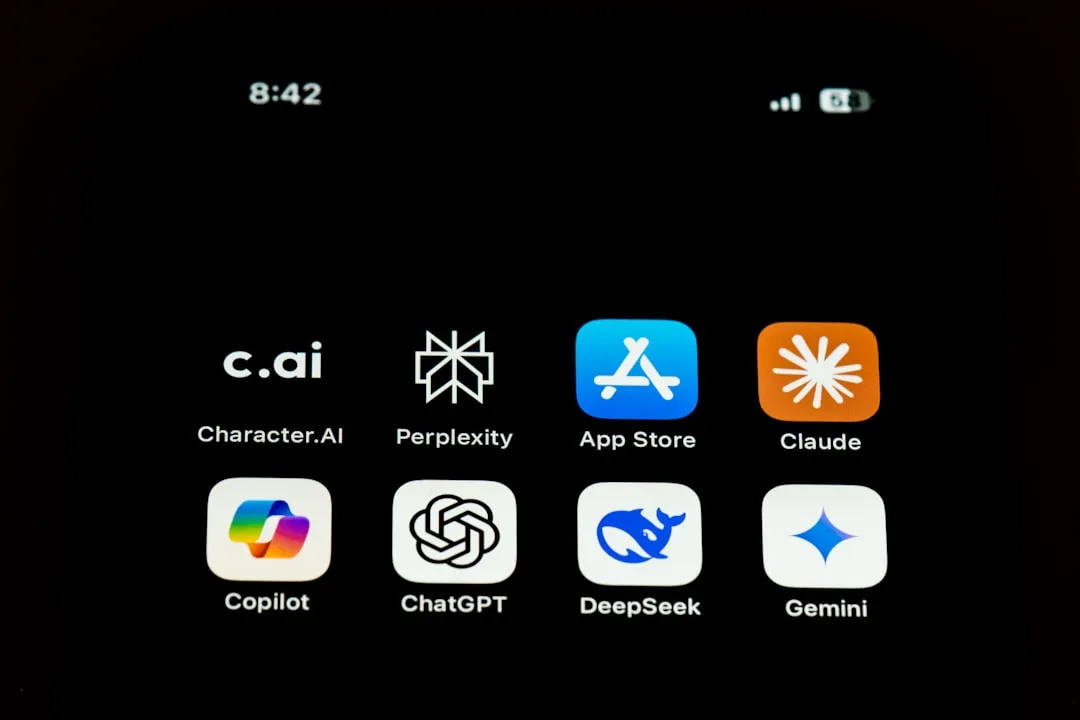
The problem is where the incentive structure points over time. OpenAI's own blog commits to evolving the advertising program to "support additional formats, objectives and buying models and build new ways for businesses to interact with consumers in ChatGPT," as Lonardi quoted from the announcement. ChatGPT isn't alone in this direction: Perplexity, Microsoft Copilot, Google's AI Mode, and Amazon's Rufus have all introduced ads into their interfaces, The Conversation reported. Sponsored AI responses are becoming the default model.
Apple's business model is the argument, not the marketing
Apple's restraint isn't a values statement. It's structurally enforced by how the company actually makes money, which is what makes it credible rather than convenient.
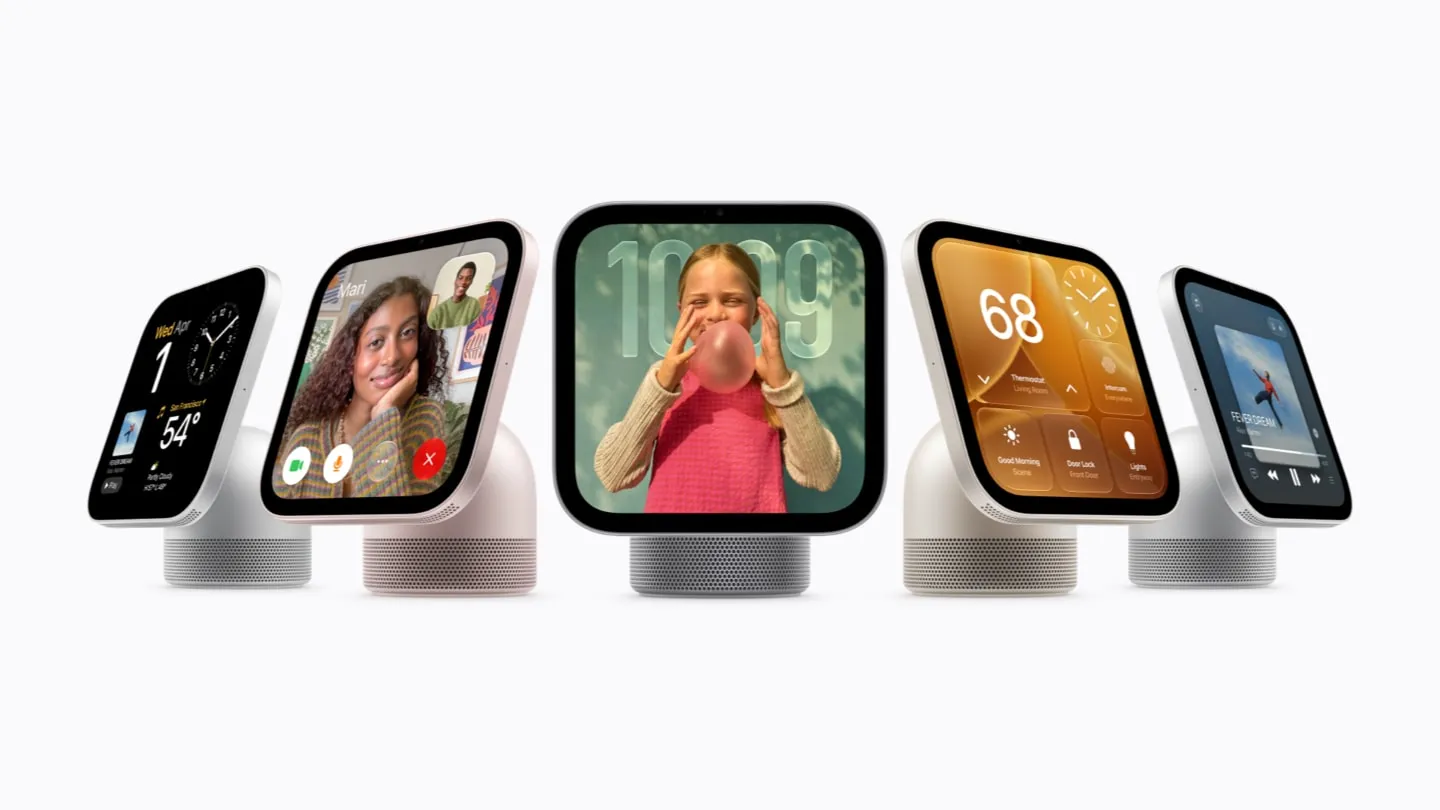
The real monetization engine for Apple Intelligence is hardware. AI capabilities drive demand for newer, more compute-intensive devices across iPhones, Macs, iPads, Apple Watch, AirPods, and HomePods, with new home devices reportedly in development, per Asymco. AI demands a step-function increase in compute, storage, and integrated memory; Apple's own minimum requirements are already leaving hardware two to three years old behind. Apple doesn't need to monetize the conversation because the device purchase already did it.
Nearly every Apple Intelligence feature is bundled with device purchases, with cloud processing confirmed as free at WWDC 2026, as Android Authority reported this week. Some compute-heavy features, like image generation, have usage limits expandable through iCloud+ subscriptions, not through ad-supported tiers. Apple has not announced any plan to fund Siri responses through sponsored content, though the absence of an announcement is not a permanent policy guarantee.
Apple's $20 billion annual search deal with Google, which accounts for roughly 20% of Services revenue, also gives the company financial room to take a slower path in AI without requiring the assistant to pay for itself, Built In reported earlier this year.
The honest complication: Apple runs its own ad network across App Store search, Apple News, and other properties. The company is not categorically anti-advertising. In practice, Apple has kept advertising out of the products where it most aggressively sells privacy and trust. Critics are right to flag that tension. But Apple has no structural incentive to inject ads into Siri, because doing so would directly undermine the premium positioning that justifies the device prices through which it actually collects revenue. That's not virtue. It's alignment of incentives.
What "good enough" actually means, and why it matters
This positioning argument only holds if Apple Intelligence is capable enough that users have a real choice. Right now, that's not clearly the case.
The lion's share of Apple's AI capabilities are still outsourced to third-party systems, as Built In reported earlier this year. Siri trails competitors on response quality, contextual reasoning, and cross-app awareness. Apple confirmed to 9to5Mac that GPT-5 integration is planned for iOS 26's fall launch, and Built In reported that Apple has reportedly reached a formal agreement with Google to test a custom Gemini model for Siri. The company's strategy of local models for on-device tasks, Private Cloud Compute for heavier queries, and selective third-party partnerships for frontier capabilities is deliberate, but the output gap is real.
Apple doesn't need the best assistant. It needs one competent enough for trust to become the deciding factor.
That threshold is specific: reliable performance on everyday tasks like scheduling, messaging, summarization, and search, combined with reasonable cross-app context. Most users don't need frontier-model performance for the decisions they actually make with an AI assistant. The baseline competence bar is lower than the benchmark rankings suggest. Once Apple clears it, the privacy architecture becomes a genuine differentiator rather than a consolation prize.
Consider what the business model difference means in practice. Ask ChatGPT for mortgage lender recommendations, and the conversation sitting underneath that query, your financial situation explained in detail for context, is the same data informing which sponsored product appears below the answer. Ask about treatment options for a chronic condition, and the same system that just demonstrated human-level persuasion ability sees that you're weighing a medical decision. The ad targeting draws on stored memories if enabled, per Lonardi's summary of OpenAI's documentation. For travel planning or shopping research, the exposure may feel tolerable. For anything users share deliberately rather than incidentally, the revenue model of the assistant starts to matter more than its response quality score.
The technical side of Apple's pitch has real substance. On-device processing handles sensitive queries without data leaving the device. Cloud tasks route through Private Cloud Compute, which Apple says deploys privacy measures that prevent data from being traced back to users, and which Android Authority noted is independently verifiable, an unusual commitment in an industry that rarely invites external scrutiny of its infrastructure. Few AI companies make privacy claims as extensive as Apple's for cloud processing. That's worth something, even accounting for the fact that Apple is the one making the claim.
Where this ends up
The ad-supported AI assistant is now the standard model. Perplexity, Copilot, Google AI Mode, Amazon Rufus, and ChatGPT for its mass-market tiers have all moved in the same direction, The Conversation reported. Apple's restraint stands out because it is increasingly an outlier, not because Apple engineered the contrast.
The forecasts Lonardi cited, $1 billion in free-user monetization this year scaling to $25 billion by 2029, signal that the incentive to expand formats and deepen targeting will only compound. What looks like a modest bottom-of-answer placement today is the beachhead for a business that needs those numbers to grow year over year.
For users choosing AI tools, the practical framework is this: for casual queries and general tasks, sponsored responses may feel like a reasonable trade for free access. For health decisions, financial comparisons, personal planning, or anything you share with an AI because you want accurate help rather than a curated result, the revenue model of the assistant is no longer a secondary consideration.
Apple hasn't won anything yet. It has a positioning advantage it didn't manufacture, a business model that makes the advantage structurally credible, and an assistant that still needs to close a capability gap before any of this converts into market share. The likely split is between users who want the most capable model regardless of how it's funded, and users for whom trust eventually becomes the tiebreaker. That second group is larger than the AI industry currently assumes, and it's the one Apple is quietly positioning to win.



Comments
Be the first, drop a comment!