



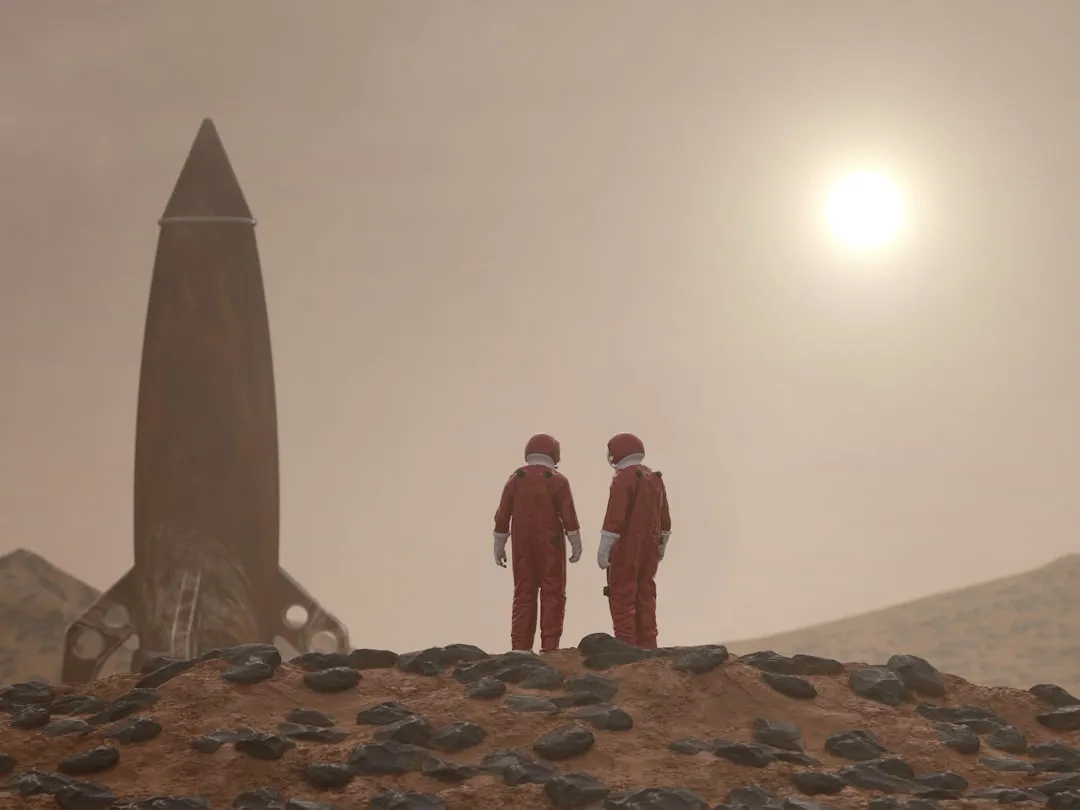
When you think about how far For All Mankind has come, it's honestly pretty wild. What started as a simple premise—what if the Soviets had beaten America to the moon?—has evolved into this sprawling alternate history that's now grappling with interplanetary politics. For All Mankind is gearing up for a fifth season, and frankly, the stakes couldn't be higher.
We're talking about a show that has carved out a reputation as one of Apple's flagship dramas since debuting in November 2019, and now it's tackling something that feels incredibly relevant to our current moment: what happens when human settlements start seeing themselves as separate from their home planet?
The upcoming season picks up in the show's version of 2012, where the consequences of Season 4's dramatic finale are about to reshape everything we thought we knew about the Mars-Earth relationship.
What happens when Mars stops being just another outpost?
Here's where things get really interesting. Season 4 ended with what was essentially an interplanetary heist—Mars rebels captured the Goldilocks asteroid and kept it in orbit, ensuring a long-term resource future for the red planet. This wasn't just about mining rights or scientific discovery—it was about economic independence and strategic autonomy that fundamentally shifts the power dynamic between worlds.
The creators have been pretty clear about what they're exploring in Season 5, and it's fascinating stuff. The thrust of Season 5's story focuses on how a rift is forming between people living on Mars and those who stayed on Earth. We're not just talking about a research station anymore—there are a lot more people living on Mars now, including families. That fundamental shift from temporary outpost to permanent home creates new political realities: questions of governance, taxation, citizenship, and ultimately, allegiance.
What's really compelling is how Season 5 will explore how settlers shift from explorers to colonists and whether they begin to see themselves as a distinct nation. Think about it—when does a group of people stop being citizens of their home country and start being citizens of where they actually live? With SpaceX and NASA making serious plans for Mars missions, these questions feel remarkably prescient. The show is essentially asking: does physical distance create political independence?
The asteroid capture becomes the perfect catalyst for exploring these themes. Mars now has the resources to sustain itself without Earth's support, fundamentally changing the colonial relationship. It's no longer about survival—it's about sovereignty.
How does a show jump decades while keeping its heart?
One thing For All Mankind has absolutely nailed over its run is maintaining character continuity across these massive time jumps while using generational storytelling to reflect how space exploration actually unfolds over decades. Season 5 will continue following characters across decades, including stalwarts Ed Baldwin and Miles Dale, and fan favorites Kelly and Aleida. It's honestly impressive how they manage to age these characters believably while keeping their core personalities intact.
The casting additions for this season are particularly intriguing from a world-building perspective. Recent additions to the cast include Mireille Enos as Lenya, Ines Asserson as Marine A.J. Jarrett, Ruby Cruz as Lily Dale, Barrett Carnahan as Marcu, and Sean Kaufman as an older Alex Poletov Baldwin. But here's what makes this particularly sophisticated—several new characters are the children and grandchildren of other characters, creating this multi-generational saga.
The timeline positioning is strategic, too. The story is set around 2012, continuing the show's structure of decade-by-decade jumps. This positioning allows the show to explore how second and third-generation Mars residents—people who may have been born on Mars or moved there as children—view their relationship to Earth differently than the original pioneers who chose to leave home.
What's particularly impressive is how the showrunners have described the evolution from superpower rivalry to interplanetary conflict. This generational approach lets them explore how identity forms not just through individual experience, but through family history and cultural memory across decades of space settlement.
Why the production delays actually make sense
Now, I know fans have been waiting longer than usual for this season, and the complexity involved helps explain why. The writers' strike and working on both For All Mankind and Star City simultaneously did slow things down, but the creators have been transparent about where things stand. Production was in full swing with visual effects, sound, and other post-production work already underway as of their most recent updates.
The complexity of maintaining this alternate timeline has grown exponentially with each season, requiring careful attention to every detail of how cascading changes affect everything from technology to culture. Now it's getting to the point where almost everything is new, and the butterfly effect increases with each season. What started as small tweaks to history now requires building entirely new worlds where prop designers need to create alternate versions of everything from smartphones to spacecraft, while writers must track how decades of political changes affect international relations.
There's also something else happening that suggests Apple TV+ is treating this as a major franchise expansion—both the main series and the spinoff Star City are being timed to release close together, creating what showrunners call a "grand relaunch of the franchise". This coordinated approach indicates they're building a comprehensive alternate history universe that can sustain multiple storylines and perspectives.
The production challenges also reflect the show's ambition. Every news montage at the beginning of each season requires creating decades of alternate history across multiple countries and continents, while every piece of technology must feel believable within the accelerated timeline the show has established.
Where does humanity go from here?
This season represents what feels like a crucial turning point for the series, both narratively and thematically. The creators have long spoken about a six- to seven-season plan, with the ultimate goal of eventually catching up to the present day. The show might eventually portray the grandchildren of original characters, reflecting a multi-generational saga that spans the entire modern space age.
What makes Season 5 particularly compelling is how it's tackling fundamental questions about human civilization that parallel historical colonial independence movements. Season 5 is seen as focusing on questions of identity, sovereignty, and the future of humanity beyond Earth. These aren't just abstract sci-fi concepts—they're philosophical challenges that NASA, SpaceX, and other space organizations are actually starting to consider as Mars missions move from science fiction to engineering reality.
The show will examine whether the Martian colony sees itself as independent and how Earth's crises might affect the balance of power. In our current era of renewed space exploration, where companies like SpaceX are making serious plans for Mars colonization, these questions about colonial governance, resource rights, and political representation feel remarkably prescient. The show is essentially exploring the same questions that drove the American Revolution—just on a planetary scale.
For All Mankind has always been at its best when it uses the lens of alternate history to examine contemporary challenges, from Cold War tensions to corporate power dynamics. Season 5 looks poised to continue that tradition while pushing the boundaries of what television sci-fi can achieve. The show started with a simple question about the moon landing and has evolved into something that's asking fundamental questions about the future of human civilization. That progression from terrestrial rivalry to interplanetary politics represents a remarkable achievement in scope and ambition, and the 2026 release can't come soon enough to see how they pull it off.















Comments
Be the first, drop a comment!