




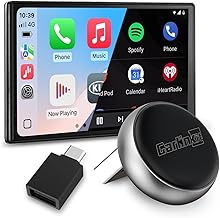

When you think about the future of car technology, there's a fascinating battle playing out on dashboards across America. At the center of this conflict sits Ford, taking what might be the most nuanced stance in the industry regarding Apple's ambitious CarPlay Ultra system.
While competitors like General Motors have thrown down the gauntlet by completely eliminating CarPlay support from future vehicles, Ford is walking a much more diplomatic line. The company remains committed to Apple, but CEO Jim Farley has been refreshingly candid about his reservations. As he puts it, Ford believes it doesn't have the authority to interfere with someone's digital experience when they enter their vehicle, according to Fortune. This philosophy has practical consequences—it means Ford customers retain access to their existing app ecosystems, messaging platforms, and digital workflows, while competitors are forcing users to adapt to entirely new interfaces.
But here's where things get interesting. Ford's commitment to preserving customer choice doesn't mean they're ready to hand over the keys to the kingdom, so to speak.
What's driving Ford's cautious approach to CarPlay Ultra?
The hesitation isn't about being anti-technology or anti-Apple. Ford's concerns stem from fundamental questions about where the boundaries should exist between smartphone integration and vehicle control. Farley has been remarkably transparent about this, noting that while Ford remains committed to Apple partnerships, they have serious reservations about CarPlay Ultra's current implementation, according to Autoblog.
What's particularly telling is that Farley maintains ongoing conversations with Apple CEO Tim Cook about the platform's future direction, as reported by Autoblog. These discussions reportedly center on technical integration challenges—how CarPlay Ultra interfaces with Ford's proprietary driver assistance systems, data sharing protocols, and the potential for system conflicts that could affect vehicle safety certifications.
The core issue? How much control should Apple have over essential vehicle functions. Farley's questions get right to the heart of it: should Apple's brand extend to starting cars, limiting speed, or restricting access, according to Jalopnik? These aren't hypothetical concerns—they're the kind of real-world scenarios that could fundamentally change the relationship between drivers and their vehicles.
How does Ford's position differ from other automakers?
Ford's approach stands out precisely because it's not following the industry herd. When GM CEO Mary Barra announced that future vehicles would eliminate support for both Apple CarPlay and Android Auto entirely, as reported by Fortune, it sent shockwaves through the tech world. But Ford chose a different path.
The resistance to CarPlay Ultra is actually pretty widespread. Major manufacturers including Audi, Mercedes-Benz, Polestar, Volvo, and Renault currently have no plans to integrate CarPlay Ultra into their vehicles, according to Fortune. That's a significant chunk of the premium automotive market essentially saying "thanks, but no thanks" to Apple's vision.
What makes this particularly interesting is the disconnect between manufacturer preferences and consumer desires. A 2023 McKinsey report found that 85% of car owners who had CarPlay or similar systems preferred them over manufacturer operating systems, as noted by Fortune. This creates a strategic opportunity for Ford—while competitors alienate customers by removing preferred features, Ford positions itself as the customer-choice advocate, potentially gaining market share from buyers frustrated with GM's approach.
Ford seems to be trying to thread this needle—acknowledging what customers want while maintaining some control over the core driving experience. It's a balancing act that's proving more complex than anyone initially anticipated.
Why are automakers concerned about data and control?
Let's break down what's really at stake here. The resistance to CarPlay Ultra reflects much deeper concerns about data ownership and system integration that go far beyond simple user interface preferences.
Manufacturers have been pretty straightforward about not wanting to provide Apple with insights into driving habits and vehicle information, according to Autoblog. Think about what that data represents—detailed location tracking, driving patterns, vehicle performance metrics, maintenance schedules, and even biometric data from driver monitoring systems. That's incredibly valuable information that automakers have traditionally controlled and monetized through their own services and partnerships.
There's also a technical pride element at play. Some automakers genuinely believe their interfaces are superior to CarPlay, as reported by Autoblog. Whether that's true is debatable (and the McKinsey data suggests consumers disagree), but it's a legitimate concern for companies that have invested heavily in developing their own systems.
Ford specifically worries that CarPlay Ultra's deeper integration and takeover of multiple in-car displays may not benefit all users, and the system could interfere with various driver-assistance technologies, according to Autoblog. For instance, Ford's Co-Pilot360 system integrates pre-collision assist with adaptive cruise control and lane-keeping. CarPlay Ultra's deeper integration could potentially interfere with the millisecond timing these systems require, or create conflicting user interface priorities during emergency situations.
What does the future hold for Ford and CarPlay?
Ford's current strategy appears to be maintaining support for traditional CarPlay while carefully evaluating next-generation options. The company continues supporting CarPlay across its vehicle lineup, specifically in 2017 and newer vehicles with SYNC 4A, SYNC 4, and SYNC 3, according to Ford's support documentation. They're not pulling the rug out from under current customers.
What's particularly noteworthy is that as of July 2025, Apple announced that Ford joined Acura, Honda, Infiniti, Jaguar, Land Rover, Lincoln, Nissan, and Porsche in supporting CarPlay Ultra, as reported by Autoblog. However, despite Farley's public concerns, Ford's inclusion in Apple's July announcement suggests ongoing negotiations may have addressed some integration issues, or that Ford is hedging its bets by maintaining optionality while competitors make definitive rejections.
Ford's approach emphasizes making digital experiences as seamless as possible for drivers while maintaining control over essential vehicle functions, according to 9to5Mac. It's a philosophy that acknowledges the reality of how people use technology today while respecting the unique safety and operational requirements of vehicles.
The company seems to be betting that there's a middle ground between the all-or-nothing approaches we're seeing elsewhere in the industry. Whether that middle ground actually exists remains to be seen, but Ford's willingness to engage in ongoing conversations with Apple suggests they're committed to finding it.
Where does this leave consumers and the industry?
Ford's measured approach to CarPlay Ultra represents something larger—a fundamental struggle between innovation and control that extends far beyond just automotive technology. The company's commitment to preserving customer choice stands in stark contrast to competitors who are eliminating these options entirely, as noted by Jalopnik.
For consumers, this means Ford vehicles may offer the best of both worlds—immediate CarPlay compatibility with potential Ultra upgrades once integration challenges are resolved, while GM customers face a permanent loss of familiar interfaces. Apple's vision for CarPlay Ultra promises deeper integration and enhanced functionality, but legitimate questions remain about the balance between innovation and automotive safety, according to MacRumors.
What's fascinating is that Ford's cautious but committed stance may actually prove prescient in the long run. By maintaining traditional CarPlay support while carefully evaluating Ultra, they're preserving customer choice without rushing into potentially problematic integrations. It's a strategy that acknowledges both the legitimate concerns about vehicle control and the clear consumer preference for familiar smartphone interfaces.
As this technology continues to evolve, the automotive industry will likely need to find ways to balance innovation with safety, consumer preference with manufacturer control, and technological advancement with practical implementation. Ford's approach suggests that the future might not be about choosing between competing visions, but rather finding ways to make them work together effectively.
The real test will come when CarPlay Ultra becomes more widely available and we can see how these integration challenges play out in practice. For now, Ford appears to be positioning itself to adapt based on real-world evidence rather than theoretical concerns—a pragmatic approach that could serve both the company and its customers well in the long run.







Comments
Be the first, drop a comment!