





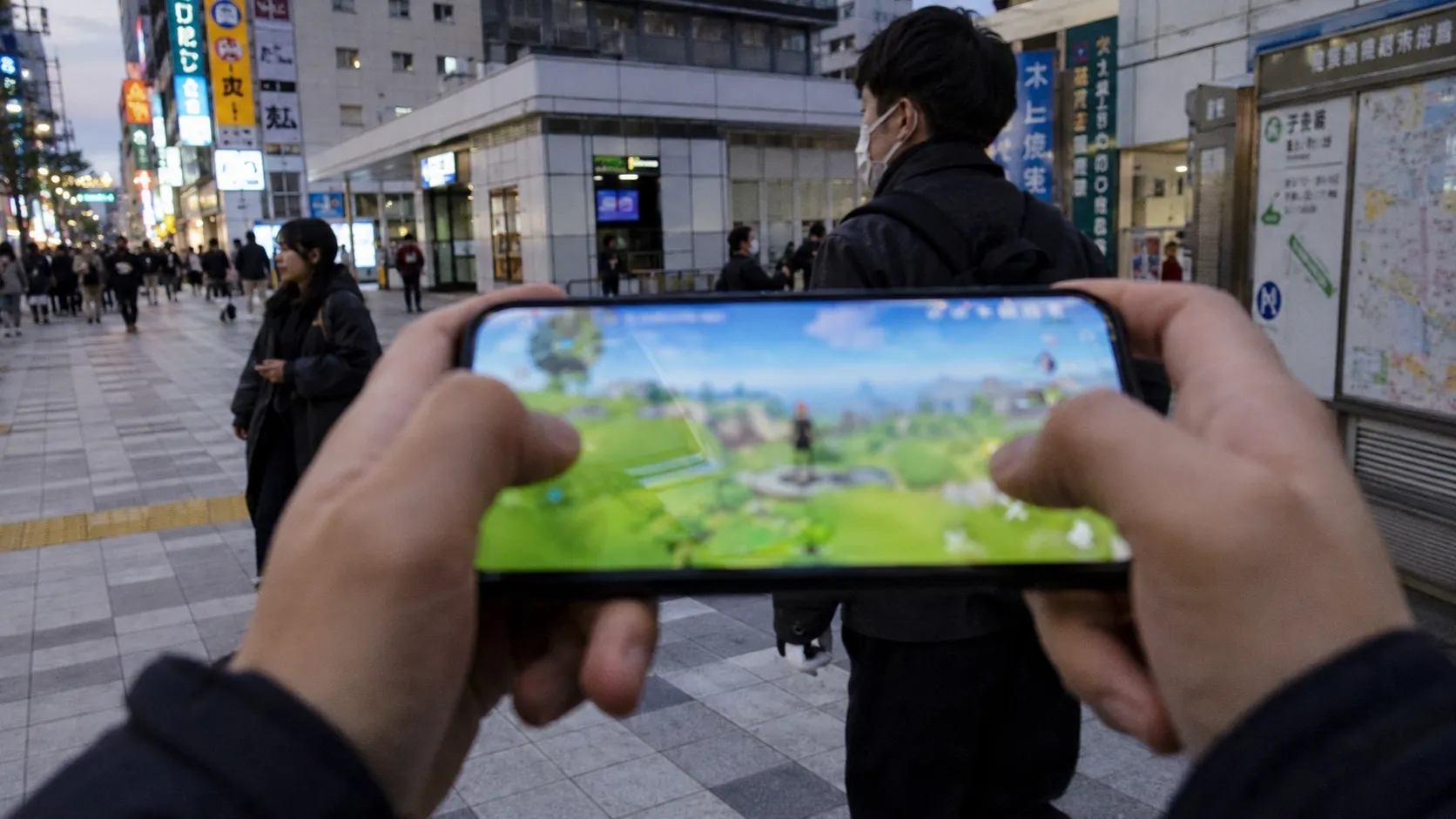
Fortnite returned to iPhone in Japan in late April 2026, five months after Epic CEO Tim Sweeney said the game would not return to iOS in Japan in 2025 under Apple's implementation of the country's mobile competition law. Epic made the Epic Games Store available for Japanese iPhone users with Fortnite and Rocket League Sideswipe as its initial iPhone titles, per Epic's announcement. The launch follows Japan's Mobile Software Competition Act, which pushed Apple to allow alternative app marketplaces on iOS in Japan. What the public record does not explain is why Epic launched now, given that Sweeney called Apple's implementation of that very law "another travesty of obstruction and lawbreaking" when it took effect.
Separately, Apple's U.S. fight with Epic continued after the Japan launch. 9to5Mac reported that Apple asked the Supreme Court on May 4, 2026, to pause the next stage of the case over external-purchase commissions, and the Supreme Court rejected that request on May 6, sending the dispute back toward district court proceedings over what Apple may charge for off-App Store transactions. That U.S. case is separate from Japan's Mobile Software Competition Act, which came fully into effect on December 18, 2025, and required changes that let developers offer alternative app marketplaces and payment options for iOS apps in Japan.
What can be documented is what the launch includes, what it doesn't, and what those facts say about the distance between a legal mandate and a functioning open market.
Why Epic said no in December
Japan's Mobile Software Competition Act came fully into effect on December 18, 2025, requiring changes that let developers offer alternative app marketplaces and payment options for iOS apps in Japan. Epic had cheered the law's passage in June 2024 as "a big win for mobile gamers and developers" and committed publicly to a Fortnite iOS Japan launch before the end of last year, according to Esports Legal News.
Apple's implementation produced a fee schedule Epic found commercially unworkable. Under that framework, Apple charges 26% on in-app purchases through its own payment system, 21% on third-party in-app payments, 15% on external web purchases, and, according to Epic, a 5% Core Technology Commission on purchases made in apps downloaded from third-party stores. Sweeney singled out the 21% third-party in-app payment rate as the primary barrier. For context, the original 30% Apple commission was the specific practice that triggered the 2020 dispute.
Fees were only part of it. Sweeney also criticized mandatory warning screens that appear when users choose alternative payment options, screens informing users they are "no longer transacting with Apple" and flagging potential privacy and security risks from rival payment systems. He characterized these as designed to steer customers away from competitors rather than inform them. A third objection concerned Apple's transaction-reporting requirements; Epic says Apple requires developers to track and report all transactions, even those that are not completed, creating costs and confusion for developers considering rival stores.
Sweeney's December statement was unambiguous: "Sadly, Fortnite will not return to iOS in Japan in 2025 as promised," per Eurogamer. Epic also said it would challenge Apple's implementation with Japanese regulators. Whether that filing was made, and whether it influenced the eventual launch, is not confirmed in available reporting. The game later launched anyway, without a public accounting of what changed between Sweeney's December objection and Epic's Japan rollout.
What the Epic Games Store iPhone rollout in Japan actually includes
For Japanese players, the practical result is straightforward: Fortnite is playable on iPhone again for the first time since Apple removed it in 2020. The Epic Games Store launched in Japan with Fortnite and Rocket League Sideswipe, plus access to more than 345,000 Unreal Editor for Fortnite experiences, according to Epic. Epic is also offering a "Yeddy" outfit to players who download Fortnite on mobile and invite a friend to play. The promotion makes the rollout look more like an active user-acquisition push than a quiet soft launch.
The competitive picture is structurally different. The iPhone version of the Epic Games Store in Japan currently carries no third-party titles, only Epic's own games, per the same announcement. That limits the launch's value as a test of whether rival iPhone app stores can attract third-party developers. It is a single-publisher distribution channel. The entire regulatory argument behind Japan's MSCA, the EU's Digital Markets Act, and the U.S. antitrust litigation is that rival stores will generate real price and distribution competition for the App Store. One publisher's catalog does not test that proposition. Epic also says Apple's Japan process requires a nine-step install flow for the Epic Games Store, compared with six screens in the EU after regulatory pressure reduced the earlier installation process.
Japan joins the EU as the only markets where the Epic Games Store is available on iPhone, with Brazil planned for June 2026 and Android availability already global, per Epic. Fortnite also remains unavailable on Mac, a gap the available reporting does not explain in technical, contractual, or policy terms. At minimum, it is a reminder that the Japan launch covers one platform in one market.
What the U.S. legal context adds and doesn't prove
The U.S. case remains useful context, but it should not be treated as a direct explanation for Epic's Japan launch. These are U.S. proceedings under U.S. antitrust findings. Japan's MSCA is a separate regulatory framework with its own fee schedules and implementation rules. The 21% and 15% rates Epic cited in December were Apple's Japan-specific response to Japanese law, not the rates or mechanisms at issue in American litigation. The two legal tracks are parallel pressure on Apple, not a single proceeding.
What the U.S. context does show is a legal environment that has grown incrementally less favorable to Apple's original enforcement posture. A separate Ninth Circuit ruling in December had already affirmed a contempt finding against Apple over restrictions on developers' use of links and calls to action for outside payment options, as documented by Esports Legal News. That history does not explain the Japan launch by itself, but it does show why Epic and Apple's dispute over app distribution and payment rules remains active on multiple fronts.
Whether that accumulating legal pressure influenced Apple's Japan terms, or Epic's decision to launch regardless, is plausible. Current reporting does not confirm it either way.
A legal opening is not the same as an open market
Fortnite being playable on iPhone in Japan is a genuine development for consumers, backed by live content and an active acquisition campaign. But the structure of the launch tells a more complicated story.
Japan required Apple to allow competing stores. Apple implemented that requirement with a fee schedule Epic publicly called commercially unworkable in December 2025, per Esports Legal News. Five months later, Epic launched anyway, without explanation. The store carries only Epic's own titles, as announced by Epic. Fortnite remains unavailable on Mac. Apple, meanwhile, faces continuing U.S. district court proceedings over what it may charge for off-App Store transactions after the Supreme Court declined to pause the case in May 2026.
Three questions will determine whether this amounts to more than player access. Does Epic's challenge to Apple's Japan terms produce regulatory pressure on the fee structure? That is the real test of marketplace competition. Does Epic's reported JFTC complaint produce regulatory pressure on Apple's Japan fee structure? And does the Mac gap eventually get explained or closed? Until those have answers, Japan is not yet proof that open iPhone distribution can work at marketplace scale.




Comments
Be the first, drop a comment!