



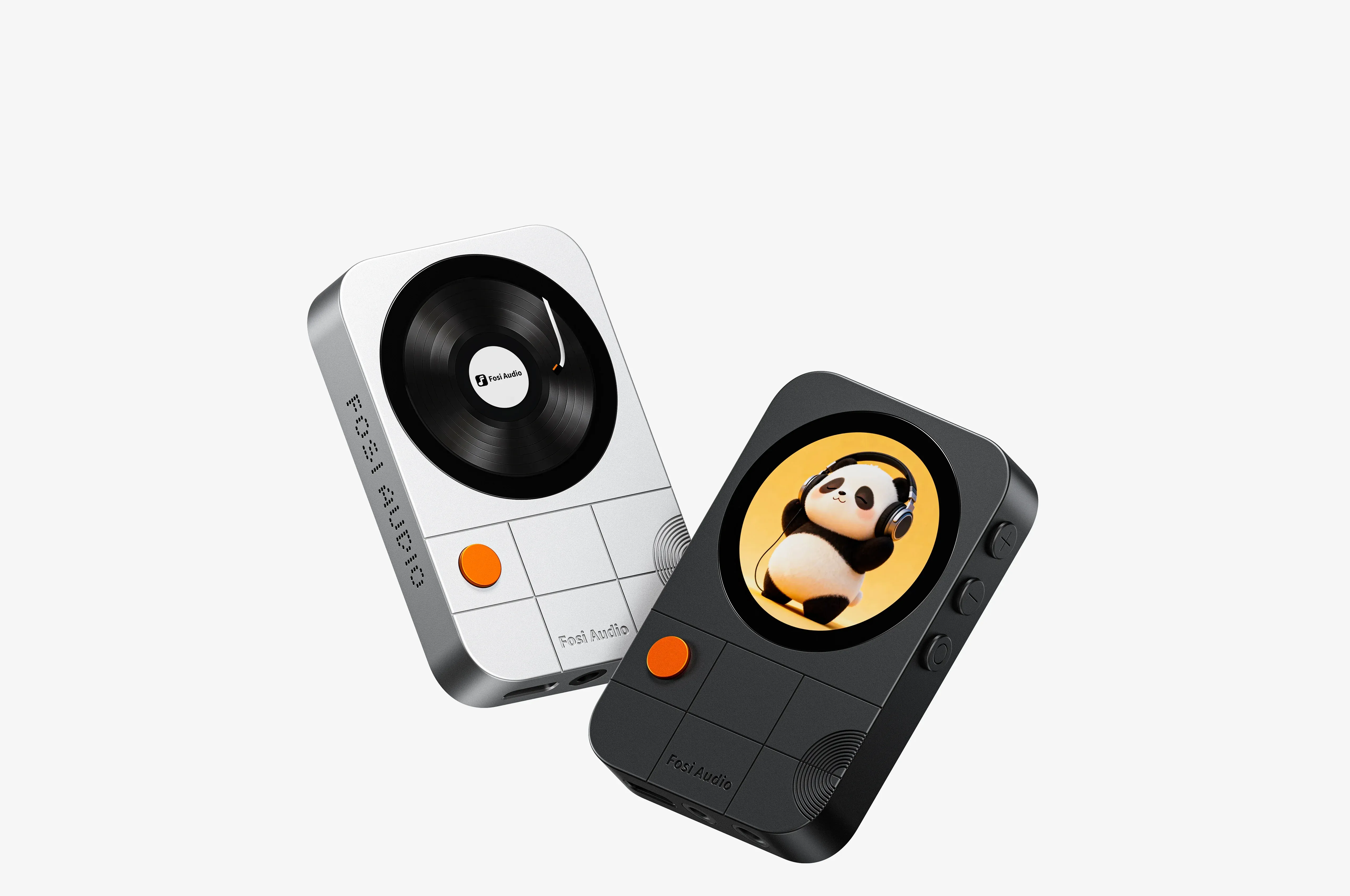
Fosi Audio is launching the MD3 MagDac on May 25 at $149.99, a portable DAC and headphone amplifier that snaps magnetically to the back of an iPhone rather than hanging from its USB-C port, adding both 3.5mm and 4.4mm balanced headphone outputs to a device that lost its headphone jack nearly a decade ago.
The hardware case is genuine. Early reviewers describe it as an integrated upgrade rather than a separate accessory, pointing to its magnetic form factor, dual headphone outputs, and pass-through charging as features that change daily use in ways a standard dongle cannot, ecoustics concluded about seven weeks ago.
The catch is in iOS, not the hardware. The MD3 supports audio up to 384kHz/32-bit PCM and native DSD256, but Some iOS audio paths and apps may resample external USB DAC output to 44.1kHz or 48kHz, though users and some apps report successful higher-rate playback under certain configurations. The spec sheet numbers are real; they just cannot be reached from an iPhone.
What the MD3 is: magnetic form factor and the problem it solves
The standard USB dongle DAC has one persistent flaw: it hangs loose from the phone's port, snagging on jacket pockets and getting yanked mid-commute. The MD3 addresses this by attaching flush to the phone's back panel using 16 N52 neodymium magnets, making it natively MagSafe-compatible with modern iPhones. Android users can add a magnetic ring for equivalent attachment.
The unit weighs 50 grams and measures 70 x 45 x 12mm in all-metal construction, roughly the size of a thick credit card. That physical profile is why reviewers describe it as closer to an integrated mobile audio upgrade than a separate device to manage, per ecoustics.
Magnetic attachment was confirmed working on an iPhone 14 at CanJam NYC 2026, though real-world durability with thick cases, camera bumps, or magnetic wallet accessories has not been independently verified across varied conditions, ecoustics notes. Worth testing before committing if your case situation is complicated.
Because the MD3 is USB-C at its core, it also connects to MacBooks and iPads without any magnetic attachment, 9to5Mac reports. That compatibility detail becomes more significant once the iOS audio limitations are understood.
Why this portable DAC amp for iPhone hits an iOS ceiling
Connect any USB DAC capable of 384kHz or DSD256 to an iPhone or iPad, and iOS will output 44.1kHz or 48kHz audio in many common playback scenarios. This is not a bug in any particular app; it is the built-in behavior of iOS Core Audio itself, Benefic explains.
The architecture explains why. macOS gives audio apps direct hardware-level control, letting them set a USB DAC's actual operating sample rate. iOS has no equivalent. A fixed-rate system mixer sits between every app and every output device, and the operating system decides the rate. Developer requests for higher rates are silently stored as preferences, then ignored; the mixer runs at 44.1kHz or 48kHz regardless of what was requested.
The practical difference is visible in hardware. Using a DAC with a multi-LED indicator system, the same Apple Music hi-res track through the same DAC chip lights up a high-rate indicator when connected to a Mac, then drops to the lowest-rate indicator when connected to an M4 iPad Pro or iPhone running the identical app. Apple Music's "Hi-Res Lossless 24-bit/192kHz" label describes the file on the server, not what reaches the DAC in the tested configuration described by Benefic.
Some users and developers report the limitation persists across recent iOS versions. Neutron Music Player, the most audiophile-focused player on the App Store, acknowledges the ceiling explicitly in its own FAQ.
No source tested the MD3 specifically under iOS sample-rate verification, but there is no architectural reason for it to behave differently from any other USB DAC. The MD3's hi-res hardware capability is genuine. It simply cannot be triggered by an iPhone. Mac remains the most consistently documented Apple platform for hardware-level USB DAC rate control.
What the MD3 MagDac delivers: outputs, power, charging, and the screen
Strip away the hi-res ceiling, and the MD3 still has a real hardware story. The ESS ES9039Q2M DAC chip delivers a 116dB signal-to-noise ratio and 0.00075% THD+N, solid numbers for this price class, paired with a 3.5mm single-ended output rated at 75mW per channel at 32 ohms and a 4.4mm balanced output at 180mW per channel at 32 ohms. One caveat worth flagging: the amplifier chip designation differs between early sources. The ecoustics review lists four ESS ES9063Q op-amps handling amplification duties; Fosi's official spec sheet should be treated as definitive on that point.
Pass-through charging is the feature that changes daily use most concretely. Plug an external charger into the top USB-C port, and the MD3 routes power to the iPhone simultaneously through the bottom port. The listen-or-charge trade-off that plagues every standard dongle disappears.
The front-facing 1.28-inch circular LCD primarily functions as a 100-step volume display, but Fosi has layered in animated visuals: spinning turntables, VU meters, tape reels, and a small selection of mini-games, including dice rolling and rock paper scissors, which reviewers describe as bright and customizable. The screen doesn't affect audio quality; it makes the device more visually distinctive than any dongle on the market, which will be exactly enough or entirely unnecessary depending on the buyer.
Power draw and thermal behavior under sustained pass-through charging have not been independently verified. Whether the MD3 carries its own internal battery, which would determine how much load it places on the iPhone, is not confirmed in available sources and is worth clarifying before purchase.
Who the MD3 is for: a practical buyer's framework
The MD3 is built for what reviewers call the commuter audiophile: someone who listens on wired headphones or IEMs from an iPhone, wants more output power than the phone's standard dongle provides, and isn't interested in carrying a separate device. The magnetic attachment, 4.4mm balanced output, and pass-through charging arrive in a single flush-mounted accessory rather than a cable-connected one. That combination doesn't exist elsewhere at this price.
At $149.99, the MD3 sits well below the FiiO Q15 at $399 or the iFi Audio xDSD Gryphon at $599, both built for users with high-impedance headphones or a need for desktop-capable output. The Q15 reaches 1,600mW per channel in desktop mode versus the MD3's 180mW balanced; the xDSD Gryphon adds Bluetooth and analog inputs at its higher price. For most IEMs and efficient consumer headphones, 180mW at 32 ohms is more than adequate.
A practical buyer checklist:
The MD3 suits wired IEM or easy-to-drive headphone users who want 4.4mm balanced output and pass-through charging in a single flush-mounted accessory
Magnetic attachment reliability should be verified with any thick or MagSafe-interfering case before committing
Mac users get the full hi-res spec benefit that iPhone users do not
The hi-res spec numbers on the box, 384kHz and DSD256, matter most for Mac pairing. On iPhone, the realistic ceiling is 48kHz bit-perfect output. That is not a product failure; it is the current state of iOS audio.
The bottom line
The MD3 launches May 25 at $149.99, pairing a competent ESS DAC, dual headphone outputs, and pass-through charging in a MagSafe-compatible package that sits flush against the iPhone rather than hanging from its port.
Buy it for better analog output, wired flexibility across two jack formats, and the elimination of the charge-or-listen trade-off. Go in clear-eyed about the iOS constraint: Core Audio caps external USB DAC output at 44.1kHz or 48kHz across every app and every iOS version through iOS 18, making the headline hi-res specs hardware capability rather than iPhone reality.
For the MD3 to deliver its full spec range on an iPhone, Apple would need to expose hardware-level USB DAC control to third-party apps, something macOS has done for years and iOS has never offered. Until that changes, a Mac remains the only Apple device where something like the MD3 can actually run at the rates printed on the box.






Comments
Be the first, drop a comment!