



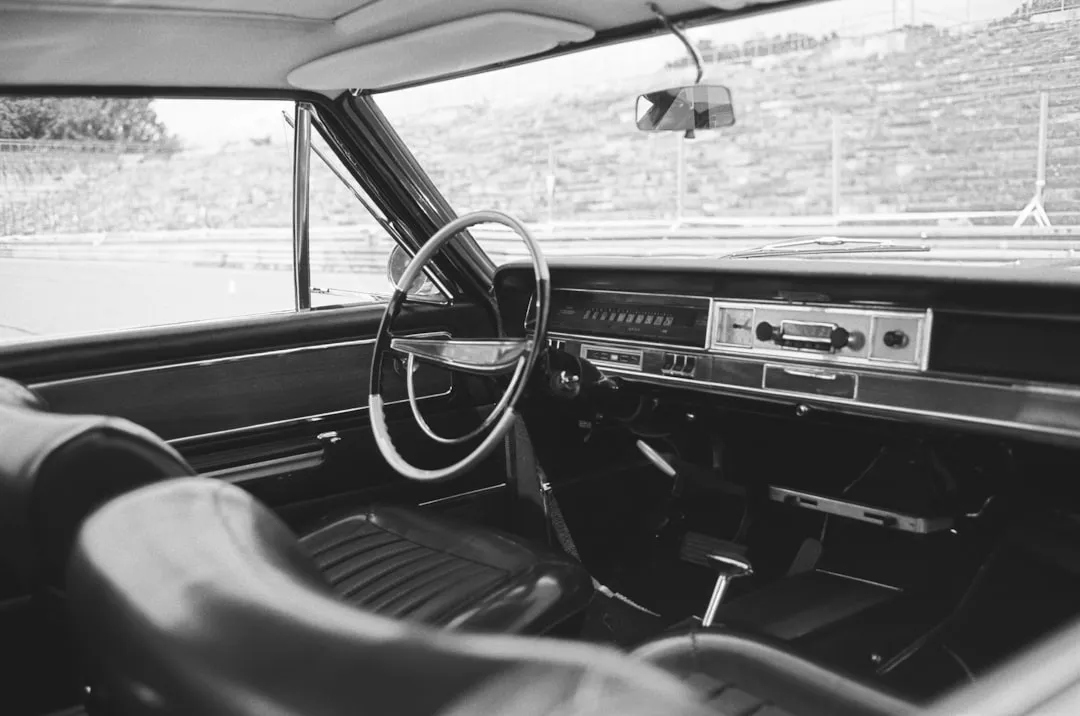
When you think about the ongoing battle for control of your car's digital experience, GM's recent announcement about native Apple Music integration tells a fascinating story about strategic positioning in the automotive tech landscape. The automaker isn't just adding another streaming service—they're making a calculated chess move that leverages premium audio technology as a weapon in the war between traditional car manufacturers and Silicon Valley tech giants.
Here's what's happening: Apple Music will arrive as a native app in 2025 and newer Cadillac and Chevy models through over-the-air updates, but here's the strategic twist—these are vehicles that notably don't support traditional CarPlay. GM is positioning this integration as a way to create "an immersive, three-dimensional sound environment" that takes full advantage of their premium audio hardware, giving them a competitive advantage that phone-mirroring solutions simply can't match.
This timing is particularly significant because it arrives just as Apple is expanding CarPlay Ultra to compete more directly with native automotive systems. By controlling the entire audio experience—from hardware to software integration—GM can offer spatial audio capabilities that showcase why their approach might be superior to smartphone-dependent solutions.
Which vehicles are getting this premium audio upgrade?
The rollout strategy reveals GM's calculated approach to establishing dominance in the premium and electric vehicle segments where audio quality increasingly drives purchasing decisions. Eligible models include the 2025 and 2026 Cadillac CT5, 2025 Cadillac Escalade IQ, 2026 Cadillac Vistiq, and various Chevy EVs including the Equinox EV, Blazer EV, and Silverado EV. Notice the pattern—they're heavily prioritizing their electric vehicle lineup, positioning premium audio as essential infrastructure for the EV transition rather than a luxury add-on.
The app and the OnStar Basics connectivity are included for eight years at no extra charge; customers still need an active Apple Music subscription to stream paid Apple Music content. That eight-year commitment signals this isn't just a feature experiment—it's a strategic bet on creating customer loyalty while establishing their infotainment systems as legitimate alternatives to Apple's ecosystem.
The priority treatment for all 2026 Cadillac EVs equipped with Dolby Atmos-enabled audio systems demonstrates how GM is using premium audio as a competitive differentiator against Tesla's audio focus and traditional luxury brands. They're essentially saying: "If you're making the jump to electric, we're going to make sure your ears are as happy as your environmental conscience—and we're going to do it better than anyone mirroring a phone screen."
Why spatial audio becomes GM's strategic advantage
This is where GM's chess game gets technically sophisticated. The company specifically highlights that GM says Apple Music is the "leading" provider of spatial audio via Dolby Atmos, but the real strategic advantage lies in how their controlled automotive environment can deliver this technology better than traditional CarPlay connections.
Take the new Cadillac Vistiq, which features a standard 23-speaker AKG sound system that's compatible with Dolby Atmos. This isn't just impressive spec-sheet bragging—the technology allows instruments and voices to move through an almost infinite range of positions around the listener, creating sound that goes far beyond traditional stereo or surround.
The automotive environment actually provides unique competitive advantages that GM can leverage against phone-based solutions. The controlled cabin space with strategically placed speakers creates more consistent, optimized audio experiences than most home setups—and certainly better than what's possible when audio signals are processed through smartphone hardware before reaching car speakers. This controlled environment becomes GM's ace in the hole against CarPlay's more generic approach.
The market timing supports this strategy perfectly. 93% of Billboard's 2024 Top 100 artists now release music in Dolby Atmos, meaning GM isn't betting on a niche format—they're positioning themselves at the center of how music gets produced and consumed. As spatial content becomes the standard, their automotive-optimized delivery system becomes increasingly valuable.
The calculated risk of ditching CarPlay
This Apple Music integration reveals the sophisticated logic behind GM's controversial decision to reduce dependence on phone-based connectivity solutions. The automaker has argued it can provide a better, more embedded experience through its native infotainment system than services like Apple CarPlay and Android Auto—and the spatial audio capabilities demonstrate exactly why.
GM has already removed phone mirroring capabilities from most of its electric vehicles, though they've clarified that it's not planning changes to vehicles that currently support CarPlay and Android Auto. This selective approach shows strategic thinking: maintain existing customer relationships while positioning future vehicles as technologically superior.
The Apple Music partnership proves how automakers can selectively adopt popular services while maintaining control over user interface, data collection, and—crucially—audio optimization. When you control the entire signal chain from streaming service to speaker hardware, you can deliver premium features like spatial audio that might be impossible through traditional CarPlay connections, which must process audio through smartphone hardware limitations.
It's a risky strategy that essentially bets consumer acceptance of losing some smartphone integration in exchange for demonstrably better audio experiences. The question is whether the superior spatial audio experience will convince consumers that GM's approach delivers more value than the convenience and familiarity of CarPlay.
What this means for the competitive landscape
This partnership represents more than just GM and Apple working together—it signals how the entire automotive entertainment industry is restructuring around premium audio as a key battleground. The convergence of several trends makes GM's strategic positioning particularly shrewd.
With 93% of Billboard's 2024 Top 100 artists now releasing music in Dolby Atmos, spatial audio is becoming the production standard rather than a premium feature. Meanwhile, more than 20 automakers now offer Atmos audio in at least some of their vehicles, indicating this isn't just GM's bet—it's an industry-wide shift toward premium audio as a competitive differentiator.
The success of this integration could force other streaming services to rethink their automotive strategies. Imagine if Spotify, Amazon Music, or podcast platforms started offering similarly deep integrations that go beyond what's possible through CarPlay or Android Auto. This could accelerate the industry's move toward native automotive apps rather than smartphone mirroring.
For consumers, this shift represents a fundamental change in how we think about vehicle entertainment systems. Instead of cars serving as bigger screens for our phones, we're moving toward vehicles that offer premium entertainment experiences as independent, optimized systems. This could be particularly appealing for reducing phone dependence while driving, or in situations where cellular connectivity might be spotty but the car's entertainment system remains fully functional.
The broader implication is that we're witnessing the automotive equivalent of the smart home revolution—cars becoming intelligent, capable devices rather than passive accessories to our smartphones. Whether this ultimately benefits consumers depends on whether automakers like GM can deliver experiences that genuinely surpass smartphone-based solutions, rather than simply creating walled gardens that limit choice.






Comments
Be the first, drop a comment!