



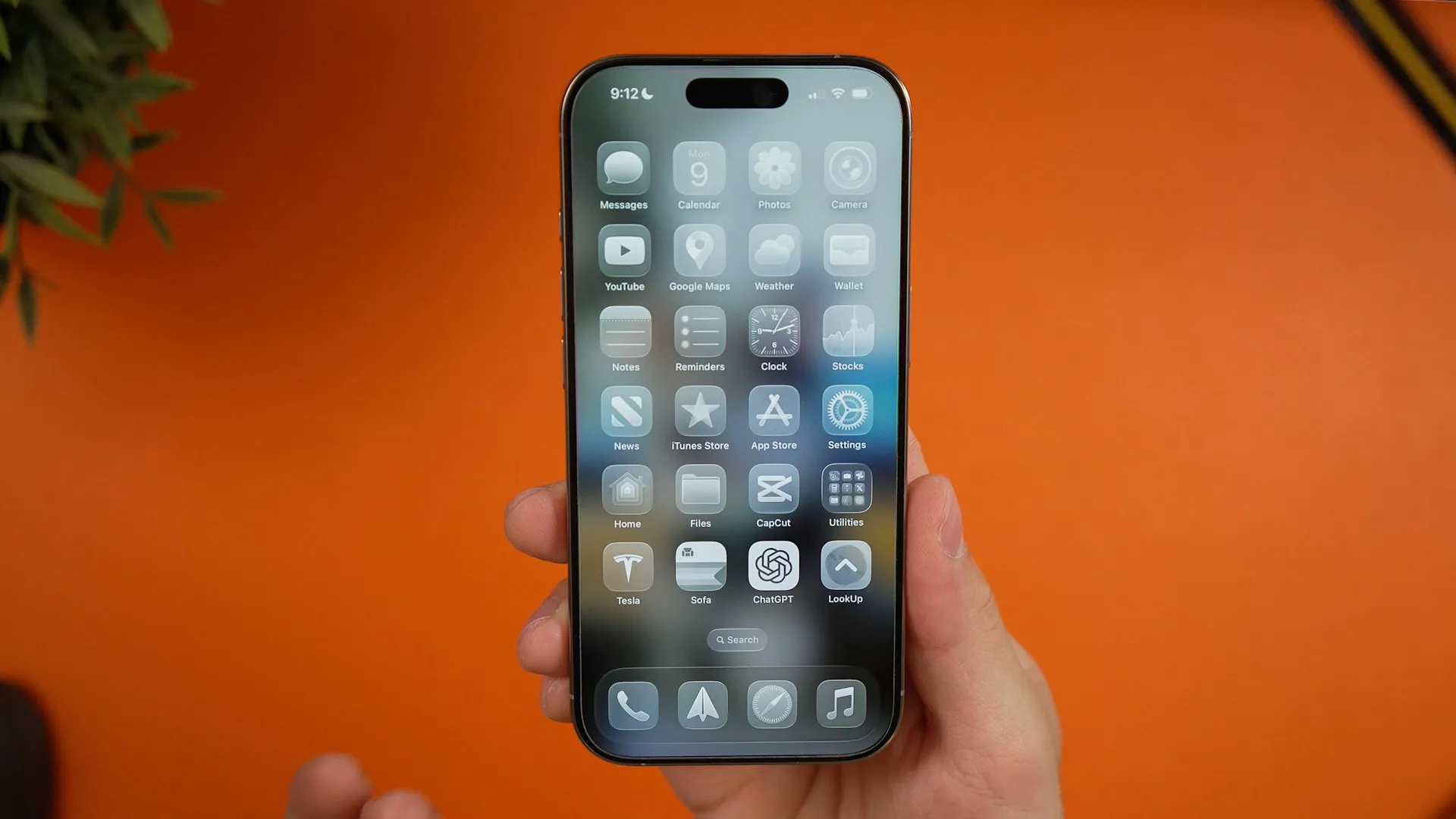
Apple is reportedly building a way for iOS 27 users to choose third-party AI models for Apple Intelligence writing tasks. What the reporting doesn't settle is whether that choice would extend to the iOS 27 AI writing tools grammar checker, or only to the generative features like Compose and Rewrite. That distinction matters more than the headline suggests.
The changes are slated for iOS 27, iPadOS 27, and macOS 27 this fall, with an expected introduction at WWDC in June, according to 9to5Mac.
What Apple's writing tools actually do today
Writing Tools already covers more ground than most users realize. The menu includes Proofread, which catches grammar, spelling, punctuation, and word choice; Rewrite, with three preset tones and a custom prompt; Compose, the generative writing feature that arrived with iOS 18.2; plus summarization, list generation, and table generation, per developer documentation. Apple says many Writing Tools features run on-device, with Private Cloud Compute used for more complex requests.
Apps built on standard Apple text frameworks get Writing Tools without any additional code, as long as the text view runs on TextKit 2. Whether model-selection behavior in iOS 27 would flow through that same automatic integration hasn't been confirmed.
By default, Writing Tools run through Apple's own model. The one exception already in place: users can tap into ChatGPT for certain Writing Tools and Image Playground tasks. That's a single integration for specific tasks. Extensions, if announced, would be the underlying infrastructure that makes similar arrangements replicable across any participating provider.
Access is gated by hardware. Writing Tools appears only on devices with Apple Intelligence enabled, including all iPhone 16 models, iPhone 15 Pro, iPhone 15 Pro Max, iPad mini with A17 Pro, and iPad and Mac models with M1 or later, with Siri and device language set to a supported locale, per Apple's newsroom.
Will the iOS 27 grammar checker be model-switchable?
This is the question the current reporting leaves open, and it's the one most relevant to anyone whose main use of Writing Tools is fixing text rather than generating it.
Users would be able to select from multiple third-party AI models for tasks like "generating and editing text and images," according to people with knowledge of the plans. That language maps to Compose and Rewrite. It does not explicitly mention Proofread.
Grammar correction is a different kind of task from generative rewriting. Rewrite and Compose involve judgment calls about tone, register, and meaning. Proofread applies rules to catch errors. Apple may treat them differently at the API level, or may not. The reporting simply doesn't say. Users who rely on the grammar checker should expect it to keep working in iOS 27; whether they'll get any choice over which model runs it is an open question for WWDC to answer.
For Compose and Rewrite, the reported change is more concrete. If Extensions works as described, a user who prefers how Claude handles a particular tone, or who wants Gemini for a specific language context, could set that model as their default for those functions. The Writing Tools popover stays the same. The AI underneath becomes configurable.
How Extensions would reportedly work
Apple is internally calling the new capability "Extensions." Test builds of iOS 27 describe it as allowing users to "access generative AI capabilities from installed apps on demand, through Apple Intelligence features such as Siri, Writing Tools, Image Playground, and more."
The mechanism runs through the App Store. Google and Anthropic could add Extensions support to their respective apps; users who have those apps installed could then designate Gemini or Claude as the model powering supported Writing Tools tasks. Apple controls the interface; the model becomes a configurable component underneath.
The broader framing, per that same reporting, is deliberate platform strategy: Apple positioning its devices as a "thorough AI platform" rather than a single-model service. The ChatGPT integration was one deal. If Extensions ships as described, it would be the infrastructure that makes similar arrangements scalable without renegotiating each one from scratch.
One Siri-specific detail worth flagging: users could assign distinct voices to different AI models, so a response from Apple's own system and one handed off to Claude could sound audibly different. That's a design signal that model switching is meant to be visible and deliberate, not a silent backend swap.
What the hardware and language limits don't change
Extensions, if announced as described, sit on top of the existing Apple Intelligence requirements. Nothing in the reporting suggests the eligible device pool would expand.
Language support is similarly unaffected. Apple Intelligence currently supports multiple languages, with additional expansions planned. A broader model menu doesn't change which locales can access Writing Tools.
There's also a privacy dimension worth noting, though it raises more questions than it resolves. A preprint study found that Apple's Professional and Friendly rewrite modes significantly disrupted AI models' ability to detect emotional signals in text. DistilBERT, which correctly classified every unmodified text in the test set, fell below 60% accuracy after Professional rewrites and below 40% after Friendly rewrites, the arXiv preprint found. The datasets were small, with 40 instances per emotion category and texts ranging from 10 to 50 words, so the findings shouldn't be over-generalized. Still, the effect depended specifically on Apple's on-device model doing the rewriting. Whether cloud-based models from Google or Anthropic would produce the same signal-masking result is a question the research doesn't address, and one that may matter to privacy-conscious users considering a switch.
Three questions WWDC must answer
WWDC kicks off June 8. Until then, the Extensions reporting is credible but unconfirmed. Apple has not commented publicly.
Which Writing Tools actions become model-switchable? The gap between "Compose and Rewrite" and "everything including Proofread" is substantial. The first is a preference feature affecting how text gets generated. The second would touch how grammar correction works on supported devices across the installed base.
How does data routing work when text leaves Apple's systems? Apple's existing ChatGPT integration requires user acknowledgment before content is sent to OpenAI. Whether Extensions would apply that same gate per request, per model configuration, or in some other form, and what Apple discloses about where text is going, will matter to enterprise users and anyone with reason to care about where their words end up.
Do developers need to update their Writing Tools integrations? Apps currently receive Writing Tools support automatically through standard text frameworks. If model-switching requires deliberate developer adoption rather than flowing through the same automatic path, uptake across third-party apps could be slower and less consistent than the headline feature would suggest.
WWDC will show whether Extensions is the architectural shift the reporting describes, or something more limited. Watch the scope language closely: how Apple defines which Writing Tools actions are covered will be the most consequential detail in the announcement.












Comments
Be the first, drop a comment!