



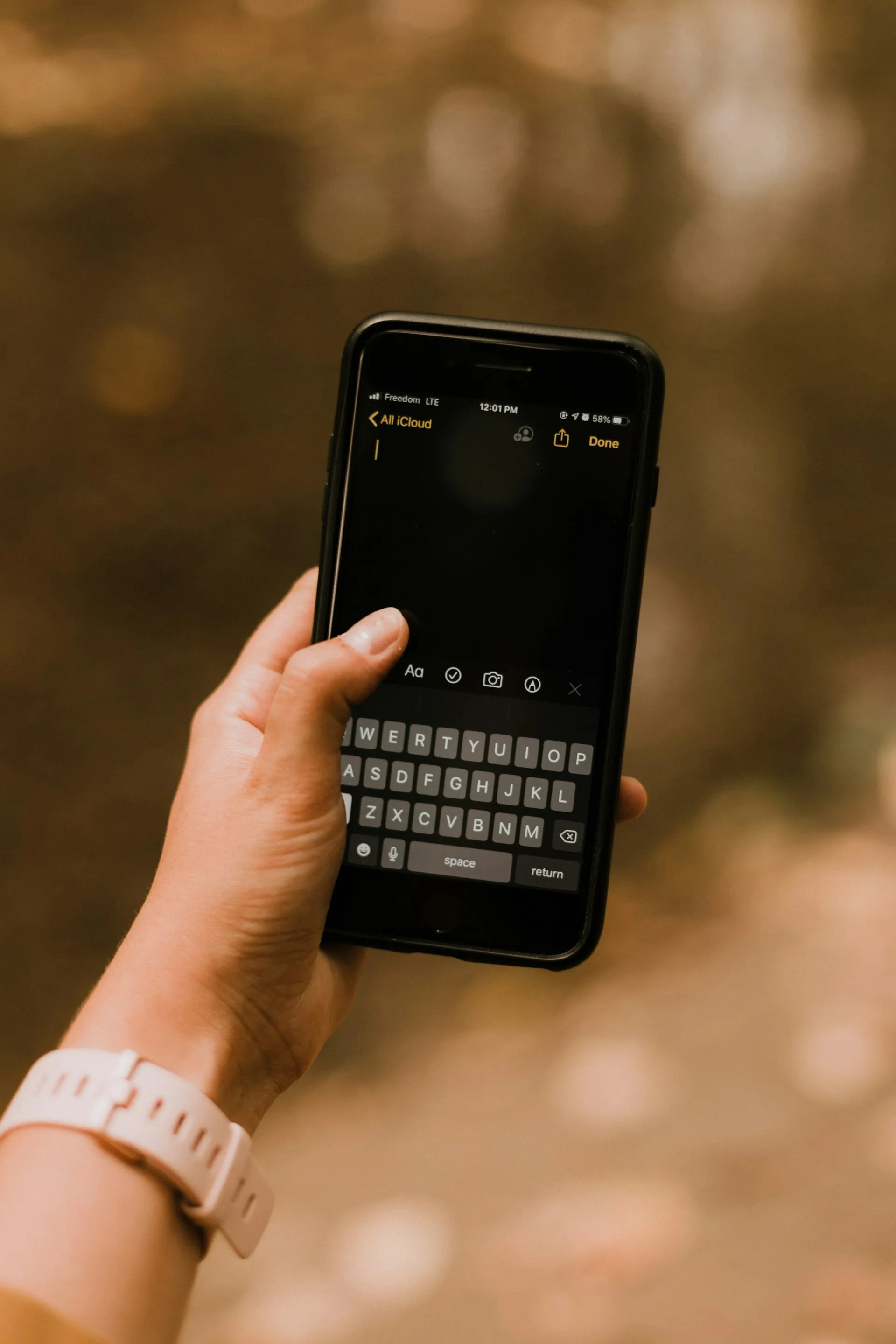
Apple has reportedly been exploring an autocorrect upgrade for iOS 27 that would go beyond fixing misspellings to suggest alternative words as you type. The approach is comparable to how tools like Grammarly surface vocabulary rewrites, 9to5Mac reported in late March. No final decision on shipping the feature has been made.
That rumor is the news peg. But the more substantive story is what Apple has already shipped across iOS 17, 18, and 26: a systematic effort to reduce the friction of multilingual typing, language by language, release by release. WWDC sessions got underway, though the rumored iOS 27 keyboard improvements have not been confirmed in available sourcing. If the autocorrect feature does ship, it would land on a foundation Apple has spent three years reinforcing.
What Apple has already built through iOS 26
Before the iOS 26 changes Apple described at WWDC25, multilingual typing still often required manual keyboard setup or switching. That's the baseline, and it's worth holding in mind as each subsequent release comes into focus.
iOS 17 laid two pieces of infrastructure. The English keyboard gained inline next-word predictions, generated entirely on-device and active by default in most text fields. Those predictions are disabled automatically in contexts where they don't belong, like password or search fields. Separately, the keyboard moved to its own process in iOS 17, running largely outside the app layer for better reliability and performance. Both changes were quiet. Both mattered.
iOS 18 introduced the first Multilingual Keyboard, letting users type across languages without switching, including a simultaneous Korean-English multiscript experience. For users who regularly move between scripts, this was the first real sign Apple was treating multilingual typing as a product problem rather than a settings problem.
iOS 26 pushed that effort further on several fronts. For Arabic speakers, Apple introduced an Arabizi transliteration keyboard: type Arabic words using Latin characters and the keyboard converts them into Arabic script automatically. A separate bilingual Arabic-English keyboard went a step further, detecting which language is being typed in real time and switching without any manual toggle. The Hindi transliteration keyboard gained bilingual suggestions, so typing an English word mid-Hindi sentence surfaces a translation automatically. Apple also shipped a new Thai keyboard with a 24-key layout.
Each release removed one more layer of multilingual friction. iOS 27, if the rumored feature ships, would add word-level intelligence to a keyboard that has already gained substantial range.
The infrastructure underneath: Natural Selection, bidirectional text, and uneven rollout
The visible keyboard improvements rest on quieter changes to how iOS handles text itself. These changes also explain why the benefits don't land equally for every user.
The most significant addition in iOS 26 is what Apple calls Natural Selection. Mixing left-to-right languages like English with right-to-left languages like Arabic or Hebrew used to produce erratic selection behavior: the cursor followed how characters were stored in memory rather than how they appeared on screen. Natural Selection fixes that. Dragging across mixed text now highlights what the cursor passes over visually, not what the underlying storage order dictates.
Writing direction has also become content-driven. A text field that starts in English will shift to right-to-left automatically once enough Urdu accumulates to constitute an Urdu sentence. The direction follows the content, not the initial configuration.
These improvements apply automatically in apps using Apple's standard text views, provided they're running on TextKit2. The catch is specific: apps that call the older layoutManager API revert to the previous text engine and lose Natural Selection and related features entirely. Apple's own apps, including Messages and Spotlight, already run on the newer text stack. Third-party apps are a different story.
This creates a real split in user experience. Two people on the same iOS version, typing in the same languages, may have noticeably different results depending on whether they're in a system app or one that hasn't updated its text handling. Apple can ship infrastructure; it can't make every developer use it.
That said, there are things developers can do today to prepare for a more multilingual future. The textInputContextIdentifier API, for instance, lets apps remember the last-used keyboard language per text field, so a user who types French in one field and Japanese in another doesn't have to reset the keyboard every time they switch. Small friction, real annoyance when it's missing. These are the kinds of gaps Apple has been closing from both directions: the OS layer and the developer tooling layer simultaneously.
What the iOS 27 keyboard update rumor actually describes
With that foundation in place, the reported iOS 27 feature reads differently than it would in isolation.
Apple has reportedly been exploring an expanded autocorrect that would propose alternative words, not just flag errors. The approach draws comparisons to tools like Grammarly, 9to5Mac reported in late March. That reporting appeared inside a broader piece on next-generation Siri capabilities, including the ability to handle multiple requests in a single query, which places any new typing feature in the context of Apple's wider AI efforts rather than a standalone keyboard update.
Apple has also been refining its existing autocorrect algorithms incrementally. In iOS 26.4, the company rolled out changes aimed at improving accuracy, per the same report. The rumored iOS 27 feature, if it ships, would be a more visible step in the same direction.
The report leaves several things unclear. Whether the feature would run on-device, use cloud processing, or combine both is unknown. Which languages would benefit beyond English is unspecified. Whether it would require Apple Intelligence-capable hardware hasn't been addressed.
That last question is worth watching. Every multilingual keyboard improvement across iOS 18 and iOS 26 applied across the device lineup, not just recent models. If the autocorrect feature is gated behind Apple Intelligence hardware, it represents a narrower kind of upgrade than anything Apple has shipped in this space so far.
What remains unresolved
WWDC sessions are running from June 8–12 and will clarify what's actually confirmed for iOS 27. Three questions matter most for anyone following this closely.
Does the Grammarly-style autocorrect ship, and if so, across which languages? Is it limited to specific hardware tiers or available system-wide? And how quickly does the developer ecosystem adopt the TextKit2 APIs that determine whether iOS 26's text improvements actually reach users inside third-party apps?
The third question doesn't get much coverage, but it may be the most consequential in the near term. Natural Selection and content-driven writing direction are already in iOS 26. The gap between what Apple has built and what users actually experience in most apps is a developer adoption curve, not a technical one.





Comments
Be the first, drop a comment!