



![Short Cuts (The Criterion Collection) [Blu-ray]](https://m.media-amazon.com/images/I/712N05DgTZL._AC_UY218_.jpg)


iOS 27 Siri AI Extensions Explained: Routing, Shortcuts, and What's Confirmed
Apple is reportedly opening Siri to rival AI assistants in iOS 27, ending OpenAI's exclusive position and replacing it with a platform-wide Extensions system. That's the news, reported by Bloomberg last week based on unnamed sources. But the iOS 27 Siri AI extensions story has a second layer most coverage has left unexplored: Apple already shipped the technical infrastructure to connect those AI services directly to app data and automation logic. It's been sitting inside Shortcuts since last June.
Here's the cleaner version of the argument: iOS 27 Siri AI extensions are a routing change. Shortcuts is the automation layer Apple already built. Together they suggest Apple is assembling something more consequential than chatbot choice but the pieces aren't fully connected yet, and it's worth being precise about what's confirmed versus what's reasonable inference.
This piece covers three distinct levels of certainty: what exists in Shortcuts today, what iOS 27 is reported to add, and what remains inference rather than fact.
What Apple has already shipped: AI models inside Shortcuts
The most concrete part of this story isn't a rumor.
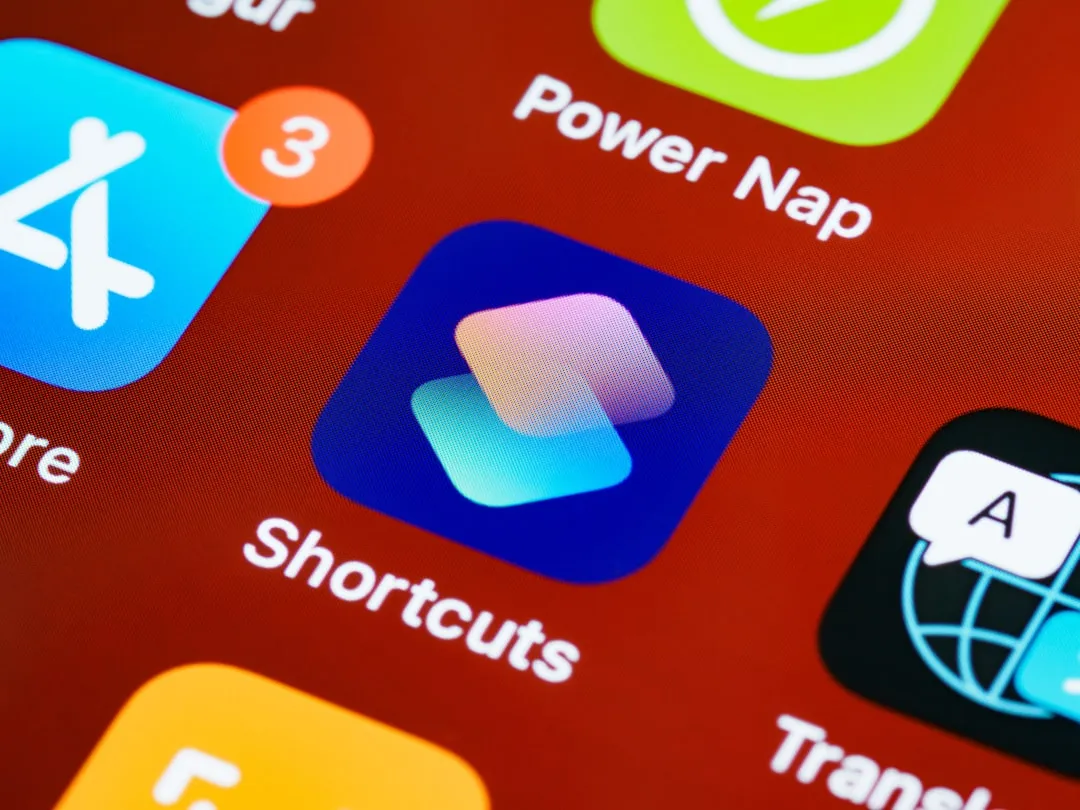
At WWDC 2025, Apple introduced a "Use Model" action for Shortcuts, framing it as bringing "the power of Apple Intelligence into Shortcuts," per Apple's own developer session. The action gives users an explicit choice between three processing tiers: Apple's on-device model for simple tasks that don't need a network connection, Private Cloud Compute for more complex requests that exceed on-device capability, and ChatGPT for queries requiring broad world knowledge. The choice belongs to the user.
The technical design goes further than basic text generation. Model outputs can be shaped into typed values that downstream Shortcuts logic can actually use. Rather than returning a verbose prose response a user would need to manually interpret, the model can return a yes/no Boolean that feeds directly into a conditional branch, according to the same Apple session. App data exposed through App Intents gets passed into the model as JSON, letting it reason over structured content from the user's installed apps.
App Intents is the connective tissue worth understanding here. As Apple's WWDC 2025 documentation explains, when a developer defines App Intents, their app's actions and content become available to Siri, Spotlight, and Shortcuts simultaneously. No separate integration required. The developer declares what the app can do and what parameters it needs; Siri and Shortcuts handle the rest. That infrastructure is already in place across the system.
What this means practically: a user can already build a Shortcut that retrieves calendar events, passes them to an AI model to filter by relevance, receives a typed output, and routes the result into a conditional action all without writing code. That's a meaningful capability shift from what Shortcuts could do two years ago. The open question is whether iOS 27 makes any of it accessible to users who have never opened the Shortcuts app.
iOS 27 Siri chatbot integration: what changes and what doesn't
The iOS 27 news is about who can plug into Siri. It is not about AI writing automations. These are different things, and conflating them leads to misleading conclusions.
Since iOS 18 in 2024, Siri has been able to hand off queries it can't handle to ChatGPT. When Siri hits its limits, it suggests routing to ChatGPT; users can also explicitly ask Siri to query ChatGPT directly. That external routing requires a separate user confirmation before any data leaves Apple's infrastructure, per outside developer analysis published earlier this month. In iOS 27, 9to5Mac reported last week, that single-provider model becomes an open Extensions system.
Language found in test builds of the upcoming OS reads: "Extensions allow agents from installed apps to work with Siri, the Siri app and other features on your devices."
A user with Anthropic's Claude or Google's Gemini app installed would be able to direct queries to those services using the same mechanism ChatGPT currently uses. Think of it as asking Siri to pass a question to Claude, then using a Shortcut to route Claude's response into Reminders or a follow-up action Apple Siri third-party AI chatbots slotting into your existing workflow rather than replacing it. The settings live under Apple Intelligence and Siri, with links to a new App Store section for AI services. That design also routes AI subscription revenue through Apple's billing infrastructure, as Bloomberg noted via MacRumors. AI providers will need to update their apps to support the integration before it becomes available. OpenAI's exclusive position ends when iOS 27 ships.
One transparency concern carries over from the current system and gets more complicated, not less. Apple displays an indicator when a request is handled by Private Cloud Compute or ChatGPT rather than the on-device model, but in practice that indicator is easy to miss, according to the same developer analysis. With multiple external providers now in the routing chain, users will have considerably less visibility into where their data is going. Apple has not yet publicly addressed how it plans to handle routing transparency for the expanded system.
The Extensions system is also separate from Apple's plan to rebuild Siri's own capabilities using Google's Gemini models, a project on a distinct development track, per Mashable last week. Reports suggest Apple has asked Google to explore dedicated server infrastructure for that integration, meaning some Siri processing could occur on Google Cloud while Apple attempts to maintain its privacy standards.
This is not outsourcing Siri to a competitor. Apple is building its own more capable Siri while also letting users route some requests to external models. The distinction matters for understanding what iOS 27 actually does.
The gap between what exists and what the headlines imply
The framing that "iOS 27 Shortcuts may write custom actions using AI" is reasonable inference. It is not reported fact.
No sourced reporting confirms that Shortcuts will generate new automations from natural language in iOS 27. What the evidence supports is this: Apple has built a model-aware automation system with typed outputs, app-entity reasoning, and cross-system action exposure through App Intents. That infrastructure could support AI-generated workflow composition. The logical next step exists; the product announcement does not, yet.
There's also a genuine usability problem AI would need to solve, not just create. Shortcuts has never cracked mainstream adoption. Six Colors observed last week that the app is "user-friendly in appearance, but not in practice" its core problem being that non-experts rarely develop the fluency to use it effectively. AI-generated Shortcuts could lower that barrier meaningfully.
But AI-driven workflows introduce a different problem: non-determinism. Model outputs can vary between runs, and model updates can silently change behavior, per Six Colors. A Shortcut assembled from deterministic code keeps working when the underlying model changes. One that pipes live model output through conditional logic does not necessarily. That's a reliability tradeoff Apple would need to solve before Apple Intelligence Siri AI apps could be trusted to run automations for ordinary users.
For now:
- Existing users get broader routing choice and a path to Claude, Gemini, and future AI providers
- Power users can already build AI-assisted automations today using the Use Model action
- AI-generated custom actions remain architecture without announcement
What to watch before and after WWDC 2026
Apple plans to announce the new Siri and the third-party Extensions system at the WWDC 2026 keynote on June 8, per MacRumors. That announcement will clarify several open questions at once.
The most important signal will be whether Apple uses WWDC to announce any AI-assisted Shortcuts creation natural language to workflow, no manual assembly required. The foundation is there, as Apple's own 2025 developer materials confirm. If that capability ships, it would represent the most significant improvement to Shortcuts since the app launched. If it doesn't, the Extensions system still advances Apple's position as an AI distribution layer for the iPhone without addressing the automation usability problem.
Also worth tracking: which AI providers confirm Extensions support before or at WWDC, how Apple addresses routing transparency as the number of external processing destinations grows, and whether the Gemini-on-Google-Cloud arrangement draws the kind of privacy scrutiny Apple has historically worked to preempt. The business case for Extensions is straightforward App Store commissions on AI subscriptions. The privacy architecture is not yet explained publicly.
The takeaway isn't that everything changes with iOS 27. It's that Apple is assembling, piece by piece, a system where Siri routes, Shortcuts executes, and AI assists at every step. The pieces are nearly all in place. June 8 will show whether Apple is ready to connect them for the users who have never once opened the Shortcuts app.








Comments
Be the first, drop a comment!